
From the cities where I ran this year, it was my first time in Helsinki. To my surprise, Helsinki is not a classical European city with an old center and historic buildings. Initially, I thought that Suomenlinna Island offered military protection to the city of Helsinki until I learned that the fortress on the island had been developed before the city.
Before becoming the capital of Finland in 1812, Helsinki had 3000 inhabitants at the beginning of the XIX century. The country gained its independence from Russia in 1917.
Helsinki has monuments reminding people of its time as a Russian gubernia. Compared with the rest of Europe, Finland was occupied before 1917. It had no influence later, while in the former communist countries (part of the European Union today), the Soviet occupation happened after World War II. Finland had the Winter War with the Soviet Union, so keeping these monuments is surprising.
The Helsinki Cathedral is a Lutheran church built in 1852 during the Russian leadership. It is built in the shape of a Greek cross, and the pediment rests on six Corinthian pillars. In front of the church is the statue of Alexander II, the Russian Tsar.

At the same time, another symbol of Helsinki is the Uspenski Cathedral, a Christian Orthodox cathedral built in 1868. It is the largest Greek Orthodox church in Northern Europe.

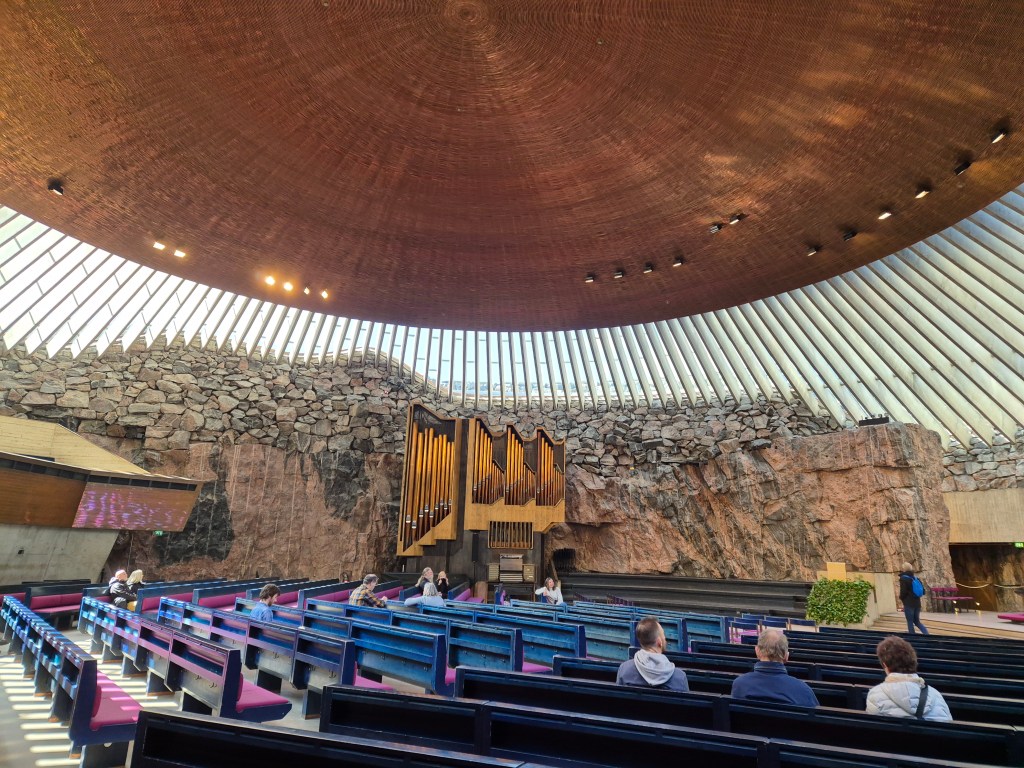
For me, the most impressive church in the city is Temppeliaukio Church, or Church of the Rock, which dates from 1969. The interior was excavated and built directly out of solid rock, and natural light enters through the skylight surrounding the center copper dome. I liked this combination of modern architecture and rocks, reminiscence of the ancient Christian churches.
Compared to other significant European cities, Helsinki has few cars and people on the streets. It has low pollution and an excellent life index. In the harbor, a typical Scandinavian marketplace has served customers since 1889. Here, you can find a lot of food, mostly fish but also sweets and beverages, and many shops with traditional products on sale.

Of course, there are many blocks and buildings like in any European city, but I couldn’t find any relevant or interesting images to post here.
The next stop is on Somenlinna islands, once a solid military fortress and now a place for tourists. Suomenlinna is now one of Helsinki’s most popular tourist attractions and a popular picnicking spot for the city’s inhabitants. The island is reachable on a 15-minute boat trip from Helsinki, and you can use a regular tram or bus ticket to travel. The island has many houses and museums on the island’s history, as well as a military museum. I would say that the entire island is a museum of life in the XIX century. From here you have lovely views of the sea and Helsinki.
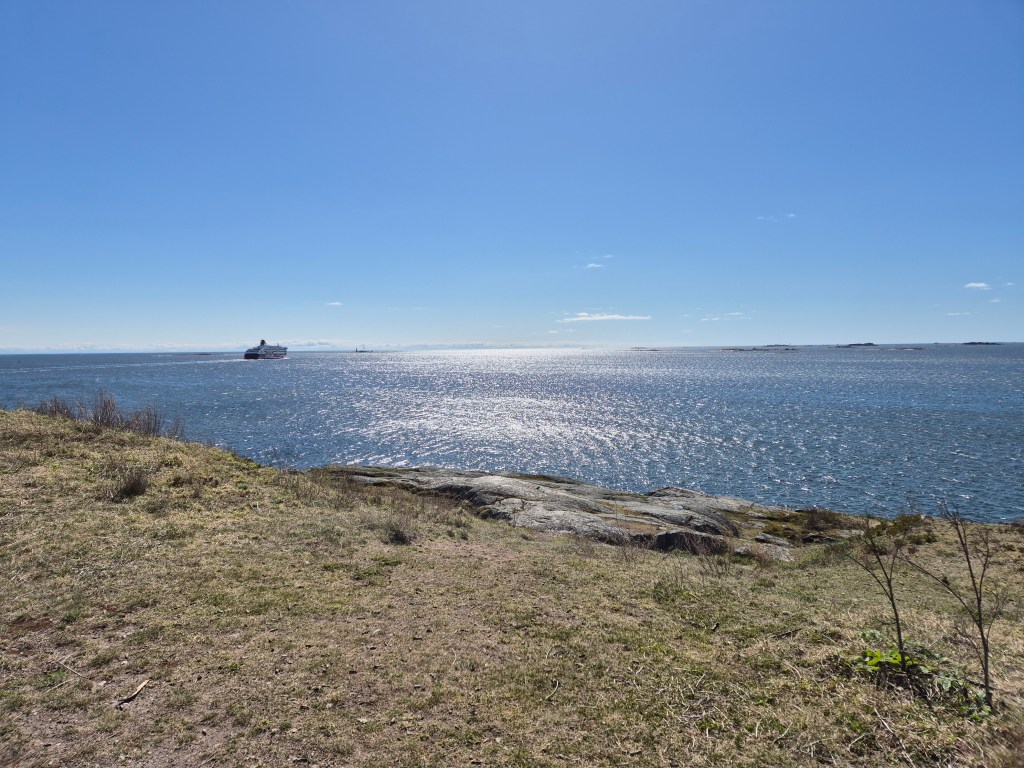
In the above picture, you can see a ferry going from Helsinki to Tallinn. The trip takes about two hours. During weekends, the ferry is full of people traveling from Helsinki to Tallinn to buy cheaper alcohol. In Finland, beer costs around 8 EUR in restaurants and 3-4 EUR in supermarkets.
Helsinki has many parks. One of them is Sibelius Park, a memorial to the great Finnish composer. In the center of the park is a Sibelius monument, reminding of the organ pipes. It consists of more than 600 hollow steel pipes welded together in a wave-like pattern. The park is closed and in restoration until the end of 2024.

Helsinki is different from other cities due to its many islands, lakes, and trees, which make it look like a vast area of wild nature. The city is beautiful, and late spring and summer are perfect times to visit it.

Based on the above, I recommend Helsinki as a lovely city to visit during a two-to-three-day city break.
 Adrian Matei's blog
You must be logged in to post a comment.