
Krakow is the most popular tourist destination in Poland. Summer in Krakow is gorgeous, with perfect weather and some fun traditions. If you are in the city in June when these events occur, you should not miss them.
The Great Dragon Weekend
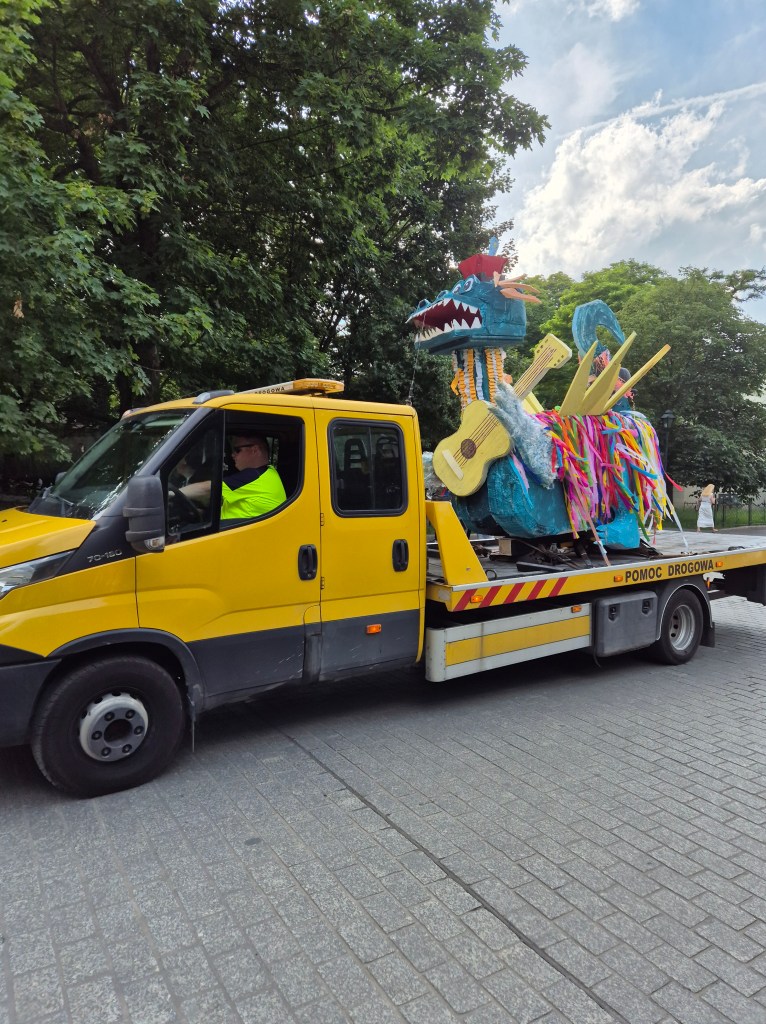
One of Kraków’s most unique and enjoyable annual events, the Great Dragon Weekend, is organized by Groteska Theatre and inspired by the city’s most famous legend. The Dragon story is about the foundation of Krakow. In 2024, on June 9th, the 24th edition of the show was organized.
Over two days of colorful pageantry, large-scale puppetry, and family fun, the weekend consists of two main events: Saturday night’s light and sound spectacular, in which giant dragons float down the Wisła, followed by Sunday afternoon’s parade of colorful beasts created by children. It was a diverse parade, with lots of dragons designed by kids. I attended both events this year for the first time since I have been in Krakow. I found two video clips on YouTube covering both events and shared them here.
Wianki
Wianki is not a Krakow tradition but a Warsaw custom that came to Krakow in the mid-19th century. In its modern form, as a cyclical mass event, Krakow’s Wianki has existed since 1992, when the Krakow City Hall took patronage over this event. In Poland, summer starts at the summer solstice on June 22nd. The summer solstice, known as Kupala Night, is a crucial moment of the year in Slavic tradition when all of nature – and the humans who are part of it – fully bloom. Ancient rituals and customs were intended to provide participants with purification, fertility, and happiness. Kupala Night is associated with several activities and rituals, such as collecting herbs and flowers and decorating people, animals, and houses with them, entering water, bathing, pouring water on it, sending wreaths on water, lighting bonfires, dancing, singing, jumping through fire.
In Polish, wianki means wreath. The wreath was an obligatory attribute of games. It was made before the holiday from wild herbs and flowers. The ceremonial use of the merchant wreath is also associated with a magical understanding of its shape.
Lajkonik
The Lajkonik is a man dressed as a warrior from the East. He rides a prancing white hobbyhorse through the city streets and, with his mace, deals out good luck blows.

There are some theories about the origin of this tradition. The most reliable is that in 1287, Mongol armies arrived close to the city. They decided to spend the night by the Vistula, close to the village of Zwierzyniec, and to attack the town in the morning. They were discovered there by raftsmen, who overpowered the sleeping army, thus saving the city from ruin and plunder. They soon changed into Mongol costumes and rode into the town on the horses they had seized as trophies. They scared the whole city with fear, yet more quickly, the townsfolk came to rejoice.
This show has been happening in Krakow for over 700 years, a long tradition. Every year, it is celebrated on Thursday, one week after Corpus Christi. It is a parade of people costumed in Mongols or Polish clothes from the Middle Ages accompanied by bands playing traditional music.

Fascinating traditions take place in Krakow in June. If you’re here, be sure not to miss them.
PS. All the videos above I found on Youtube, they are not made by me.
 Adrian Matei's blog
You must be logged in to post a comment.