
George Enescu was a renowned composer, orchestral conductor, and violinist, born in Romania in 1881. Today, he is celebrated not only for his remarkable musical creations but also for his influence on legendary pupils such as Yehudi Menuhin and Ivry Gitlis. During his lifetime, Enescu was regarded as one of the greatest violinists in the world, sharing his profound knowledge with countless aspiring musicians.
A child prodigy, Enescu was admitted to the Music Conservatory in Vienna at just seven years old. His extraordinary memory was legendary; he was known to have memorized the entire works of Beethoven and Brahms. Renowned musicians often marveled at his ability to recall intricate compositions. Enescu had a unique gift for teaching, imparting his art to those eager to learn, and he remains one of the few individuals about whom only positive stories are told.
In the following accounts, I will share three poignant stories that illustrate not only his genius but also his extraordinary humanity.
Luchian
In the summer of 1916, the famous Romanian painter Ștefan Luchian struggled with multiple sclerosis. As his illness progressed, he was confined to his bed and could paint only with a brush tied to his hand. One evening, George Enescu, who had never met Luchian before, visited him and played his violin for two hours. This heartfelt gift brought immense joy to Luchian, who later recounted the experience to his close friend, the poet Tudor Arghezi. It was not until Enescu’s passing in May 1955 that Arghezi publicly shared this touching story.
Jora
Later that same year, Romania was engulfed in the turmoil of World War I. The situation was not good for the Romanian army and a big part of country territory was lost. George Enescu was behind the front line doing concerts for wounded soldiers to raise their morale. Once he did a concert for a young composer who just had a difficult surgery after losing a leg and was about to die. The name of the wounded composer was Mihail Jora. Upon hearing Enescu playing his compositions, Mihail Jora felt something powerful and a strong desire to live and started to fight for his life. Jora later described this moment as transformative. Sometimes music can make miracles. Jora eventually resumed his studies in Paris after the war. Even later during the challenging times of communism, Jora dedicated himself to honoring Enescu’s legacy.
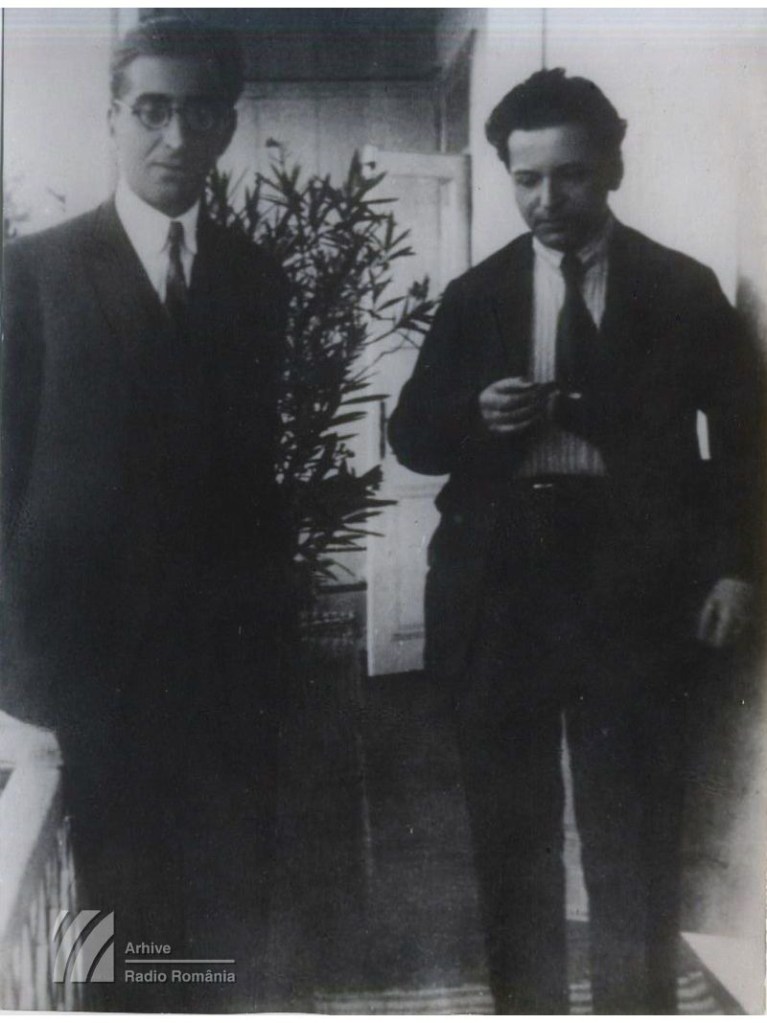
Moscow
As time passed, Enescu gained international fame. After World War II ended in 1945, Romania found itself under Soviet occupation, facing political strife due to its previous alliance with Germany. To foster better relations between Romania and the Soviet Union, Enescu traveled to Moscow in 1946, performing concerts at the age of 65, despite no longer being at the peak of his abilities. He played alongside some of the greatest Soviet musicians, including David Oistrakh, who was then considered the world’s finest violinist.
Below you can hear Enescu and Oistrakh playing the double violin concerto by Bach. Enescu was playing on a Guarneri violin called “The cathedral” while Oistrakh was playing on a Stradivarius violin. It is interesting that both instruments were created during Bach’s lifetime. This sounds like two people who are trying to give their best to the world. Try to listen this music with your soul.
Enescu undertook this tour not for personal gain, but to support his country during tumultuous times. Later that year, he traveled to the United States and the United Kingdom, and settled in France, never to return to Romania, which had fallen under communist rule.
It’s essential to recognize the many contributions Enescu made to his homeland. He traveled extensively throughout Romania, seeking out and nurturing talented musicians, helping them pursue their studies at the conservatory. He also championed folklore music, discovering talented singers like Maria Tănase and Ioana Radu. Enescu’s unwavering dedication to music and musicians demonstrated a profound commitment to the cultural enrichment of his country.
In our increasingly individualistic society, it is vital to remember humans like Enescu, who dedicated their lives to making the world a better place through compassion, knowledge, and artistry. A quote from Yehudy Menuhin, says a lot: “Enescu gave me the light that has guided my entire existence.”
 Adrian Matei's blog
You must be logged in to post a comment.