Short history of half-marathons

When registering for the 50th edition of the Roma-Ostia Half-Marathon, I became curious about the history of this race distance. I had always assumed the half-marathon was a more recent creation, but I wanted to learn more.

To understand the history of the half-marathon, we must first explore the origins of its full-distance counterpart: the marathon. The marathon’s roots trace back to the famous legend of Pheidippides, a Greek messenger who reportedly ran around 40 kilometers from Marathon to Athens to deliver news of a military victory. Legend says he collapsed and died from exhaustion after delivering his message.

Interestingly, there were no marathons or long-distance races exceeding 5 kilometers in the ancient Olympic Games. The marathon as we know it today began with the inaugural modern Olympic Games in Athens in 1896. That first race was in fact from Marathon to Athens as in the legend. For the first editions of the Olympiad, the marathon distance varied between 39-42 kilometers. The first Olympic marathons were races full of challenges, with the 1904 St. Louis Marathon being the probably the most strange running race of all times.
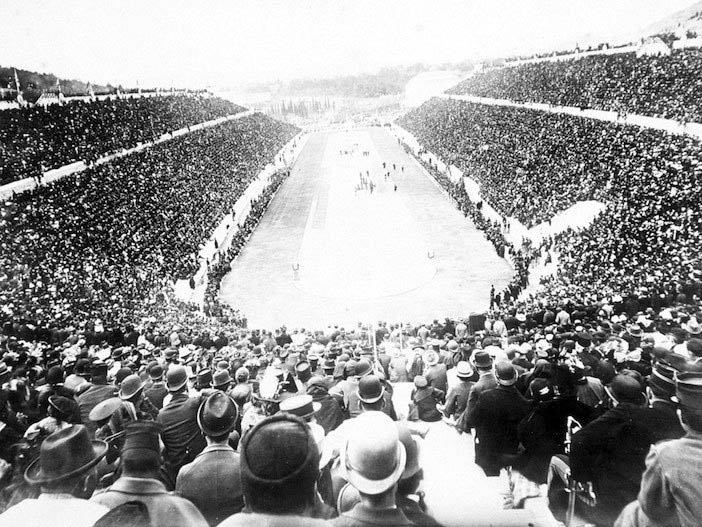
Spectators at Olympic Stadium in Athens waiting for the winner of the first Olympic Marathon

The marathon distance of 42,195 meters (26.2 miles) was officially established during the 1908 London Olympic Games. The race was originally planned to be 26 miles long, but at the request of Queen Alexandra, the starting point was moved to Windsor Castle’s lawn so the royal children could watch the start from the nursery. This adjustment added 352 meters, creating the now-standard distance.

London Olympic Marathon 1908 – the first race of 42195 meters

As the marathon gained popularity, races began appearing outside the Olympics. The Boston Marathon, for instance, was first held in 1897, inspired by the Athens Olympics. In the UK, the Polytechnic Marathon was established to train athletes for the Games, while in the continental Europe, the Kosice Peace Marathon, which began in 1924, is the oldest continuously running marathon on the continent.

While the marathon’s history is well-documented, the half-marathon’s origins are more ambiguous. The longest distance ran inside stadium at official competitions was 10 kilometers. There was a big gap between 10k and marathon and this is how appeared the need for an intermediary distance. Why they chose half-marathon instead of 20 kilometers or 15 miles? Because the marathon distance was standardized by mid of last century and meant the same thing everywhere in the world.

Wikipedia mentions as the first race the Route du Vin Half Marathon which started in 1961. But they also say that it was not the exact 21097 meters (13.1 miles) until 1990s. Given this situation other sources mentions the Freckleton half-marathon as the the first race to match this exact distance in 1965. There are also other events that claim to be the first half-marathon. For sure the first half was run in the 1960s. Regardless, the half-marathon emerged roughly 70 years after the marathon.

One reason for this unclear history is that the half-marathon remained relatively unpopular until it became part of the World Athletics Road Running Championships in 1992. This addition helped elevate its profile, making any half-marathon with more than 50 editions, like the Roma-Ostia, a truly special event.

The popularity of the half-marathon has skyrocketed in recent years. In 2019, more than 2 million participants ran half-marathons globally, double the number of marathon runners. Many major half-marathons now sell out months in advance, reflecting their appeal to both seasoned runners and beginners alike.

Social media and the internet have undoubtedly played a significant role in this surge. Seeing friends share their running experiences online has inspired others to try it themselves, discovering that long-distance running is achievable with consistent effort. The half-marathon, in particular, strikes a perfect balance, challenging yet accessible, making it the ideal entry point for many aspiring runners.

Half-marathon has a history of only around 60 years but the best times of this race are still ahead. You can contribute to this history too!

Athens Olympic Stadium where history of long distance races begins – and I was in Arcadia

Remembering George Enescu: Stories of Humanity and Art

George Enescu was a renowned composer, orchestral conductor, and violinist, born in Romania in 1881. Today, he is celebrated not only for his remarkable musical creations but also for his influence on legendary pupils such as Yehudi Menuhin and Ivry Gitlis. During his lifetime, Enescu was regarded as one of the greatest violinists in the world, sharing his profound knowledge with countless aspiring musicians.

A child prodigy, Enescu was admitted to the Music Conservatory in Vienna at just seven years old. His extraordinary memory was legendary; he was known to have memorized the entire works of Beethoven and Brahms. Renowned musicians often marveled at his ability to recall intricate compositions. Enescu had a unique gift for teaching, imparting his art to those eager to learn, and he remains one of the few individuals about whom only positive stories are told.

In the following accounts, I will share three poignant stories that illustrate not only his genius but also his extraordinary humanity.

Luchian

In the summer of 1916, the famous Romanian painter Ștefan Luchian struggled with multiple sclerosis. As his illness progressed, he was confined to his bed and could paint only with a brush tied to his hand. One evening, George Enescu, who had never met Luchian before, visited him and played his violin for two hours. This heartfelt gift brought immense joy to Luchian, who later recounted the experience to his close friend, the poet Tudor Arghezi. It was not until Enescu’s passing in May 1955 that Arghezi publicly shared this touching story.

The poet Tudor Arghezi recounting Enescu playing for Luchian in the summer of 1916 (you can set captions in English)

Jora

Later that same year, Romania was engulfed in the turmoil of World War I. The situation was not good for the Romanian army and a big part of country territory was lost. George Enescu was behind the front line doing concerts for wounded soldiers to raise their morale. Once he did a concert for a young composer who just had a difficult surgery after losing a leg and was about to die. The name of the wounded composer was Mihail Jora. Upon hearing Enescu playing his compositions, Mihail Jora felt something powerful and a strong desire to live and started to fight for his life. Jora later described this moment as transformative. Sometimes music can make miracles. Jora eventually resumed his studies in Paris after the war. Even later during the challenging times of communism, Jora dedicated himself to honoring Enescu’s legacy.

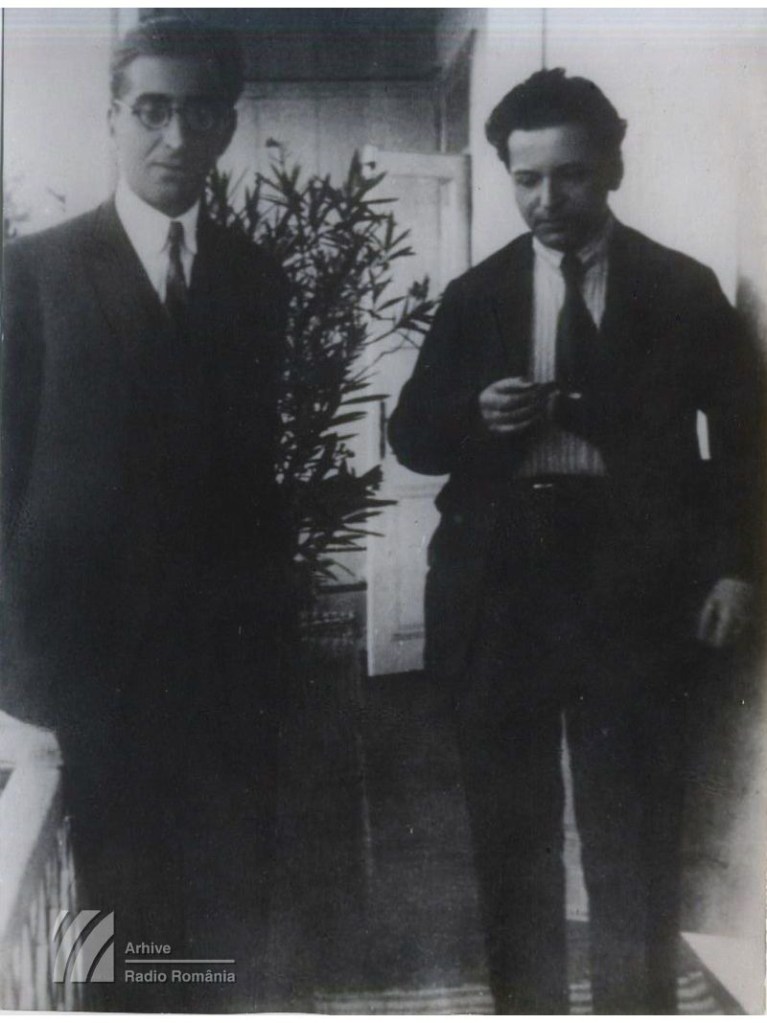
George Enescu and Mihail Jora
Mihail Jora (1891-1971) expressing his thoughts on George Enescu

Moscow

As time passed, Enescu gained international fame. After World War II ended in 1945, Romania found itself under Soviet occupation, facing political strife due to its previous alliance with Germany. To foster better relations between Romania and the Soviet Union, Enescu traveled to Moscow in 1946, performing concerts at the age of 65, despite no longer being at the peak of his abilities. He played alongside some of the greatest Soviet musicians, including David Oistrakh, who was then considered the world’s finest violinist.

Below you can hear Enescu and Oistrakh playing the double violin concerto by Bach. Enescu was playing on a Guarneri violin called “The cathedral” while Oistrakh was playing on a Stradivarius violin. It is interesting that both instruments were created during Bach’s lifetime. This sounds like two people who are trying to give their best to the world. Try to listen this music with your soul.

Bach – Double Concerto in d minor, first and second movements
Bach – Double Concerto in d minor, third movement

Enescu undertook this tour not for personal gain, but to support his country during tumultuous times. Later that year, he traveled to the United States and the United Kingdom, and settled in France, never to return to Romania, which had fallen under communist rule.

It’s essential to recognize the many contributions Enescu made to his homeland. He traveled extensively throughout Romania, seeking out and nurturing talented musicians, helping them pursue their studies at the conservatory. He also championed folklore music, discovering talented singers like Maria Tănase and Ioana Radu. Enescu’s unwavering dedication to music and musicians demonstrated a profound commitment to the cultural enrichment of his country.

In our increasingly individualistic society, it is vital to remember humans like Enescu, who dedicated their lives to making the world a better place through compassion, knowledge, and artistry. A quote from Yehudy Menuhin, says a lot: “Enescu gave me the light that has guided my entire existence.”

Summer traditions from Krakow

Krakow is the most popular tourist destination in Poland. Summer in Krakow is gorgeous, with perfect weather and some fun traditions. If you are in the city in June when these events occur, you should not miss them.

The Great Dragon Weekend

Parade of Dragons 2024

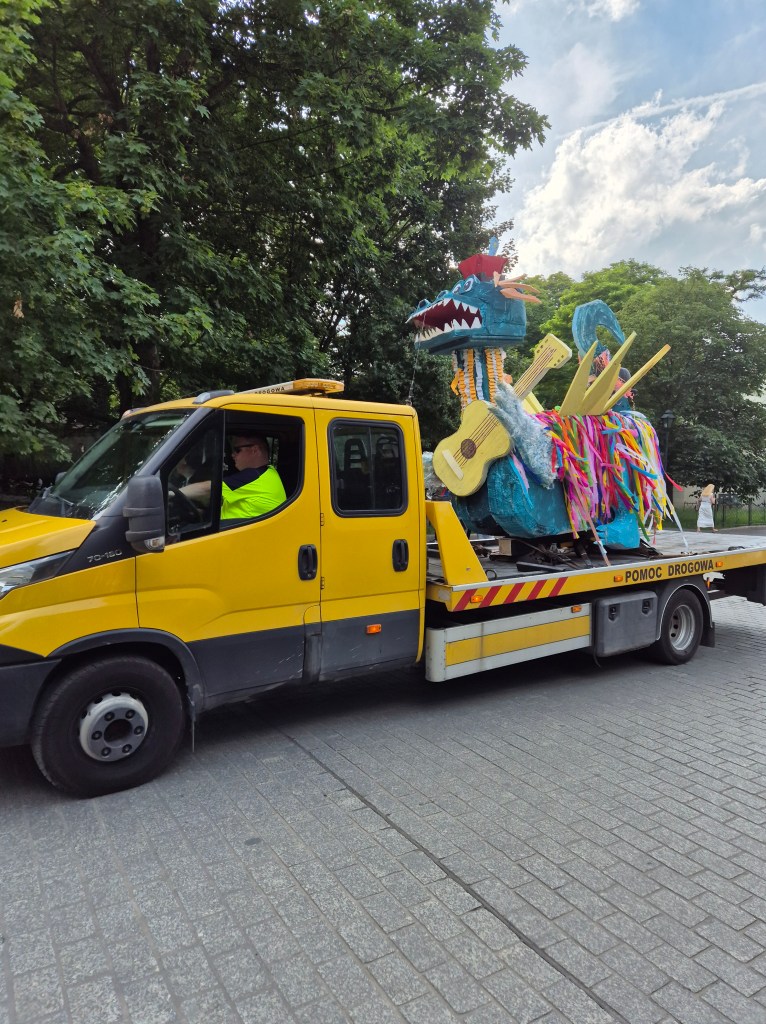
One of Kraków’s most unique and enjoyable annual events, the Great Dragon Weekend, is organized by Groteska Theatre and inspired by the city’s most famous legend. The Dragon story is about the foundation of Krakow. In 2024, on June 9th, the 24th edition of the show was organized.

Children created dragons in a parade. Kids have a lot of imagination

Over two days of colorful pageantry, large-scale puppetry, and family fun, the weekend consists of two main events: Saturday night’s light and sound spectacular, in which giant dragons float down the Wisła, followed by Sunday afternoon’s parade of colorful beasts created by children. It was a diverse parade, with lots of dragons designed by kids.  I attended both events this year for the first time since I have been in Krakow. I found two video clips on YouTube covering both events and shared them here.

Singing dragon

Wianki

Wianki is not a Krakow tradition but a Warsaw custom that came to Krakow in the mid-19th century. In its modern form, as a cyclical mass event, Krakow’s Wianki has existed since 1992, when the Krakow City Hall took patronage over this event. In Poland, summer starts at the summer solstice on June 22nd. The summer solstice, known as Kupala Night, is a crucial moment of the year in Slavic tradition when all of nature – and the humans who are part of it – fully bloom. Ancient rituals and customs were intended to provide participants with purification, fertility, and happiness. Kupala Night is associated with several activities and rituals, such as collecting herbs and flowers and decorating people, animals, and houses with them, entering water, bathing, pouring water on it, sending wreaths on water, lighting bonfires, dancing, singing, jumping through fire.

Wianki in Krakow

In Polish, wianki means wreath. The wreath was an obligatory attribute of games. It was made before the holiday from wild herbs and flowers. The ceremonial use of the merchant wreath is also associated with a magical understanding of its shape.

Lajkonik

 The Lajkonik is a man dressed as a warrior from the East. He rides a prancing white hobbyhorse through the city streets and, with his mace, deals out good luck blows.

Lajkonik

There are some theories about the origin of this tradition. The most reliable is that in 1287, Mongol armies arrived close to the city. They decided to spend the night by the Vistula, close to the village of Zwierzyniec, and to attack the town in the morning. They were discovered there by raftsmen, who overpowered the sleeping army, thus saving the city from ruin and plunder. They soon changed into Mongol costumes and rode into the town on the horses they had seized as trophies. They scared the whole city with fear, yet more quickly, the townsfolk came to rejoice.

This show has been happening in Krakow for over 700 years, a long tradition. Every year, it is celebrated on Thursday, one week after Corpus Christi. It is a parade of people costumed in Mongols or Polish clothes from the Middle Ages accompanied by bands playing traditional music.

Lajkonik Parade

Fascinating traditions take place in Krakow in June. If you’re here, be sure not to miss them.

PS. All the videos above I found on Youtube, they are not made by me.

Revolution songs from the previous century

The XX century was turbulent, with many revolutions and wars. In this post, I will write about some of the songs that encouraged the fighters to combat those bloody events.

The criteria for the songs were to be composed in the XXth century and to cover events from the same century. For this reason, I had to eliminate pieces like “The Internationale,” “Warszawianka,” or “Ay Carmela !” which were composed in the XIXth century. Another criterion was to add only songs I like. It is a subjective list, and I don’t claim to be an exhaustive list. It is essential to mention that I don’t associate myself with the message of all the songs. It would be impossible to sustain both communist and anti-communist causes simultaneously. However, that doesn’t stop me from appreciating beautiful and motivating songs. Conversely, I chose not to write about some events because I failed to find lovely songs with my subjective taste. Some pieces were contemporary with the revolutions they referred to, while others were composed before or later. I chose to cover only revolutions and not World Wars.

From a chronological perspective of the XXth century, the first six decades were dominated by communist or anarchist revolutions. In comparison, the last four decades were democratic revolutions fighting against dictatorship.

The first revolution of the XX century we cover here was the 1905 uprising in Russia. In our times, we remember those events in the movie “Battleship Potemkin” by Serghei Eisenstein from 1925. That movie remains a masterpiece of cinematography and propaganda. It is possible that the song “Potemkine” by Jean Ferrat, composed in 1965, was inspired by that movie.

We continue with the Mexican Revolution from 1910-1920. The most known song from that period, “La Cucaracha,” was from the previous century. Therefore, I chose “La Adelita,” a song about the women “Soldaderas” participating in the revolution.

The next event was the Russian Revolution of 1917. The most known hymn of the “great revolution” is “The Internationale,” which dates from the 1870s. For the same reason as above, I chose “Farewell of Slavianka,” composed in 1912 by Vasily Agapkin and played during the events.

After the Russian Revolution, there were many tries by communists to seize power in different European countries. Most notable would be the revolution in Germany during 1918-1919. A representative piece of that revolution is “Brüder, Ergreift Die Gewehre,” written by Max Barthel, although some things are unclear about this song.

The Spanish Revolution happened in the 1930s. There are many beautiful songs from that time. My first choice would be “Ay Carmela !” but since it was from the previous century, I selected “Si me quieres escribir,” a song of the Left forces composed in the 1920s. It has to be added that “A las barricadas” is, in fact, “Warszawianka” melody with Spanish verses.

The Cuban Revolution started in 1953 and succeeded in 1959. The well-known song “Hasta siempre comandante” was composed in 1965 as a response to a farewell letter from Ernesto Che Guevara to the Cuban people. Che Guevara was an Argentinian anarchist who, after the success of the Cuban revolution, left Cuba to support the uprisings in other countries, in Congo and later in Bolivia, where he was murdered.

We can say that communist and anarchist revolutions died with Che Guevara. The subsequent revolutions covered here are fights for democracy.

In 1956, the first anticommunist uprising in Europe took place in Hungary. There was no official song for that event, but 10 years later, in 1966, an Italian journalist, Pier Francesco Pingitore,  wrote the lyrics commemorating those events. It was called “Avanti ragazzi di Buda” to remember the young students who participated in that rebellion. The Hungarian uprising was crushed the same year by the Soviet Army.

The Spring in Prague happened in 1968. Again, it was a fight for freedom and democracy. The Warsaw Pact countries’ armies occupied Czechoslovakia and crushed the democratic movement. Romania was the only country from the Warsaw Pact without sending troops and condemning the aggression instead. The Prague Spring had a huge impact all over Europe. Many poems and melodies were composed for the revolution in Prague. I had to select four songs: one in Czech, two in French, and one in Italian. Guicini’s song refers to the self-immolation of Jan Palach in Prague in 1969, a moment with broad impact at the time and over the years. His death is covered in other songs, like this one from Salvatore Adamo:

“Y en a qui meurent au printemps
Comme des éclairs, comme des flambeaux
Barrant la route un court instant
Aux chars d’assaut” -Mourir dans tes bras

The following two events are not revolutions in the classical sense. In 1970, Salvador Allende became president of Chile, moving the country to socialism. In 1973, there was a coup d’etat, which led to Salvador Allende’s death and starting of dictatorship in Chile. “El pueblo unido” was composed in Chile in 1973, a few months before the coup.

In 1974, Greece changed the ruling regime from dictatorship to democracy after the unsuccessful Cypriot coup followed by the Turkish invasion of the island. Mikis Theodorakis, the famous composer, returned to Greece and had concerts where they sang his composition “To Yelasto Pedi,” among others.

In 1989, there was a significant event in Eastern Europe, and democracy was instated in East Germany, Poland, Hungary, Czechoslovakia, Romania, and Bulgaria. This is the only event I witnessed live from the last century’s revolutions. I chose a wonderful Czech song from that time.

I really enjoyed doing the research for this article because I discovered many beautiful songs. It is not easy to match the objective history with the subjective pieces. It was a complex century, but at least they wrote beautiful music. I recommend this webpage as a starting point if anyone is interested in doing a similar job or wants to learn more on such a topic.

Disclaimer: Don’t listen to these songs before you go to sleep.

If you wonder what the usage of this post my answer is that it can be used as a playlist to be listened to during running or exercising.

Playlist with all the songs described in this post

Notes on Romanian language history

This is a different post from the ones I wrote until now. If you are interested in the history of languages, please continue reading.
I will try to explain how the Romanian language and culture could survive for centuries. Although it wasn’t the official language in any country that is now part of Romania, no schools or documents were written in this language before the XVI century.

My country, Romania, has a historical particularity that makes it different from other countries in the region. Two thousand years ago, that land was inhabited by the Dacians. We don’t know their language because no written texts are left from them except the short “Decebalus per Scorilo” (Decebalus the son of Scorilo). We know that Ovid, the famous Roman poet exiled by the emperor Augustus at Tomis (Constanta in present days), wrote poems in the local language. Unfortunately, those poems are lost. Later, the Dacians were conquered by Romans in 106 AD, who stayed in the country until 271 AD. Then, many nomadic populations went through that space, and the Romanian language appeared in time. It is a Latin language with minor Slavonic and other external influences. More precisely, 70% of the language has Latin origins, and about 15% is of Slavic roots. Even if this language was formed around the X century, as most historians accept nowadays, the first written document in Romanian that we know about dates from mid-1521 (Neacsu’s letter). Now, let’s compare the first documents in neighbors’ languages (from the same geographical area). The first manuscripts in Bulgarian are from the X century, in Serbian from the XI century, in Hungarian from 1192, in Russian XIth century, in Polish from 1270, and in Czech since the early XIII century. In my opinion, this is evidence that writing was not much valued within the Romanian population for a long time.

For some context, the official language used by the rulers and the Orthodox Church was old Slavonian Bulgarian in both Walachia and Moldova from the X century. But that was not the language spoken by the people. It was similar to the situation in the central and West of Europe. The church used Latin as an official language there, but the people did not understand it.

The corpus of official and religious documents in the old Slavonian language left from Moldova and Valachia is much less than those in Serbia or Bulgaria. The main reason is that in those regions, people spoke a Slavic language, while in Moldova and Valachia, that was not the case. Besides, as mentioned before, writing was not a priority among Romanians.

What has changed and made people start writing in Romanian? There are different theories on this topic among historians. The one that seems more accurate is that the Lutheran influence in Transylvania from the XVI century made people start writing in their native language. In support of that, we have the first documents printed in the Romanian language in Brasov from the 1550s. The deacon Coresi moved from Targoviste to Brasov (at the time in a different country, Transylvania) and started publishing religious books translated into Romanian. In “Psaltirea romaneasca” printed in 1570 Coresi explains his reasons to publish in Romanian language: “Eu, diaconul Coresi, daca vazui ca mai toate limbile au cuvintul lu dumnezeu in limba lor, numai noi, rumanii, n-avam…” (I, Coresi the deacon, if I saw that all the languages have the word of god in their language, only us, romanians, don’t…)

The first school in Romanian was also founded in Brasov in the same century. Lutherans were strong supporters of using people’s language in the church. For example, Martin Luther translated the Bible into German in 1534.

We know how writing in Romanian began. Now let’s see how this language was still alive after centuries in which it was not used in official documents, church, or school.

Things written next are my personal opinion. My grandfather was a child in the 1930s in the countryside of the Dobrogea region. He told me that during that time (and probably many years before), people from the village gathered on Saturday nights at some inhabitants’ houses, where older people told stories, legends, myths, and poems from the past. There were things from ancient times and more recent times that those people experienced: for example, working on the bridge built over the Danube River in 1895 by Anghel Saligny or memories from the First World War. This form of transmitting information to the next generations made this population’s traditions, language, and culture survive over centuries despite no written documents. Children would listen to those stories, and some would transmit them later to the next generations. That is why there were many poems and songs because those are easy to remember. Also, those people developed their memory to keep those stories, poetry, and themes in their minds for a long time and transmit them to the next generations.

This is how people transmitted their culture from past generations over thousands of years. Of course, it was a living culture: some poems, stories, and songs were changed in time or space. There were different variants of the lyrics or the stories, and some stories changed or disappeared in time. There were actual historical facts and fictional stories transmitted to young generations.

Interestingly, those people in the 1930s lived the same way humans lived for thousands of years. They did not use any modern technologies available at the time, like electricity, cars, radio, etc. It is incredible how the world has changed in the last hundred years. We lost that connection with the past, and there is no way back. 

In the 1920s, Dimitrie Gusti, a sociology professor, and his team went to many places in Romanian villages and wrote down or recorded the folklore and traditions of those places. He conducted ethnographic research on the country’s regions. I don’t know the state of those books and recordings, but someone should digitalize them before they are lost forever.

Constantin Brailoiu and Harry Brauner, two musicologists, were in Professor Gusti’s team doing musical recordings for this sociological study. Harry Brauner lived long enough to leave such great testimonies as the documentary film below from 1976. It is only in Romanian, but the songs are interesting, I hope.

A documentary by Harry Brauner from 1976 on Romanian Folklore (only in Romanian)

Although the things mentioned here are not as exciting as battles and politics in Romanian history, this is an integral part of the country’s development.

Note: For information in this article I used a book written in Romanian by Petre P. Panaitescu “Inceputurile si biruinta scrisului in limba romana“. Panaitescu was a great Romanian historian. Yet this book was published in 1965 during communist times in Romania and had some theories aligned with the political views of the communist regime on history (nationalism, fight between poor and rich, no external influences in our country, etc.), so it needs to be read carefully. Nevertheless, the facts described here are accurate, but he could not publish the book without achieving compromises with the rulers in those times.

Trail of the Eagle’s Nests

This post will cover some spectacular tourist attractions close to Krakow. This is also a page of Poland’s history that resembles, in certain ways, what happens during the last months in Ukraine. The castles on the Trail of the Eagle’s Nests are located in the Polish Jura mountains, North of Krakow, and they can be reached by car in one or two hours of driving. The Polish Jura are old mountains with maximum heights under 500m, similar to the Dobrogea Mountains in Romania. The hills are not high, but the views are beautiful.

map of the castles on the trail of eagle’s nests. The ones colored red no longer exist, and the black ones can be visited. Some are renovated while others are not.

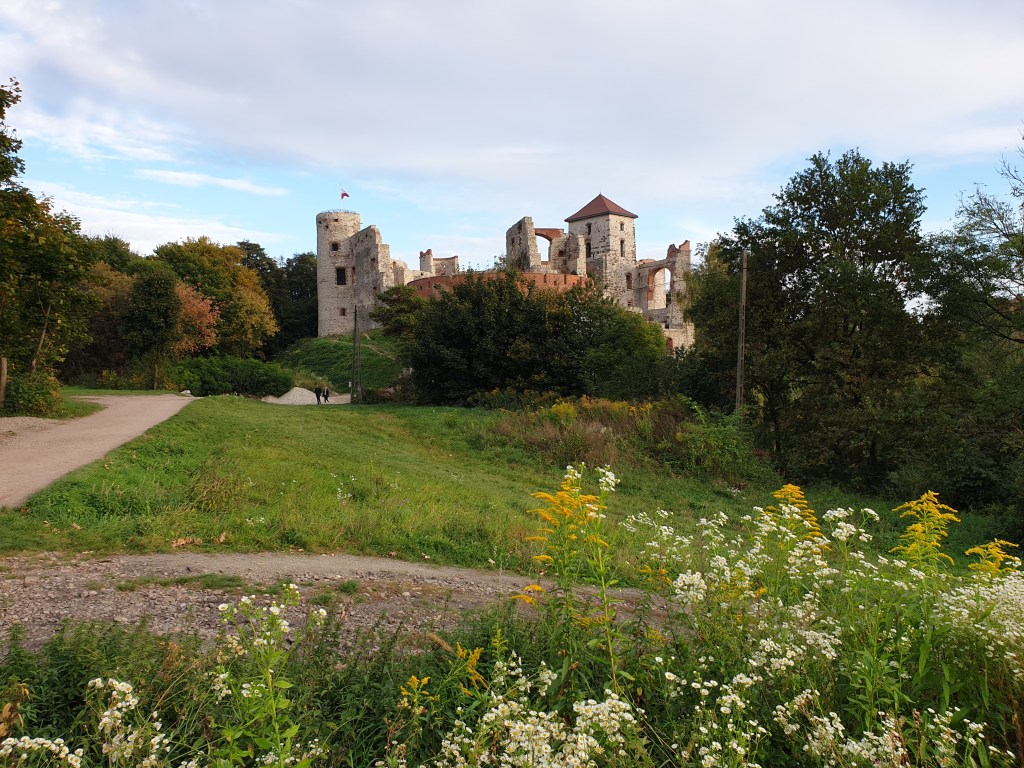
In the XIV century, the Polish King Casimir the Great (1333-1370) built about 25 castles in these mountains between Krakow, his capital, and Czestochowa. These castles attract many tourists for the spectacular sightseeing in the present days. The area was the border between Poland and Silesia, a province of the Bohemian kingdom.

Rabsztyn Castle
View from Rabsztyn Castle
Another view from Rabsztyn Castle

Casimir the Great did more than build castles. In 1367 he founded the University of Krakow. This University is vital for the city even in the present day. Krakow owes its current growth mainly to the University. The increasing IT sector is a good example. An investment in education pays a lot in the long term.

Garden of the Scala castle

Let’s return to our topic. There is a good site with helpful information regarding castles in Poland. You can learn about the history of every building, and you can also see that many are entirely destroyed. This is because of an event that deeply impacted Polish history.

Ogrodzienec castle

The 30 Years War finished in 1648. At the end of that war, Sweden remained with a powerful army and not enough money to pay its soldiers. As often happened in history, countries with mighty armies looked for opportunities to attack their neighbors. In 1655 Sweden decided to attack Poland, which was not affected after the 30 Years’ War. Poland offered plenty of things to loot for the invaders. The Swedish troops occupied almost the entire country as Poland had problems preparing its army to defend it.

View of Ojcow park from Ojcow castle

The turning point of the events was the unexpected resistance of the Jasna Gora monastery. This monastery was and still is the most important religious site in Poland. In 1655 Polish people became highly emotional hearing about the fights for the sanctuary, and they gathered an army to start fighting the Swedes. The unsuccessful siege of the fortified monastery was lifted after more than one month. The Swedish forces eventually retreated with all the goods they could carry. One-third of the civil population of Poland died in that war.

Jasna Gora monastery

These events remained in history as “The Deluge”. Henry Sienkiewicz wrote a novel on this topic. A well-known movie, “Potop”, was made based on the book in 1974.

Tenczyn Castle
View next to the Tenczyin castle

The Swedish army destroyed all the castles part of the Trial of the Eagle’s Nest during the deluge. They tried to steal everything they found. The ruins remained in some cases since those events until recently. Because unfortunately, for every war, the impact and destructions last for generations after it ends.

Korzkiew castle

Last decade, as Poland joined the European Union, they got funds from the union or other countries. They were able to renovate or rebuild some of these castles.

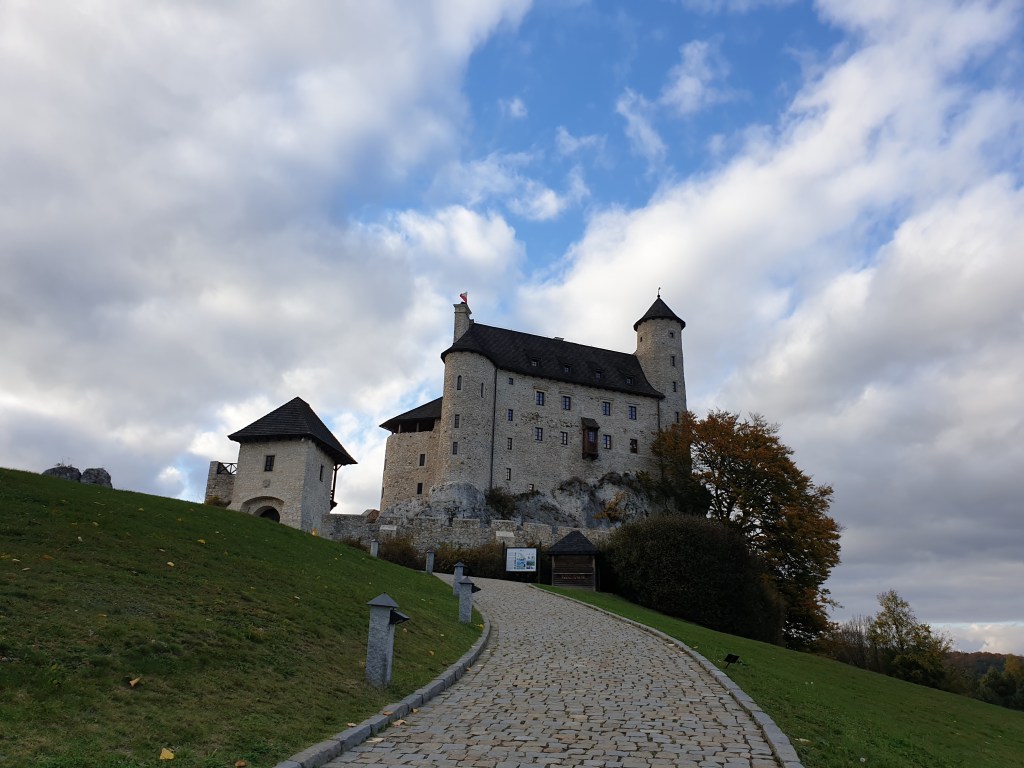
Bobolice castle

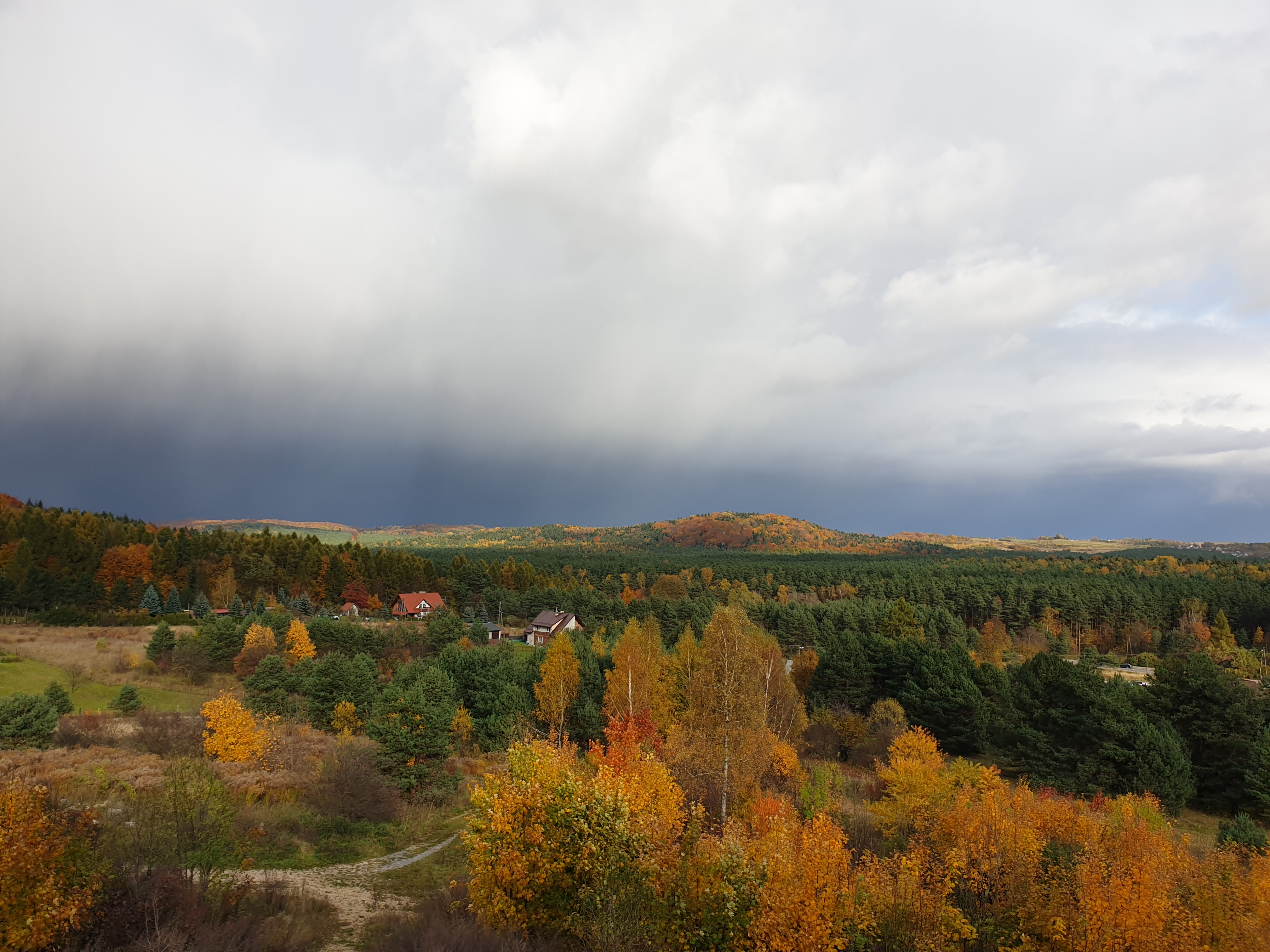
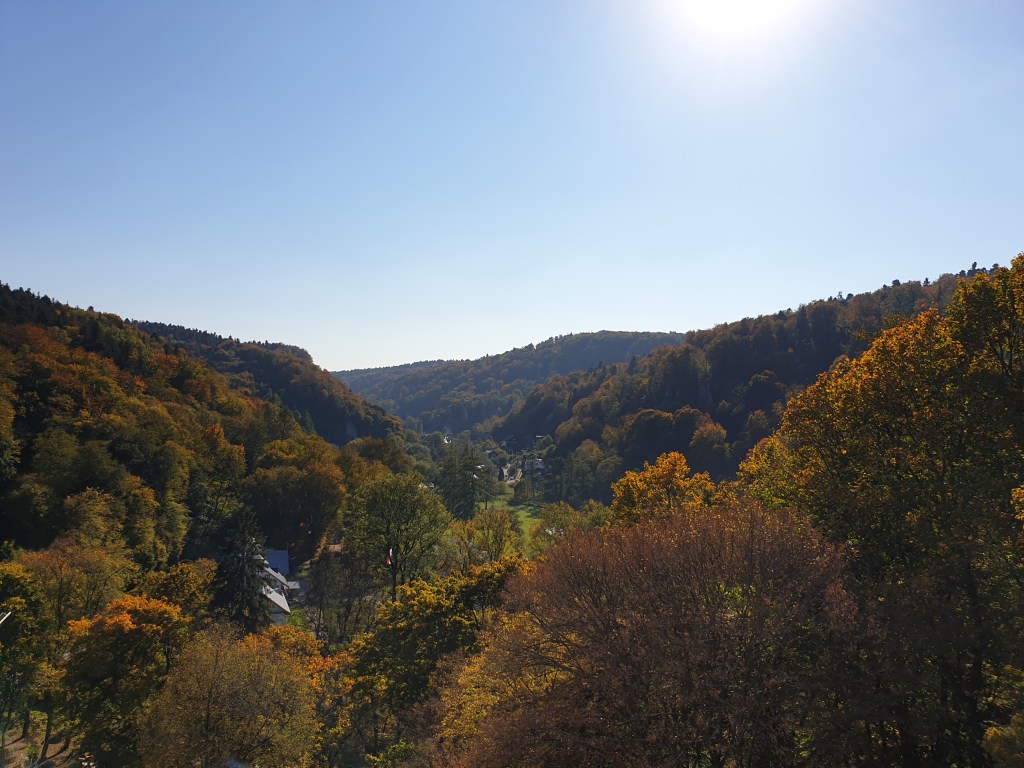
Many of the castles on the Trail of the Eagle’s Nest are open for tourists for small fees. In my opinion, the best time to visit them is in autumn when the trees from the surrounding hills are beautifully colored.

Maybe you wonder why these attractions were called Trail of the Eagle’s Nest? All of them are situated on high limestone cliffs or huge rocks, which suggests a resemblance to the eagle’s nests.

View near the Bobolice castle

Besides castles in the same Jura mountains, you can see many gates created by nature by carving big stones. Examples are the Krakow gate and Twardowski gate.
These attractions combine history and nature. Maybe you’ll also find them interesting to visit someday.

Don’t look up

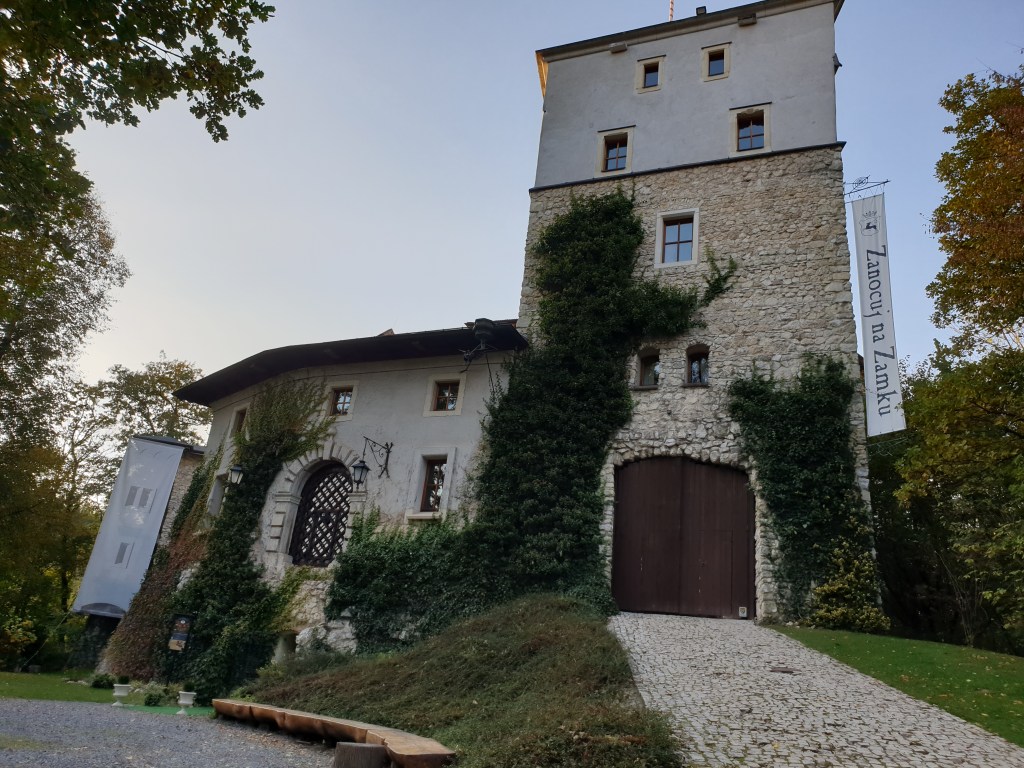
Early in January, during a road trip, I visited the charming medieval city of Torun. Among the attractions of the old city center is the house where the scientist Nicolaus Copernicus was born. The house is a museum dedicated to the memory of the astronomer for many years.

Torun – birth house of Nicolaus Copernicus

While visiting the museum, one thing got my attention. Copernicus published his main work, De revolutionibus orbium coelestium, in 1543, just before his death. The scientist waited for that long because he could not explain all the consequences of his theory. For example, if the Earth revolves around the Sun, why don’t people fall out during this rotation? Scientists did not discover the laws of gravity at that time. Eventually, he published his lifetime research and conclusions and let others continue his work and answer the questions that remained open. His book’s second and third editions appeared in 1566 and 1617. Yet, the fourth edition was published only in 1853, almost 240 years later. That was a long time!

I knew that the inquisition condemned Galileo Galilei for endorsing the theory that the Earth moved around the Sun. He had to recant his theory to avoid the death penalty. But I did not know that the persecution and denial of the Heliocentric idea lasted that long. Galileo, Kepler, and Newton (Philosophiæ Naturalis Principia Mathematica, 1687) clarified things on this matter. By the end of the XVII century, scientists proved that Copernicus was right and that the Earth revolves around the Sun. Yet, the church continued to ignore the logic and the scientific realities for another 150 years.

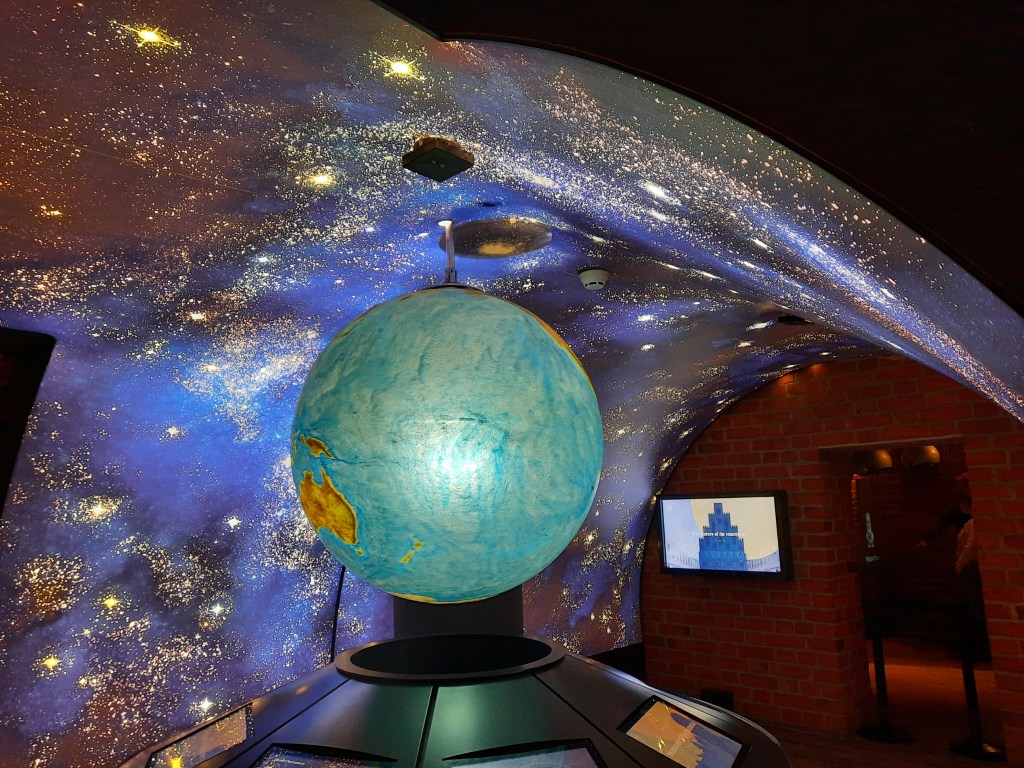
Earth and sky mockup inside the museum

Let’s see what happened during this time.

Copernicus’s theory was attacked by both Protestants and Catholics with theological arguments rather than scientific ones. The rejection happened from the mid-XVI century, immediately after the theory was published. There was not a dispute as Copernicus was already dead, and no one was defending his ideas at the time.

The church leaders in Rome considered that Copernicus was a crazy scientist who wasn’t right. Interestingly, in Poland, at that time, the church was more tolerant than all the other Catholic countries. Quite different than in present days.

Later, Galileo made discoveries aligned with the Heliocentric theory by looking at the sky. A trial followed, and the catholic church placed De revolutionibus on the index of Forbidden Books in 1616. Descartes initially sustained the Heliocentric idea but then changed his mind based on Galileo’s trial.

Two centuries later, after another trial, the church recognized that the Heliocentric theory was correct. Copernicus’s De Revolutionibus and Galileo’s Dialogue were omitted from the edition of the Index of Forbidden Books only from 1835.

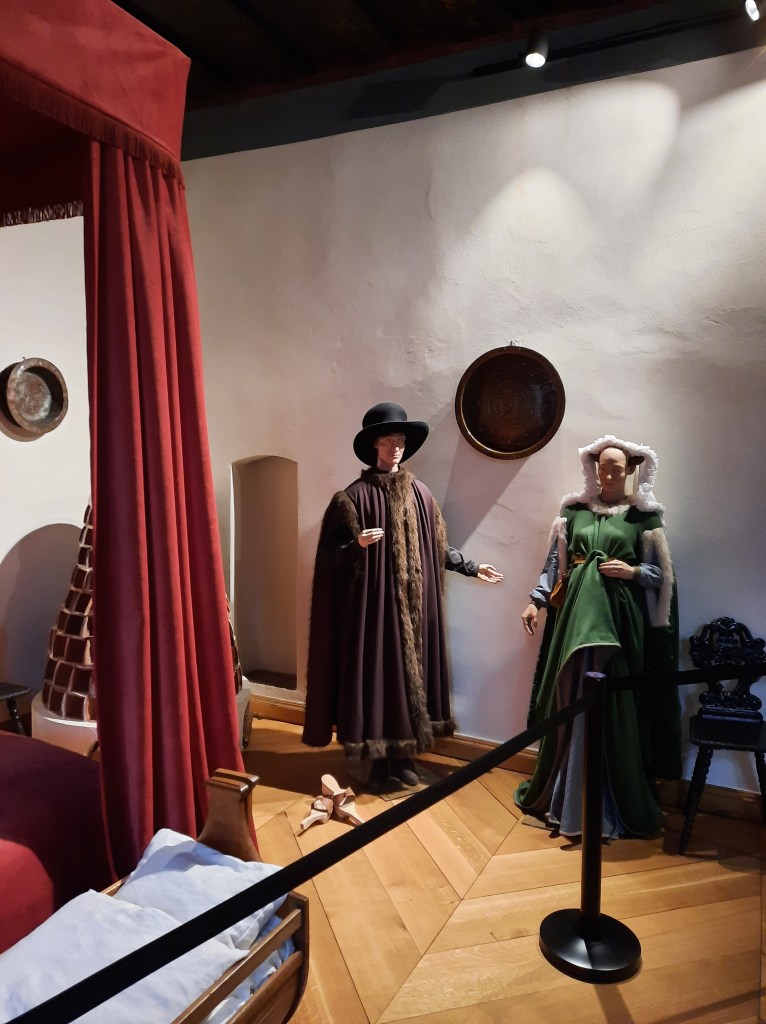
Arnolfini Portrait – created with mannequins inside the museum as a depiction of life in the XV century. One can notice some differences compared to the painting.

The church used its power to silence the astronomers and scientists for a long time. It was better not to look up at the sky if they wanted to live. Or, at least, tell the church what they would like to hear. The church pretended to own the truth, but the wrong part at that time was imposing their truth on everyone.
Copernicus’s theory brought a significant change to the world. People were not ready for it in the XVI century. At that time, the tradition was more important than reason. Humans were more inclined to look in the Bible for truth than nature. It took a very long time to change that.

The statue of Copernicus is in the center of Torun. The text says: “Nicolaus Copernicus Thorunensis, terrae motor, solis caelique stator”(“Nicolaus Copernicus of Thorun, mover of the Earth, stopper of the Sun and heavens”)

Almost 500 years after his death, we still talk of the significant impact Copernicus, a man working by himself, had on the scientific revolution and human history. The most important lesson was not to accept things as they are given but use logic and observation instead. One can say that Copernicus started the renascent of science in Europe.

INFJ explained

As mentioned in a previous post, my Myers-Briggs type is INFJ. The initials come from Introverted, iNtuitive, Feeling, Judging. Everyone agrees that this is the rarest psychological profile in the world (around 1-2% of the population) with women twice more than men. There is also an agreement on the fact that humans with this profile are misunderstood. In this post I will try to explain this misunderstood profile from my point of view.

INFJ people have an intense internal life. That can’t be observed from the outside. They look calm, and therefore people assume they are very cool inside. This difference makes INFJ people sometimes behave in a different way than other people would expect them. It is not that INFJ will surprise you in a bad or in a good way. They will be just different than what you think about them.

Because of their long-term thinking, INFJ can make predictions of how things will look in the future. It is not about guessing lottery numbers but rather making assumptions based on a system current state and the internal forces. Whether we talk about a political, economic, or social system.

INFJ’s most important value in life is love. This is why you can see this feeling mentioned in this blog. Love is something that resonates with such an individual and makes him go further in life. Casual relations are not possible for this type of people.

To give a personal example, more than twenty years ago when I had a problem one friend advised me to learn a poem. As you can imagine, learning a poem would not make any difference. It would not help my situation at all. Yet this was a turning point in my life as that recommendation was in line with my personality. I learned “Ballad of Reading Gaol” by Oscar Wilde. Of course, it was of no help in the short term, and I knew it. But in the long-term, it made a big difference for me.

Banksy – Escaping prisoner in Reading – March 2021. Probably a drawing of Oscar Wilde imprisoned in Reading. He wrote the “Ballad of Reading Gaol”. In my opinion, the symbol is that through literature Oscar Wilde was able to escape prison. Oscar Wilde himself said, “We are all in the gutterbut some of us are looking at the stars”

Let me give another example. Pablo Neruda once said, “If nothing saves us from death, at least love should save us from life”. For an INFJ this sounds like an absolute truth, you just feel like that is powerful. For other humans, it is not. They can replace the word love in the above sentence with whatever motivates them: money, power, glory, etc.

Banksy – Girl with a pierced eardrum, Bristol 2014. A parody of one of my favorite paintings “Girl with a Pearl Earring” by Vermeer

INFJs genuinely care about other people and want to help them. They are glad of the success of other people. Envy is not part of their life.

INFJs avoid corrupt people or people who lie to them, for example. Often this avoidance is seen as a conflict by the other part. It is not a conflict, no hate or negative feelings are involved.

Because of their rich inner life, INFJs don’t drink coffee. In software companies, most people begin their day by drinking coffee. Instead, every morning I start by solving chess puzzles for a few minutes to get my brain up and running.

INFJ people do not talk about their personal life and what problems they might have. They never complain and give everything they have in relationships. They ask for nothing in return.

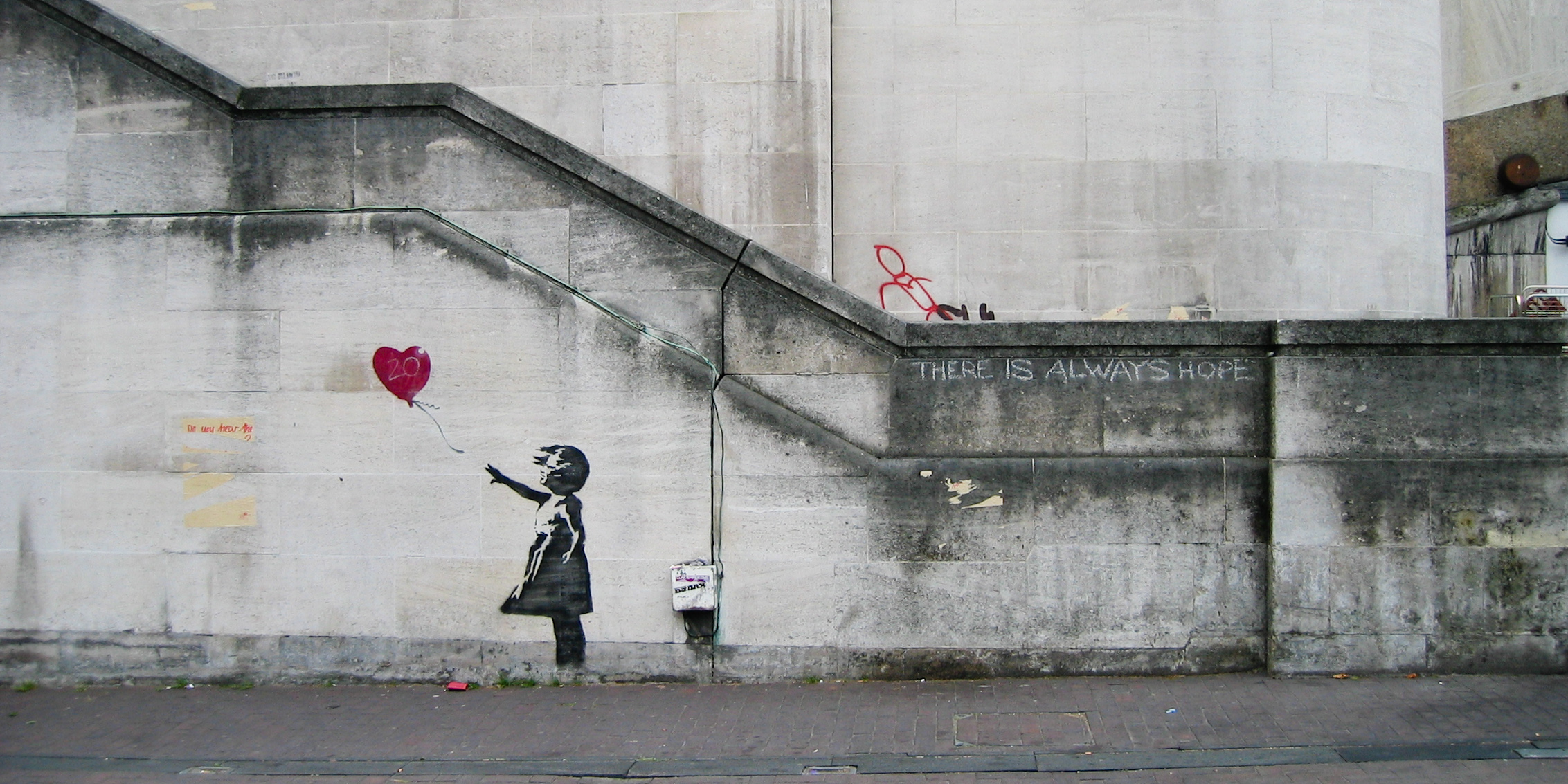
Banksy -Girl with ballon, London 2002. The most famous Banksy artwork

Music is an important component of INFJ life. You can see that most of my posts end with a musical moment. The music videos were not randomly chosen.

Every human being is different. A lot of the things that happen in our life are related to our previous experiences. Everyone is free to live their life as they want. However, some behavioral patterns do exist.

Why did I choose Banksy’s artworks for this post? We do not know who Banksy is, but I feel he is an INFJ. I found out that I am not even original in this opinion. Someone else already said that.

Banksy illustrates very well INFJ behaviors. He does unexpected things, he is misunderstood, he is very discreet about his life, has artworks about feelings, has a sense of humor. He is an idealist who does things and does not just talk about ideas.

Hoping that things are more clear now in case you’ll meet an INFJ somewhere in this world.

Spring in Krakow

Pablo Neruda once said that “you can cut all the flowers but you cannot keep spring from coming”. Today, March 5th, beginning of spring, my intention is not to cut flowers but to write about something nice. One thing that came to my mind was to mention the beautiful and interesting things I see in Krakow when running on the shores of Vistula. The order of images listed here was chosen to make the narrative easier.

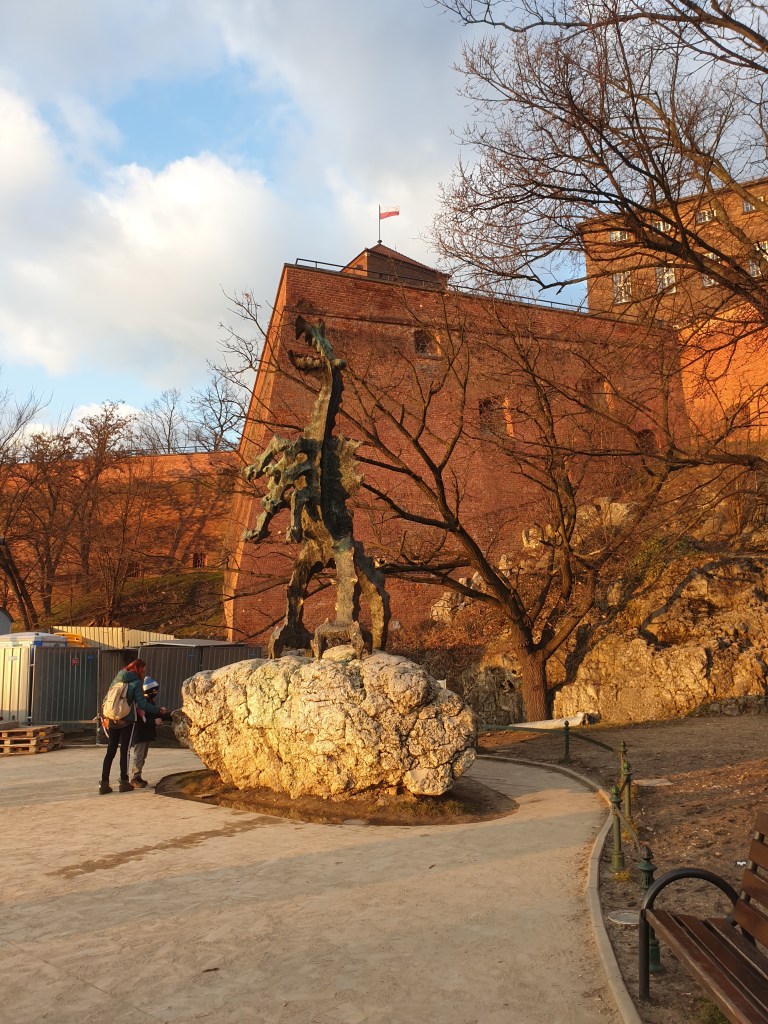
Let’s start with the symbol of the city, the Wawel Dragon. These days many kids take pictures in front of the legendary mighty dragon. To make it look more real, the dragon spits fire every few minutes. A dragon guarding a castle is a fairytale image.

The Wawel Dragon

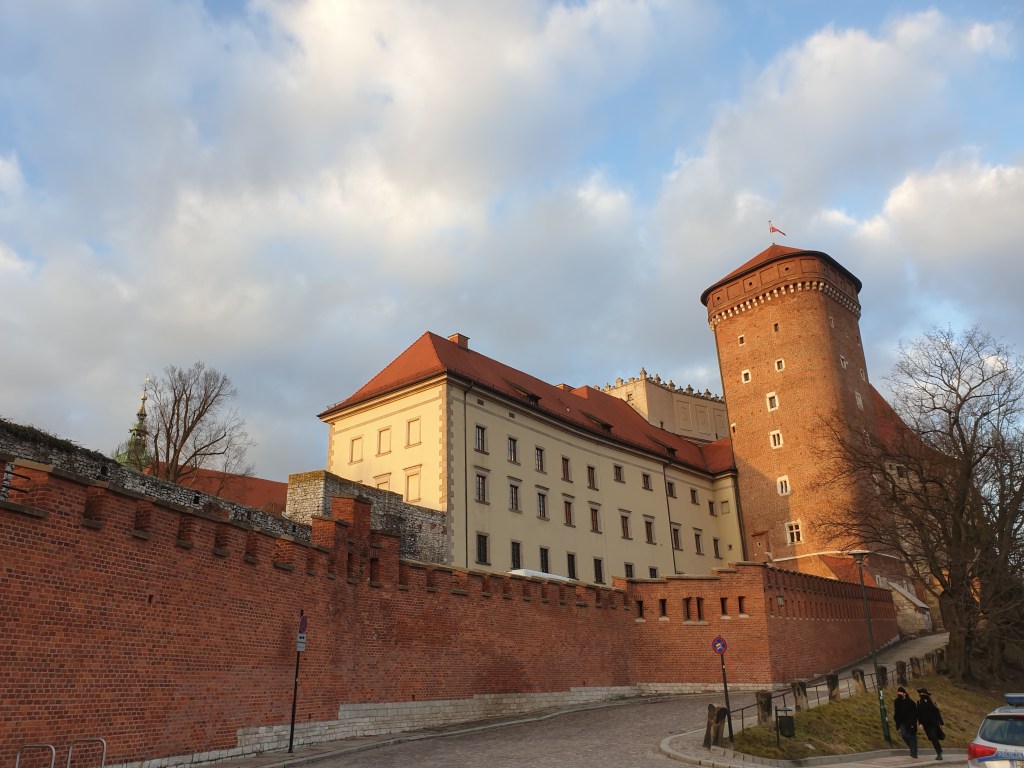
Guarded by the dragon is the famous Wawel Castle. The former residence of Polish Kings before 1596 when the capital moved to Warsaw. The big castle and cathedral form an architectural complex similar to the one in Prague. In fact, Prague is the city with the most similarities compared to Krakow. Probably it is because both cities were for many years under Habsburg Monarchy domination.

A wing of the Wawel Castle

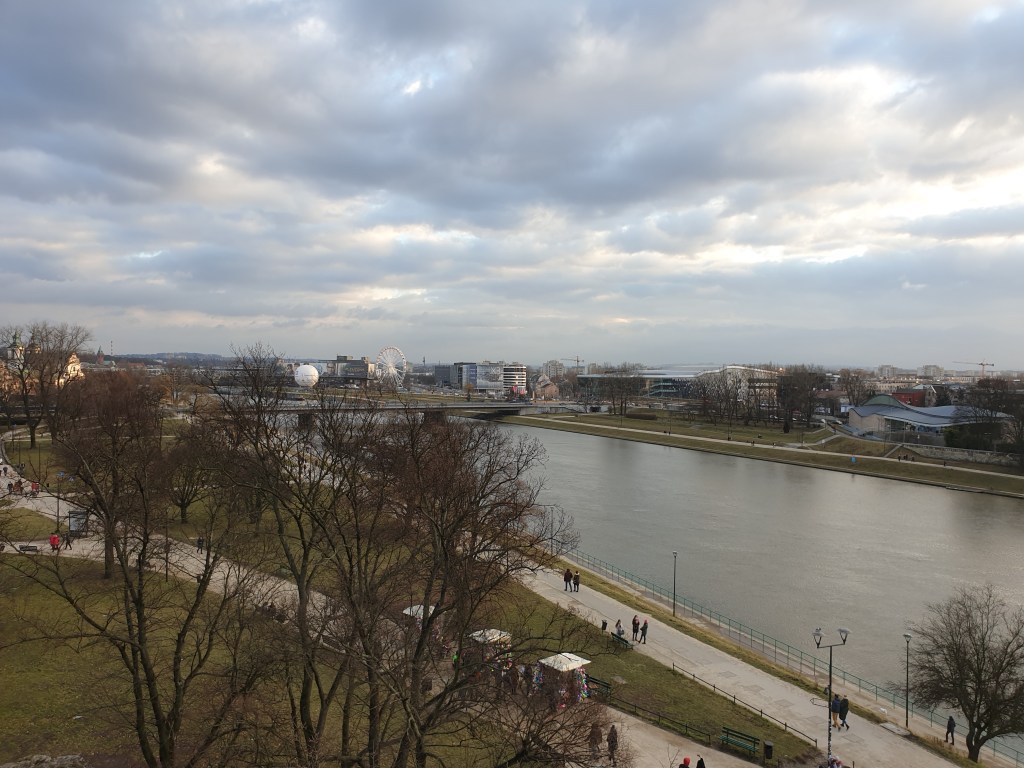
From the castle, the running path follows the Vistula river until the foot of the hill that can be seen far away in this picture. There are a large park and a big forest. It is impressive to see a forest on a hill in a city. The highest peak that can be seen in the picture below is the Kościuszko Mound. That is a human-made mound to honor the memory of Polish national hero Tadeusz Kościuszko. As a fun fact, I remember in school learning at Geography that the highest peak in Australia is Mount Kosciuszko. At the time, I did not understand why. The internet was not available to search for the answer. I had to come to Krakow to find the answer. For the explorer who first climbed that mountain, it looked like the mound with the same name in Krakow.

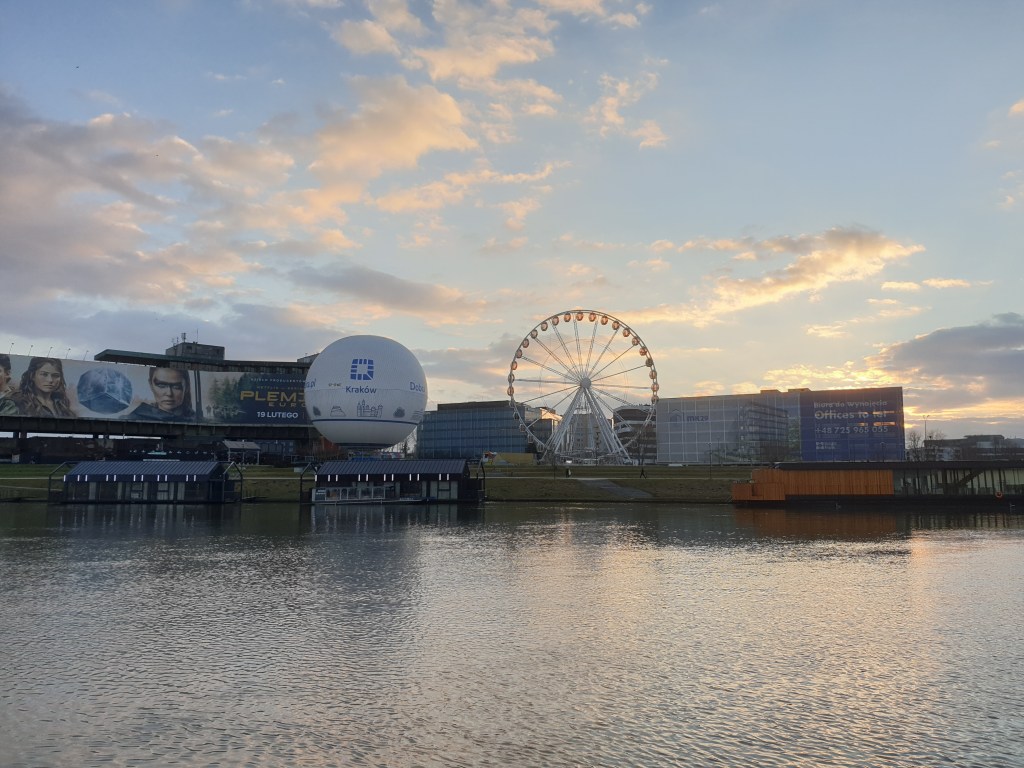
The other way of the running path leads to the Kazimierz neighborhood. Far on the right side, you can see a wheel and a balloon.

The balloon and the Krakow’s Ferris Wheel. Unfortunately, the ballon was not flying when I took the picture. For me flying the ballon is not an option as I am afraid of heights.

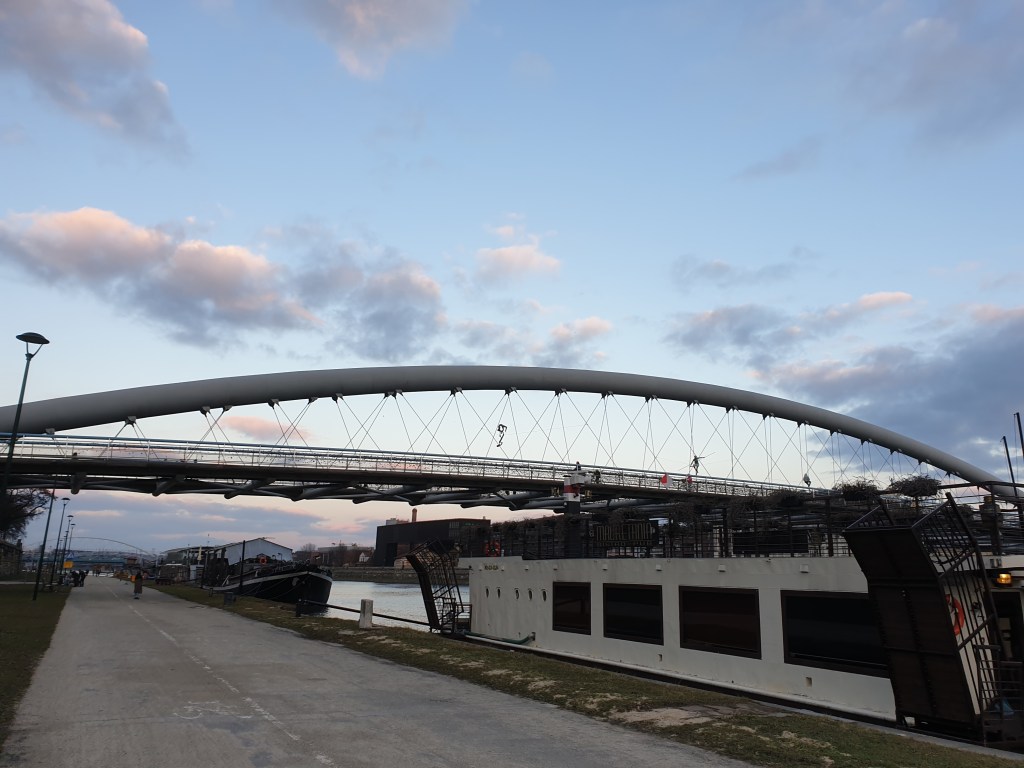
Another nice bridge is Father Bernatek Footbridge adorned with sculptures. This bridge makes the connection with the Jewish neighborhood. Kazimierz is the bohemian part of the city, with a different atmosphere than in the city center. Under the bridge, a few ships were transformed into restaurants. Some ships make cruises on the Vistula river.

Bernatek Footbridge

As mentioned above, Krakow reminds me mostly of Prague. I couldn’t resist adding a picture of this modern art symbol from Krakow similar to the ones from Prague. It is always funny to admire such examples of modern art. A theory is that the pig, set in a position to be lit ablaze, signifies renewal. 

Running in a fairytale environment makes the experience more pleasant. Hoping that you enjoyed the pictures above, I wish you a great year ahead! Despite all the difficulties, life goes on!

Since all the pictures were near a river, I thought it appropriate to end with a song on a river

I had a dream in Washington D.C.

Two years ago, on a trip to East Coast, I visited Washington D.C. The US capital has many museums and plenty of tourist attractions. It is really an interesting city. It was the place in the US in which I learned most things.

Like all the visitors, I took a picture in front of the White House.

At that time, Donald Trump was the US President. The victory sign was my hope that one day this period of hate will end. That day has come. Donald Trump was not voted for a second term. Hence the timing for this post.

I did not resonate with the values promoted by Donald Trump. In my opinion, a country governed by fake news and lies goes in the wrong direction. Lying is a norm in day to day life in a dictatorship, but not in a democracy. I know that because I lived in Romania before 1989.

A day after the picture in front of the White House, still in Washington, I witnessed a scene that impressed me.

In Washington D.C. there are many memorial monuments. Including the famous Lincoln Memorial and Vietnam War Memorial. One of these memorial monuments is Martin Luther King jr. Memorial.

Next to Martin Luther King’s memorial, I saw an old man together with his family, children, and nephews. The old man was in a state of deep emotion. He was trying to convey his feelings to his family. I saw gratitude in that man’s looks towards Martin Luther King’s statue. His family moved on from the memorial. He remained for a while next to the monument. It was then I took the picture below.

The monument, inaugurated in 2011, is inspired by the line  “Out of the mountain of despair, a stone of hope”. From the memorable discourse, “I have a dream”.

“I have a dream” is maybe the most famous speech in US History. Martin Luther King had that speech during the March to Washington in August 1963.

At the time the man in the picture above was grieving next to the monument, Martin Luther King was gone from this world for fifty years. Yet, people are still honoring his memory.

Seneca once said that gratitude ages very fast. We rarely see this feeling expressed in the modern world.

The United States owe to Martin Luther King the fact that they are not a segregated nation. He paid that price with his life.

That scene in Washington D.C. made me think about the fact that for politicians, the test of time is the most important. If people will honor a politician’s memory years after they depart from this world, it means the politician fulfilled his or her mission. For those aiming for a political career, this should be the ultimate goal.

My political dream is for responsible leaders. Leaders who will think beyond themselves, their relatives, and friends in the first place. I hope that the human race will finally move over this form of tribal leadership.

The speech “I have a dream” was not prepared. It was improvised by Martin Luther King when Mahalia Jackson shouted to him “Tell them about the dream”.