Helsinki half-marathon

Helsinki offers three half-marathons over the summer, but the most interesting is the one during City Running Day. The main attraction of this half-marathon is finishing inside the stadium that hosted the 1952 Summer Olympic Games. There are not many races in the world inside an Olympic stadium. Another attraction is that most of the route is on the seaside of Helsinki, in nature, around lakes, and inside forests. It is not a typical city marathon.

Sightseeing from Helsinki route

The event was very well organized and had many positive aspects. Many volunteers were on the route, ensuring things were okay—this was a record number of volunteers for a race. They served water and isotonic every 4-5 km. People started in waves every 10 minutes, so it was not crowded at the start, and you could run faster if you wanted to and were able to.

During the race

I would have preferred that they don’t have hills. Also, about 5 km of the total distance is not on asphalt but on gravel. You will definitely end up with pebbles inside your shoes. These are not good conditions for me, but they might be suitable for other runners. For people who like to run in the mountains, this is much better than running only on asphalt.

The race day was perfect, with temperatures of about 13 degrees Celsius. The only problem was the wind. The Marathon started at 9:30 AM, and the half-marathon was held in the afternoon from 2:20 PM, similar to in Gothenburg.

On the Olympic Stadium

My race went according to plan for the first 3 km until I stopped to drink isotonic water. The hills came, and I went from a race mindset to a mood of enjoying nature and the moment and not focusing on the time to finish the race. I stopped and drank isotonic water at each post. Running on pebbles was also not fun.

Upon entering the stadium, I removed my cap as a sign of respect for the history of this temple of athletics. The finish was lovely, with many spectators encouraging the runners in the Olympic stadium. The organizers made the most of this attraction by charging a 50 euro entry fee for the Half-marathon and a 60 euro price for the pictures.

Prize giving for marathon runners

My friend Bogdan had an interesting number at the start. Compared with me, he is better trained and was able to focus on the race and finish in 1:47. If it wasn’t for the climbing and descending, he would have achieved a personal best at this race.

With Bogdan before the start

My main reason for choosing this race was the finish at the Olympic stadium. It was in this place, at the 1952 Olympic Games, that Emil Zatopek won gold at 5000m, 10000m and Marathon. No other athlete ever done that and very likely no one else will ever be able to achieve the triple win at an Olympics Game. I consider Zatopek the most remarkable human in athletics, not only for his results but also for the courage to always do what is right. In Czechia, they recently made a movie about his sports career.

Footage from the 1952 Olympic Marathon

San Francisco

I spent the first weekend of June in San Francisco before returning to Krakow. SF is a city I first visited in 2011 and then on several other occasions, the last time six years ago. I’ve always found San Francisco beautiful. The curiosity to see how the city evolved brought me here again.


Before the pandemic, San Francisco was so crowded that you could hardly find restaurants to go to during weekends. Today things have changed. Many companies moved their businesses elsewhere because of the city’s high crime rate. However, things are better than they seem. When I came to the town from the airport, I saw many homeless people on the streets. On some roads, there were many tents on the sidewalks. In those neighborhoods, the situation is worse than it used to be. But in the central areas, the city is cleaner, and there are fewer homeless people than in the pre-pandemic times. That makes the visitor experience better as you don’t risk much.


Although I have visited the city a few times already, there are many tourist attractions, and I chose to see places I have yet to see. This time I went to Botanical Garden and Ashbury-Haight neighborhood.


The botanical garden is enormous. San Francisco weather allows having here plants and trees from all over the world. There are sections of the park dedicated to many geographical regions. Plants I had not seen before from Australia and New Zealand and a vast part devoted to Asian, African, and South American continents. I am not a specialist in Botanics, but I enjoy seeing plants from places I have not been before and may never go to. Flowers in strange shapes and a wide range of colors, some scented, others not.


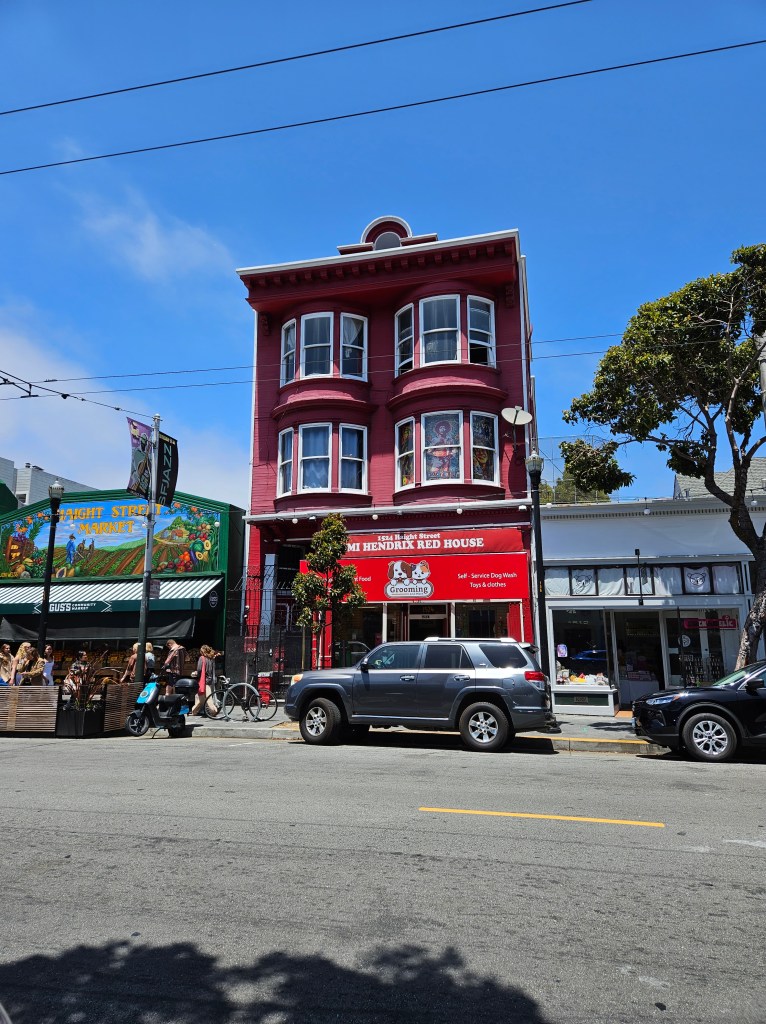
The other highlight of the visit was the Ashbury Haight neighborhood. The place is famous as the place where the 1967 “Summer of Love” social phenomenon occurred. At that time, young people moved here attracted by the low rent. It is funny how things have changed in terms of rent prices. The area still has a hippie and psychedelic appearance after all these years. Walking down the Haight streets, one could see Jimmy Hendrix’s house or some other places reminding of the history of that area. Pictures explain better and can trigger memories or things you associate with “Summer of Love”. People still remember that movement even more than 55 years later. You can still wear some flowers in your hair.


Of course, I’ve again seen the main attractions of San Francisco: the Golden Gate Bridge, Pier 39, the Coit Tower, Union Square, and Market Street.
If you are careful where you stay in San Francisco, I recommend visiting the city. It has charm, beautiful hills, lovely views, and a fantastic bridge.

The best view of Golden Gate is from Battery Ridge. Not on misty days.

Seattle

At the end of May, I spent a week in Seattle. I could not help to compare the city with my first impressions from 6 or 7 years ago when I visited it for the first time. At that time, I liked the city very much because it was like San Francisco but more relaxed and safer. The town was growing, and many new skyscrapers were in development. Also, Amazon was increasing its presence by building more offices in the city. It was a busy place but chilled also. One thing that helped is that although people complained about the weather in Seattle, I had great weather both then and now.

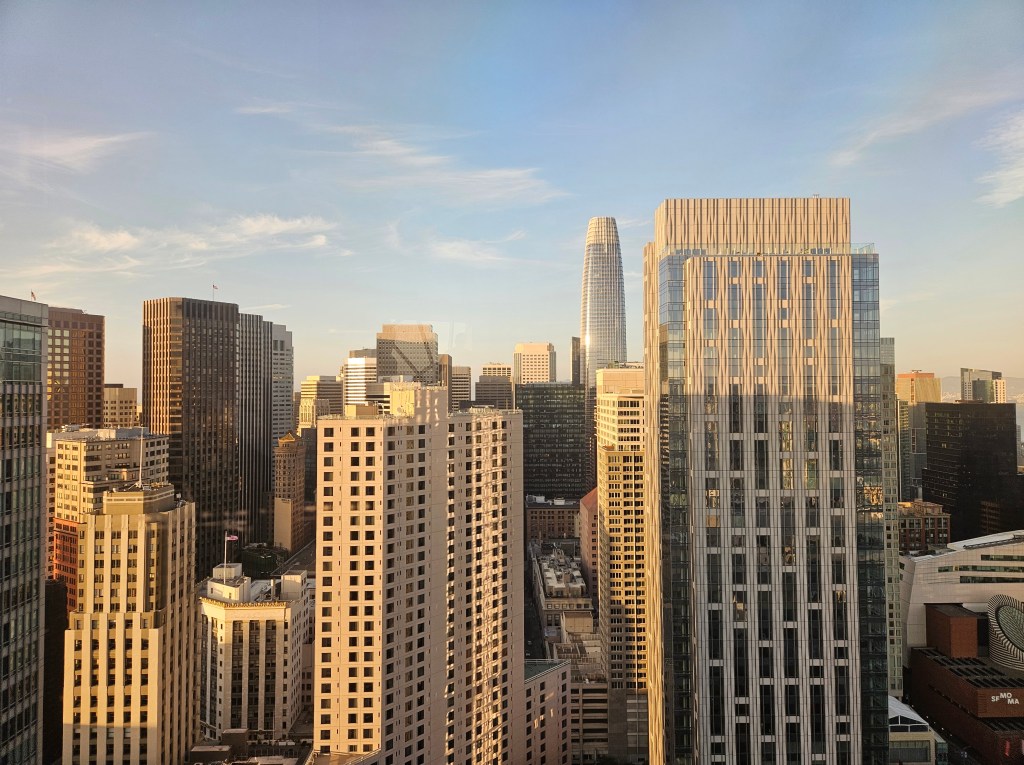
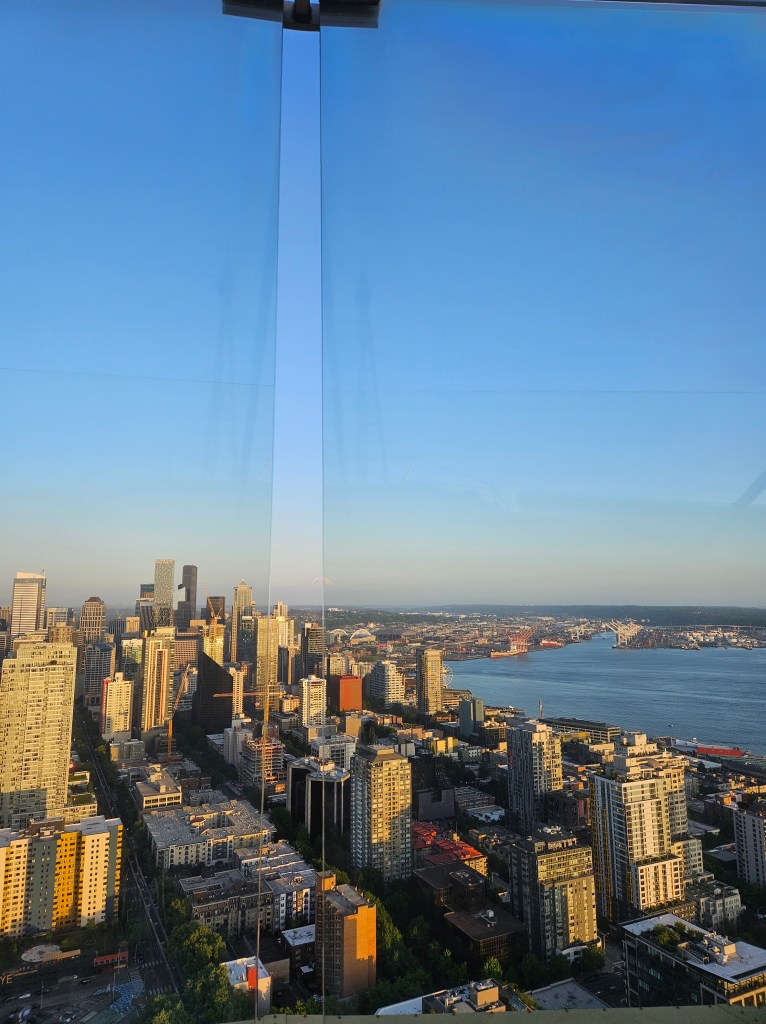
View from Space Needle

Nowadays, many companies choose to keep remote work for their employees. That makes Seattle look like a deserted city. Prices for houses outside of the town grew. Instead of busy people on the streets, you see more homeless people. This change could give people a sense of insecurity. That might change again if more companies ask employees to work from the office.
If you want to see Seattle, you can wander downtown and visit Space Needle for beautiful views. You can also take a ferry to Bainbridge Island for lovely views from Elliott Bay. Regarding attractions, you can take the boat to Washington Lake or hike the mountains close to the city. Next time I will do that.

Interesting looking skyscraper

What is impressive about Seattle is that it all started 170 years ago when the first colonists settled in. The main business in the area was often changed throughout the years. It began with exporting wood cut from the forests, then mining coal or building ships during the gold rush. In 1897 even the mayor of Seattle quit his job and went on for the gold rush instead.
During the First World War, planes and ships were built here. Later the Boeing company drove innovation in the city. Then Microsoft became a vital software company worldwide, and recently Amazon changed the experience of delivering products to customers everywhere in the world. All major software companies have offices here.

There is one explanation for that. Seattle has the highest percentage of college and university graduates of any major U.S. city. This might be the secret to the city’s success. But let’s take a look back at history. Seattle’s first colonists came here in 1851, and the University of Washington was founded in 1861, only ten years later.

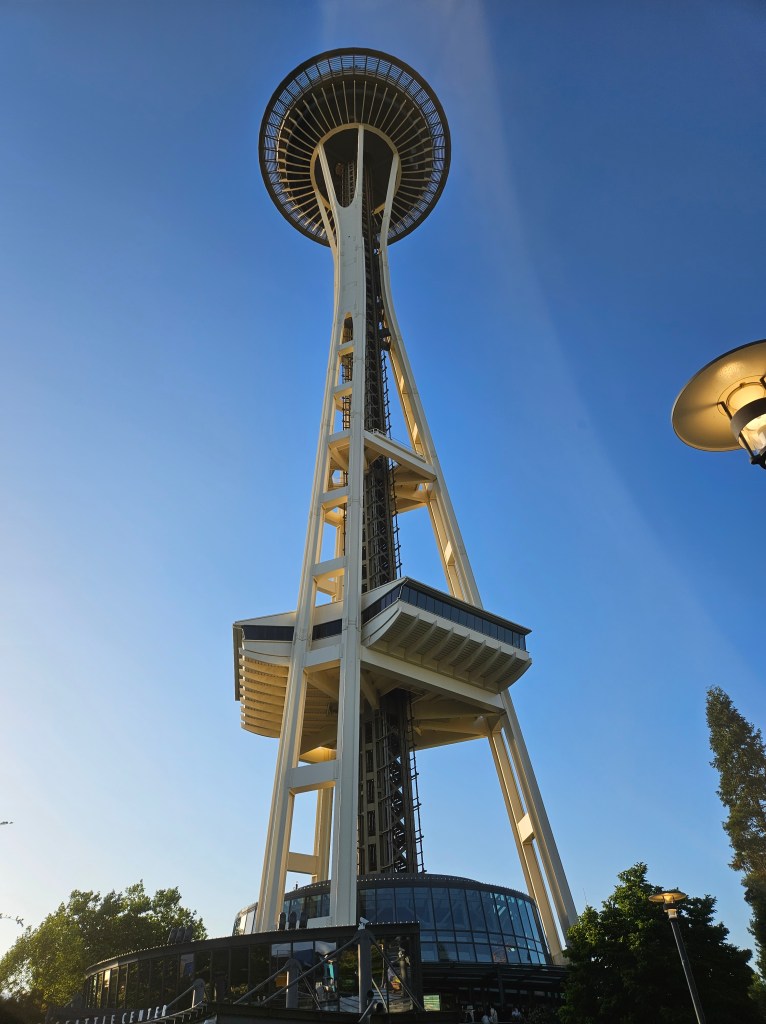
Space needle has been a symbol of Seattle since 1962

The adaptability to change in this city is a lesson for survival for everyone. One could also understand the importance of education in developing a community.

PS. While talking about change, an AI may write my next blog posts. Or has it already started?

Trail of the Eagle’s Nests

This post will cover some spectacular tourist attractions close to Krakow. This is also a page of Poland’s history that resembles, in certain ways, what happens during the last months in Ukraine. The castles on the Trail of the Eagle’s Nests are located in the Polish Jura mountains, North of Krakow, and they can be reached by car in one or two hours of driving. The Polish Jura are old mountains with maximum heights under 500m, similar to the Dobrogea Mountains in Romania. The hills are not high, but the views are beautiful.

map of the castles on the trail of eagle’s nests. The ones colored red no longer exist, and the black ones can be visited. Some are renovated while others are not.

In the XIV century, the Polish King Casimir the Great (1333-1370) built about 25 castles in these mountains between Krakow, his capital, and Czestochowa. These castles attract many tourists for the spectacular sightseeing in the present days. The area was the border between Poland and Silesia, a province of the Bohemian kingdom.

Rabsztyn Castle
View from Rabsztyn Castle
Another view from Rabsztyn Castle

Casimir the Great did more than build castles. In 1367 he founded the University of Krakow. This University is vital for the city even in the present day. Krakow owes its current growth mainly to the University. The increasing IT sector is a good example. An investment in education pays a lot in the long term.

Garden of the Scala castle

Let’s return to our topic. There is a good site with helpful information regarding castles in Poland. You can learn about the history of every building, and you can also see that many are entirely destroyed. This is because of an event that deeply impacted Polish history.

Ogrodzienec castle

The 30 Years War finished in 1648. At the end of that war, Sweden remained with a powerful army and not enough money to pay its soldiers. As often happened in history, countries with mighty armies looked for opportunities to attack their neighbors. In 1655 Sweden decided to attack Poland, which was not affected after the 30 Years’ War. Poland offered plenty of things to loot for the invaders. The Swedish troops occupied almost the entire country as Poland had problems preparing its army to defend it.

View of Ojcow park from Ojcow castle

The turning point of the events was the unexpected resistance of the Jasna Gora monastery. This monastery was and still is the most important religious site in Poland. In 1655 Polish people became highly emotional hearing about the fights for the sanctuary, and they gathered an army to start fighting the Swedes. The unsuccessful siege of the fortified monastery was lifted after more than one month. The Swedish forces eventually retreated with all the goods they could carry. One-third of the civil population of Poland died in that war.

Jasna Gora monastery

These events remained in history as “The Deluge”. Henry Sienkiewicz wrote a novel on this topic. A well-known movie, “Potop”, was made based on the book in 1974.

Tenczyn Castle
View next to the Tenczyin castle

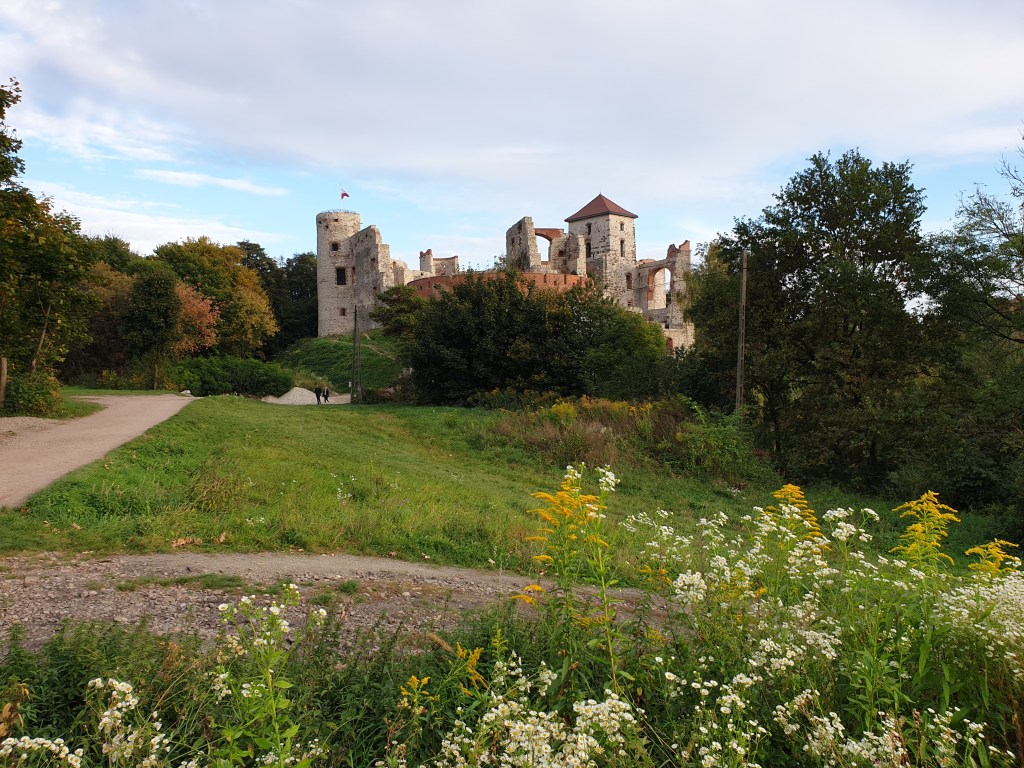
The Swedish army destroyed all the castles part of the Trial of the Eagle’s Nest during the deluge. They tried to steal everything they found. The ruins remained in some cases since those events until recently. Because unfortunately, for every war, the impact and destructions last for generations after it ends.

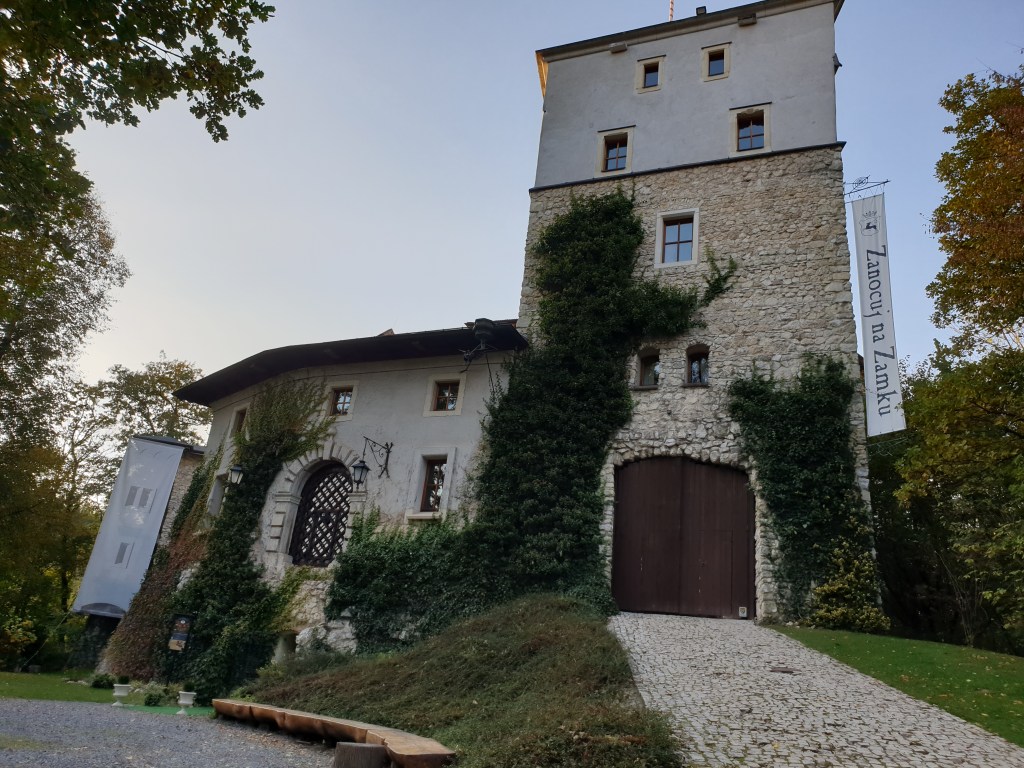
Korzkiew castle

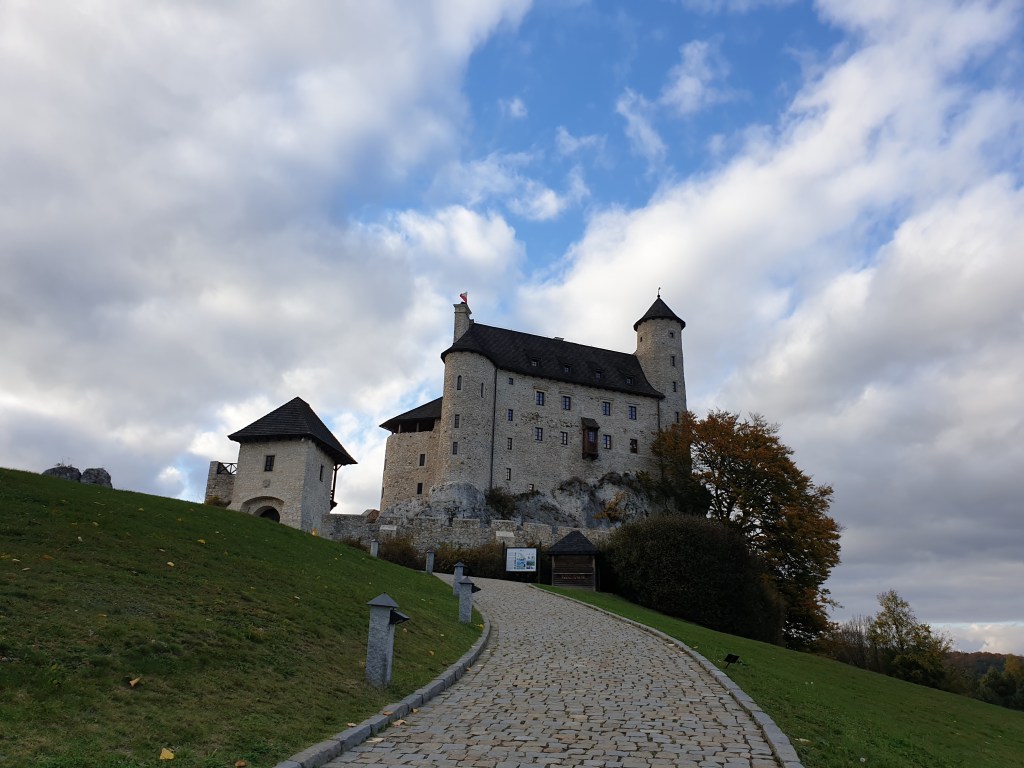
Last decade, as Poland joined the European Union, they got funds from the union or other countries. They were able to renovate or rebuild some of these castles.

Bobolice castle

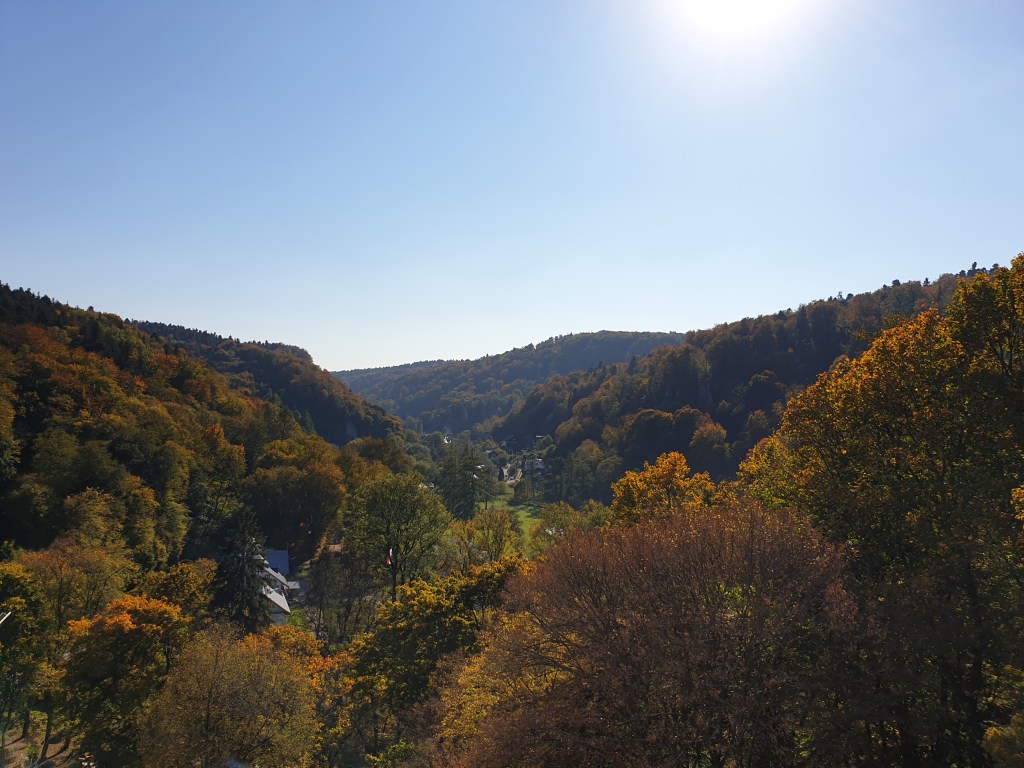
Many of the castles on the Trail of the Eagle’s Nest are open for tourists for small fees. In my opinion, the best time to visit them is in autumn when the trees from the surrounding hills are beautifully colored.

Maybe you wonder why these attractions were called Trail of the Eagle’s Nest? All of them are situated on high limestone cliffs or huge rocks, which suggests a resemblance to the eagle’s nests.

View near the Bobolice castle

Besides castles in the same Jura mountains, you can see many gates created by nature by carving big stones. Examples are the Krakow gate and Twardowski gate.
These attractions combine history and nature. Maybe you’ll also find them interesting to visit someday.

Don’t look up

Early in January, during a road trip, I visited the charming medieval city of Torun. Among the attractions of the old city center is the house where the scientist Nicolaus Copernicus was born. The house is a museum dedicated to the memory of the astronomer for many years.

Torun – birth house of Nicolaus Copernicus

While visiting the museum, one thing got my attention. Copernicus published his main work, De revolutionibus orbium coelestium, in 1543, just before his death. The scientist waited for that long because he could not explain all the consequences of his theory. For example, if the Earth revolves around the Sun, why don’t people fall out during this rotation? Scientists did not discover the laws of gravity at that time. Eventually, he published his lifetime research and conclusions and let others continue his work and answer the questions that remained open. His book’s second and third editions appeared in 1566 and 1617. Yet, the fourth edition was published only in 1853, almost 240 years later. That was a long time!

I knew that the inquisition condemned Galileo Galilei for endorsing the theory that the Earth moved around the Sun. He had to recant his theory to avoid the death penalty. But I did not know that the persecution and denial of the Heliocentric idea lasted that long. Galileo, Kepler, and Newton (Philosophiæ Naturalis Principia Mathematica, 1687) clarified things on this matter. By the end of the XVII century, scientists proved that Copernicus was right and that the Earth revolves around the Sun. Yet, the church continued to ignore the logic and the scientific realities for another 150 years.

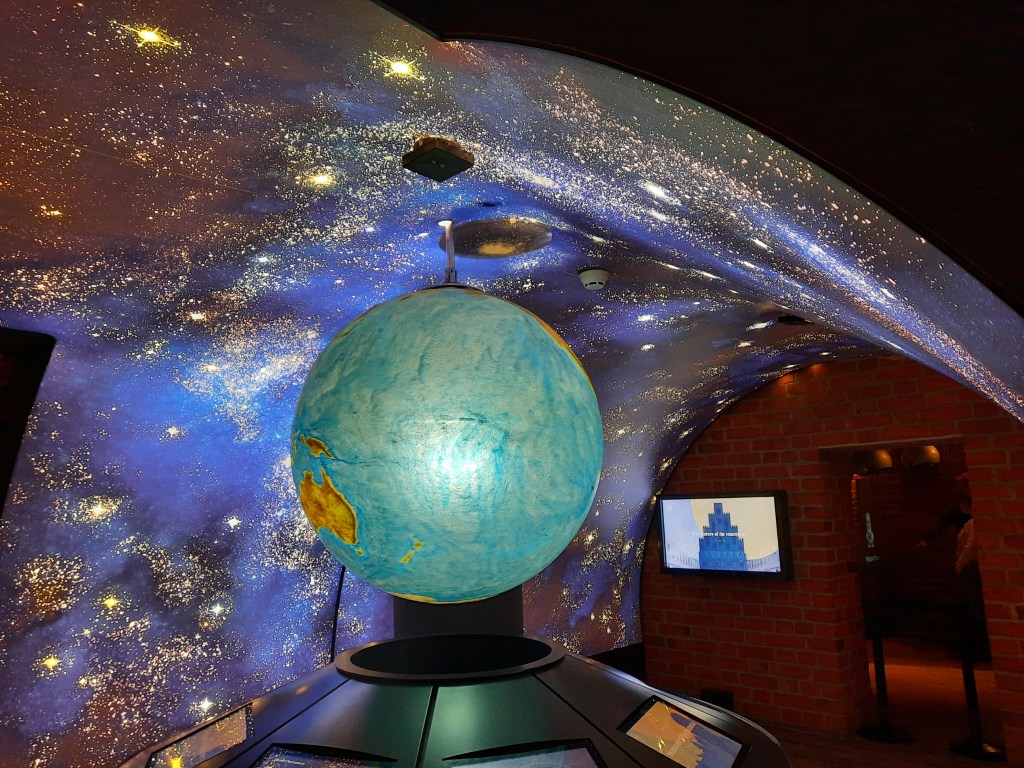
Earth and sky mockup inside the museum

Let’s see what happened during this time.

Copernicus’s theory was attacked by both Protestants and Catholics with theological arguments rather than scientific ones. The rejection happened from the mid-XVI century, immediately after the theory was published. There was not a dispute as Copernicus was already dead, and no one was defending his ideas at the time.

The church leaders in Rome considered that Copernicus was a crazy scientist who wasn’t right. Interestingly, in Poland, at that time, the church was more tolerant than all the other Catholic countries. Quite different than in present days.

Later, Galileo made discoveries aligned with the Heliocentric theory by looking at the sky. A trial followed, and the catholic church placed De revolutionibus on the index of Forbidden Books in 1616. Descartes initially sustained the Heliocentric idea but then changed his mind based on Galileo’s trial.

Two centuries later, after another trial, the church recognized that the Heliocentric theory was correct. Copernicus’s De Revolutionibus and Galileo’s Dialogue were omitted from the edition of the Index of Forbidden Books only from 1835.

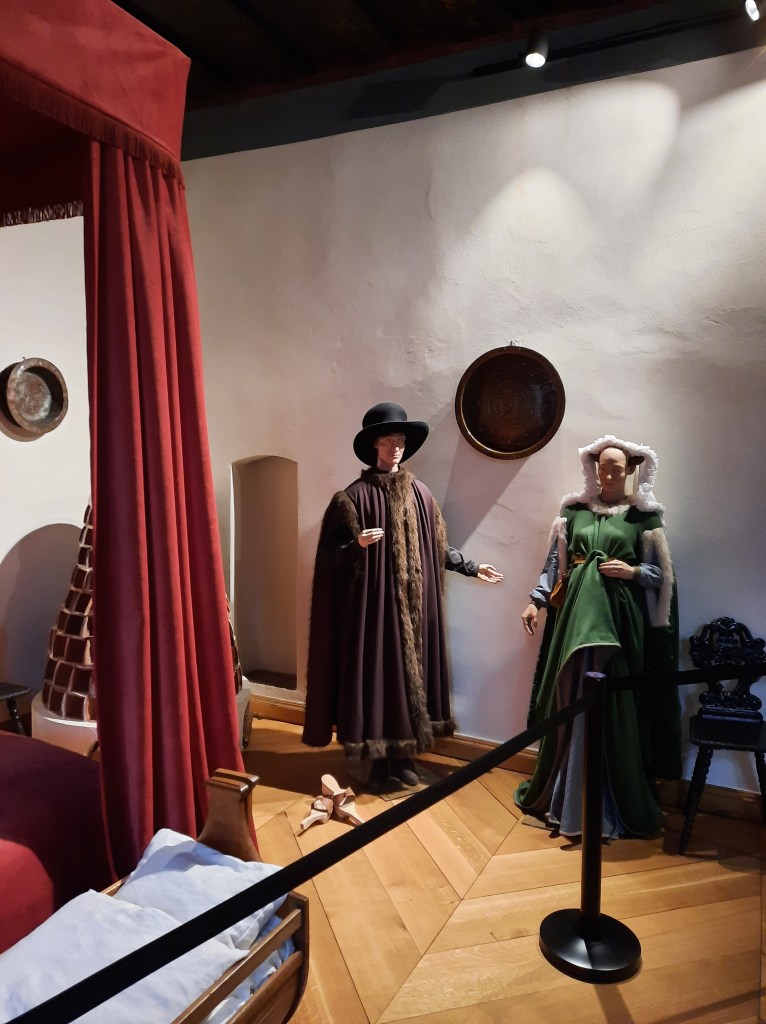
Arnolfini Portrait – created with mannequins inside the museum as a depiction of life in the XV century. One can notice some differences compared to the painting.

The church used its power to silence the astronomers and scientists for a long time. It was better not to look up at the sky if they wanted to live. Or, at least, tell the church what they would like to hear. The church pretended to own the truth, but the wrong part at that time was imposing their truth on everyone.
Copernicus’s theory brought a significant change to the world. People were not ready for it in the XVI century. At that time, the tradition was more important than reason. Humans were more inclined to look in the Bible for truth than nature. It took a very long time to change that.

The statue of Copernicus is in the center of Torun. The text says: “Nicolaus Copernicus Thorunensis, terrae motor, solis caelique stator”(“Nicolaus Copernicus of Thorun, mover of the Earth, stopper of the Sun and heavens”)

Almost 500 years after his death, we still talk of the significant impact Copernicus, a man working by himself, had on the scientific revolution and human history. The most important lesson was not to accept things as they are given but use logic and observation instead. One can say that Copernicus started the renascent of science in Europe.

Auschwitz

In August, before going to Bucharest, I went to visit Auschwitz. The former extermination camp is located around 70 kilometers west of Krakow. From Krakow, you have many options to visit Auschwitz. You can go by train, bus or car.

Although I have read many things about this extermination camp, it’s entirely different from being there. It is one thing to get info about the life in the death factory and a different experience to be in a chamber where hundreds of thousands of people were killed.

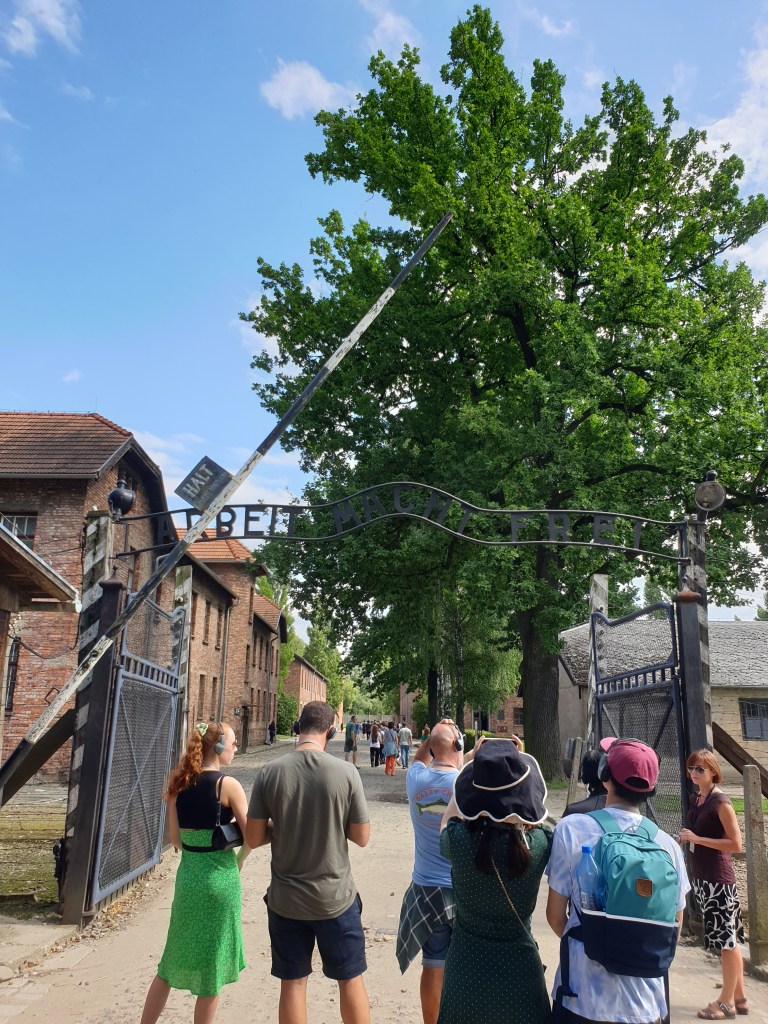
Entry to Auschwitz extermination camp. In front of the well-known iron gate with the message “Arbeit Macht Frei.”

The Auschwitz camp was first used as a labor camp and then, from 1942 to 1945, was an extermination camp. In January 1942, the Nazis decided to kill all the Jews from the German-occupied territories. Therefore they start moving more than one million Jews from Ghettoes to the exterminations camps by trains. Those who were not able to work were sent directly to the gas chamber. That included old people and children. It is estimated that more than 1.1 million people were killed in this camp. During the war from the six extermination camps, this was the camp with the most victims.

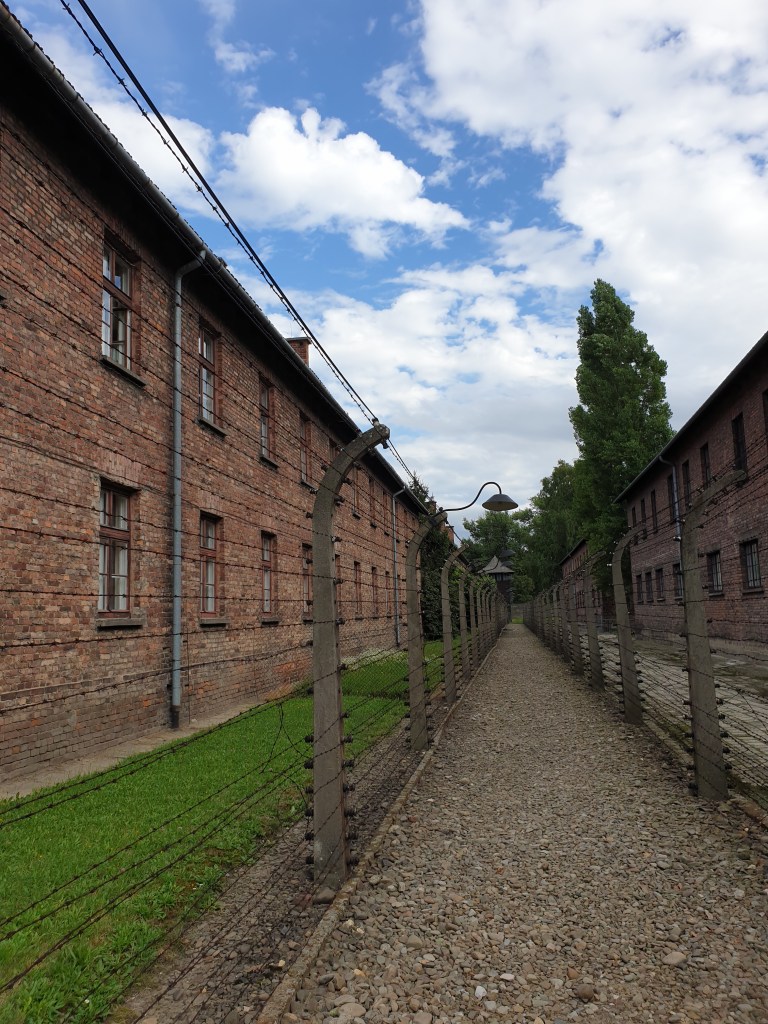
An electrified barbed-wire fence separates areas in the extermination camp.

The Nazis tried hard to hide the atrocities they did everywhere and the massacres against innocent people. Their actions to conceal facts failed. For example, in Auschwitz, they blew up the gas chambers before leaving the camp in January 1945. The Auschwitz museum was open soon after the war in 1947. Since 2016, more than 2 million people have visited the Auschwitz museum in the concentration camp each year. Having many visitors is a good sign that we learn from history not to repeat the same horrors.

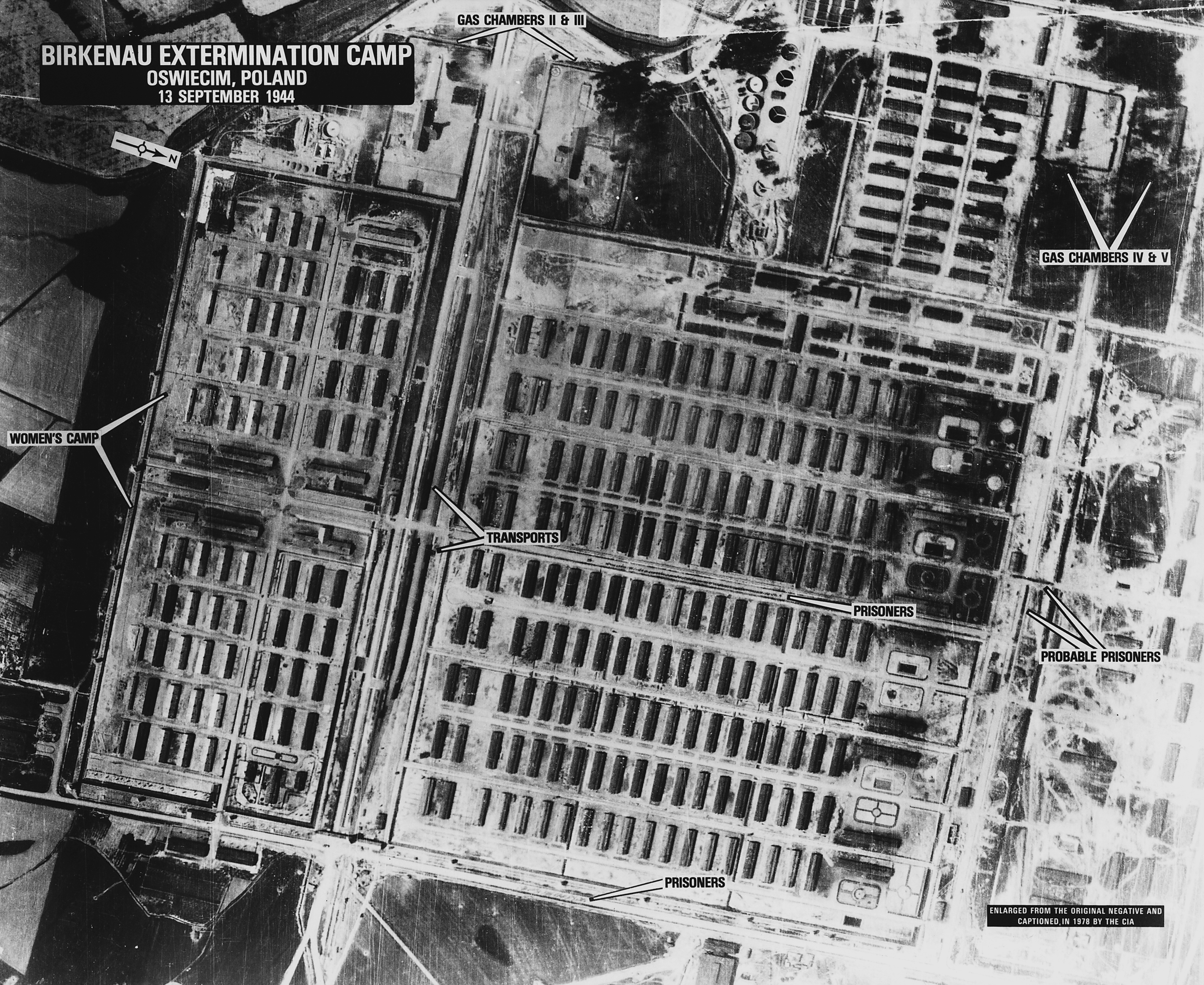
Gas chamber II was blown up by Nazis before departing the camp. There were four gas chambers in Birkenau and one in Auschwitz. The gas chamber in Auschwitz is the only one that tourists can visit.
Aerial view of Auschwitz II Birkenau extermination camp from 1944. Gas chamber II marked on this image was shown in the previous picture.

That day in August, I heard about many atrocities and impressive stories told by our guide. I won’t mention those things here as this is not the purpose of this post.

In one of the buildings, there were two long opposite walls with pictures of former inmates. On one wall, there were pictures of men while on the other of women. Under each image was written the date when they entered the concentration camp and the day they died. They were all prisoners selected for work. They had better physical condition when they arrived. The guide told us that, on average, men resisted more prolonged than women. That was not because of physical strength but because of mental differences. During that time, women were expected to marry, have children and grow them. For many being there meant the end of life, that they were prepared to live. In many cases, the death happened within weeks after the arrival in the camp. It was not dying because of hunger or physical extermination but because of giving up hope.
Auschwitz-Birkenau: a memorial plaque written in Romanian

I wanted to understand more of what was causing that. I read Viktor Frankl’s book “Man’s Searching for Meaning”. Viktor Frankl was an Austrian psychiatrist imprisoned in Auschwitz and wrote about this experience.

He said that those who had a purpose in the life lived longer. His advice for humans was not to ask “what life offered me?” but rather “what can I do for this life?”. The answer would help us find meaning in life.

Another idea from the book is that the things that happen to us are not under our control. What matters is how we respond to the things that happen to us. Seneca said this in a format of heroism: “The bravest sight in the world is to see a great man struggling against adversity.”

There was one more insight. Viktor Frankl quoted Goethe, who said: “If we treat people as they are, we make them worse. If we treat people as they ought to be, we help them become what they are capable of becoming.” I have resonated for a long time with this statement.

On my departure from Auschwitz, I looked back over the camp and saw the light coming down through the clouds over Birkenau. That light was over the place on earth where some human beings killed so many innocent humans. The ashes of so many people rose to the sky there, and human beings suffered a lot. We should not forget this.

Birkenau – a place that we should never forget

Spring in Krakow

Pablo Neruda once said that “you can cut all the flowers but you cannot keep spring from coming”. Today, March 5th, beginning of spring, my intention is not to cut flowers but to write about something nice. One thing that came to my mind was to mention the beautiful and interesting things I see in Krakow when running on the shores of Vistula. The order of images listed here was chosen to make the narrative easier.

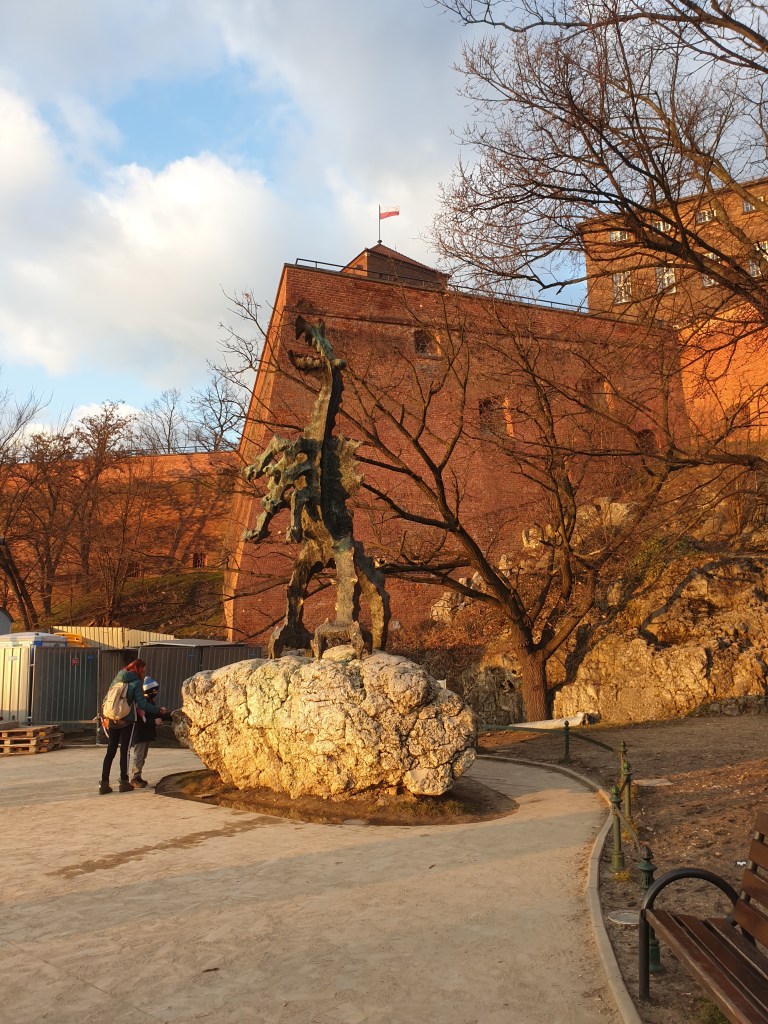
Let’s start with the symbol of the city, the Wawel Dragon. These days many kids take pictures in front of the legendary mighty dragon. To make it look more real, the dragon spits fire every few minutes. A dragon guarding a castle is a fairytale image.

The Wawel Dragon

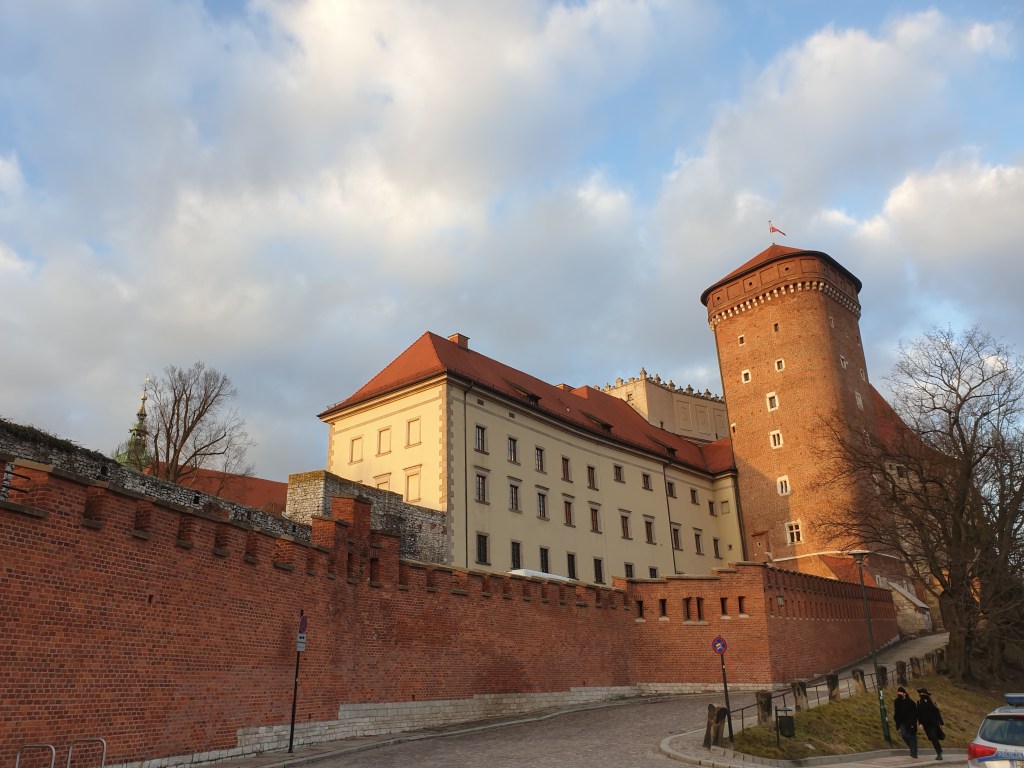
Guarded by the dragon is the famous Wawel Castle. The former residence of Polish Kings before 1596 when the capital moved to Warsaw. The big castle and cathedral form an architectural complex similar to the one in Prague. In fact, Prague is the city with the most similarities compared to Krakow. Probably it is because both cities were for many years under Habsburg Monarchy domination.

A wing of the Wawel Castle

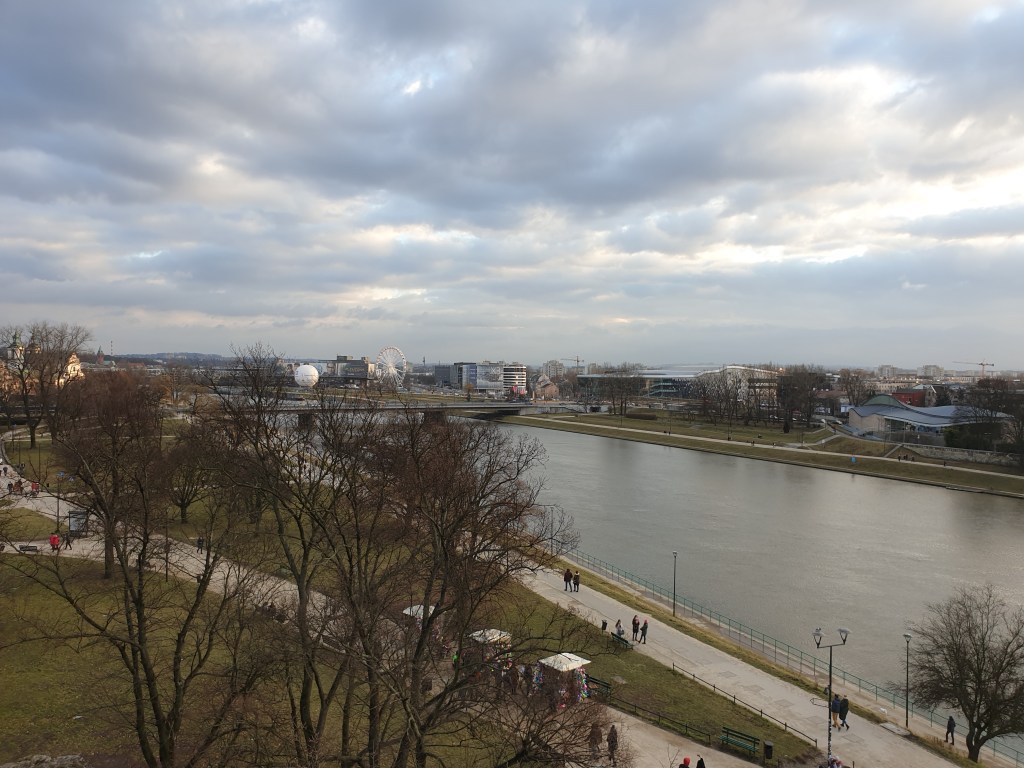
From the castle, the running path follows the Vistula river until the foot of the hill that can be seen far away in this picture. There are a large park and a big forest. It is impressive to see a forest on a hill in a city. The highest peak that can be seen in the picture below is the Kościuszko Mound. That is a human-made mound to honor the memory of Polish national hero Tadeusz Kościuszko. As a fun fact, I remember in school learning at Geography that the highest peak in Australia is Mount Kosciuszko. At the time, I did not understand why. The internet was not available to search for the answer. I had to come to Krakow to find the answer. For the explorer who first climbed that mountain, it looked like the mound with the same name in Krakow.

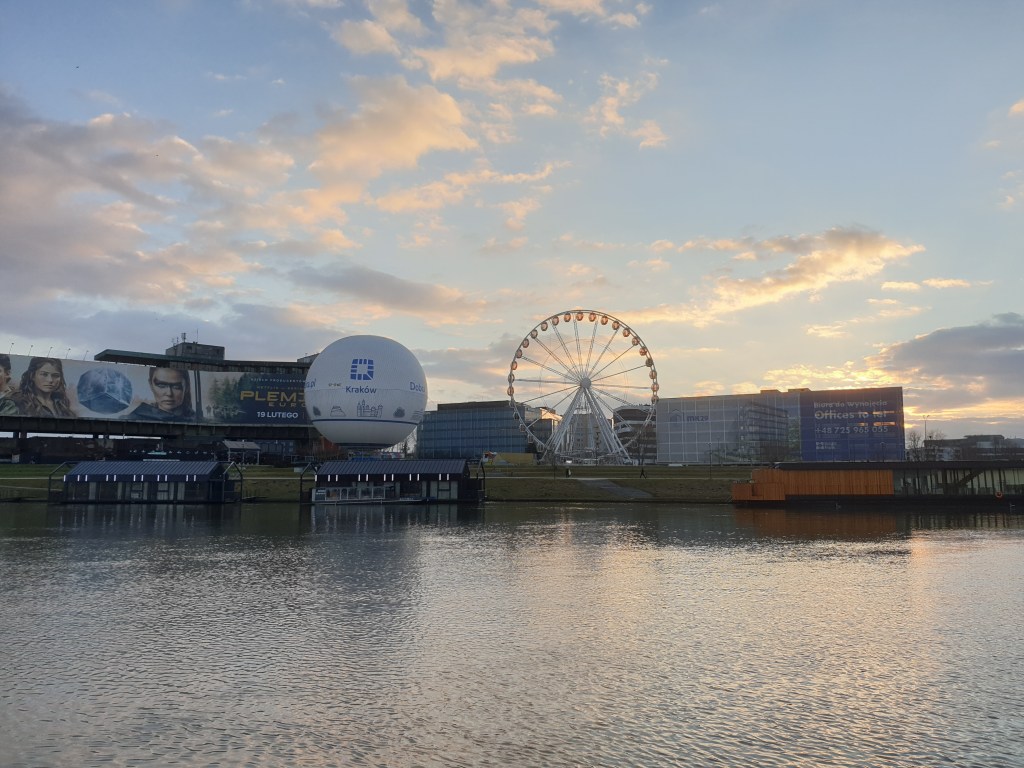
The other way of the running path leads to the Kazimierz neighborhood. Far on the right side, you can see a wheel and a balloon.

The balloon and the Krakow’s Ferris Wheel. Unfortunately, the ballon was not flying when I took the picture. For me flying the ballon is not an option as I am afraid of heights.

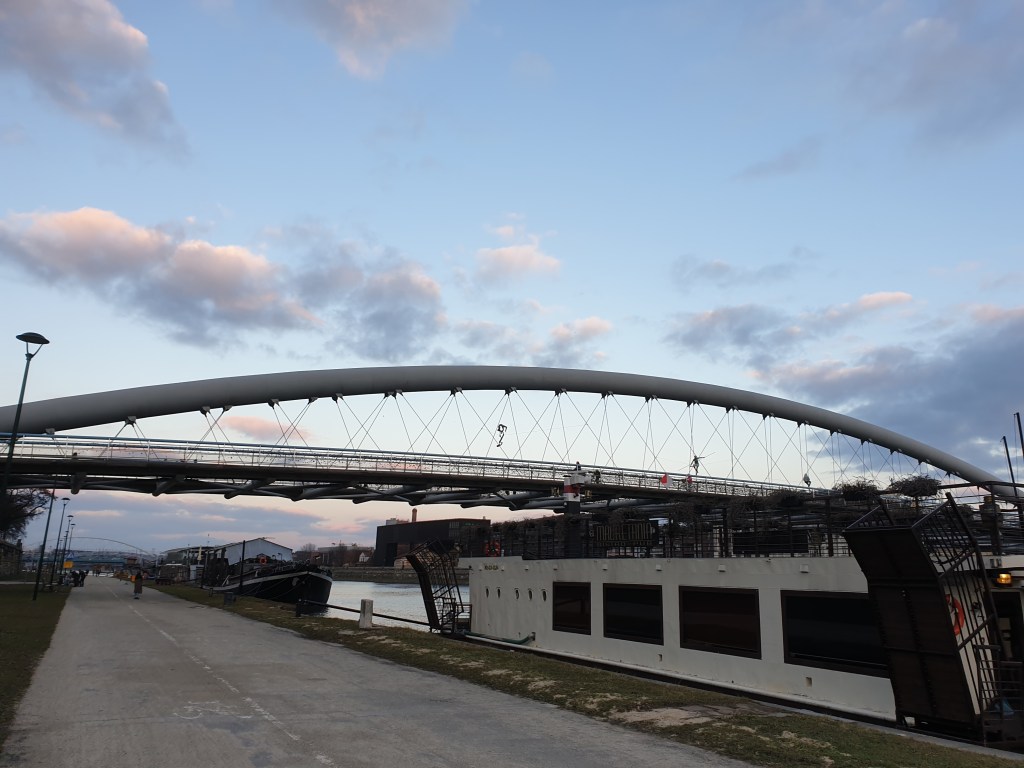
Another nice bridge is Father Bernatek Footbridge adorned with sculptures. This bridge makes the connection with the Jewish neighborhood. Kazimierz is the bohemian part of the city, with a different atmosphere than in the city center. Under the bridge, a few ships were transformed into restaurants. Some ships make cruises on the Vistula river.

Bernatek Footbridge

As mentioned above, Krakow reminds me mostly of Prague. I couldn’t resist adding a picture of this modern art symbol from Krakow similar to the ones from Prague. It is always funny to admire such examples of modern art. A theory is that the pig, set in a position to be lit ablaze, signifies renewal. 

Running in a fairytale environment makes the experience more pleasant. Hoping that you enjoyed the pictures above, I wish you a great year ahead! Despite all the difficulties, life goes on!

Since all the pictures were near a river, I thought it appropriate to end with a song on a river

6700 km – Running in Krakow

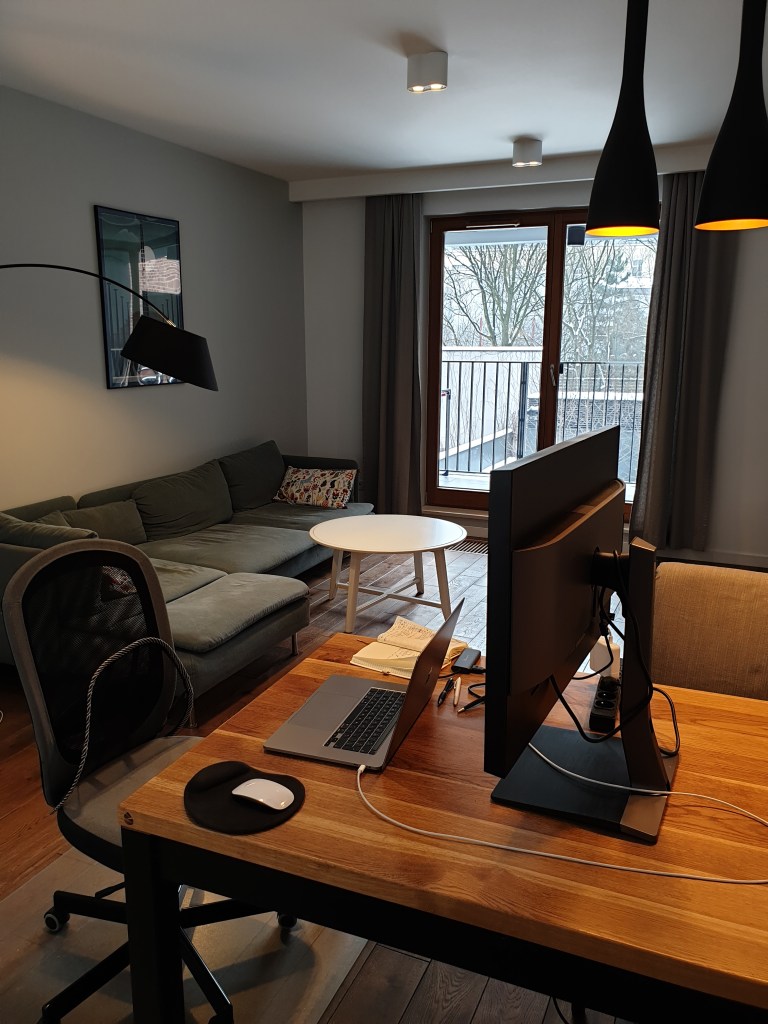
Last summer, I decided to resume my professional career in Krakow. Living alone in a city where I knew no one was not easy but not that hard as anticipated. The fact that the office is open, respecting anti-Covid norms, was very helpful. I could meet face to face many colleagues. The company assisted me with all the formalities needed to work from Poland.

My improvised office while working from home in Krakow

Running helped me a lot. I continued my training under indications from my coach, Stefan Oprina. In Krakow, I ran 540 km, three times per week, before I had to stop in December. The reason was that it was too cold outside. I had a sour throat after running while the outside temperature was under 0 Celsius. The gyms were closed due to Covid. My only option was to run at home with two dumbbells. I did that three times every week. I hope that I will be able to resume running outside starting from March. At the end of 2020, I still ran 1500 km in total.

Generally, I was running at a slower speed because the area for my training was where other people use to walk. In most cases, my runs were on the shores of Vistula. For example, in October, I ran a half marathon in two hours and thirteen minutes. Almost thirty minutes slower than the previous year. Still, running helps a lot both physical and mental health.

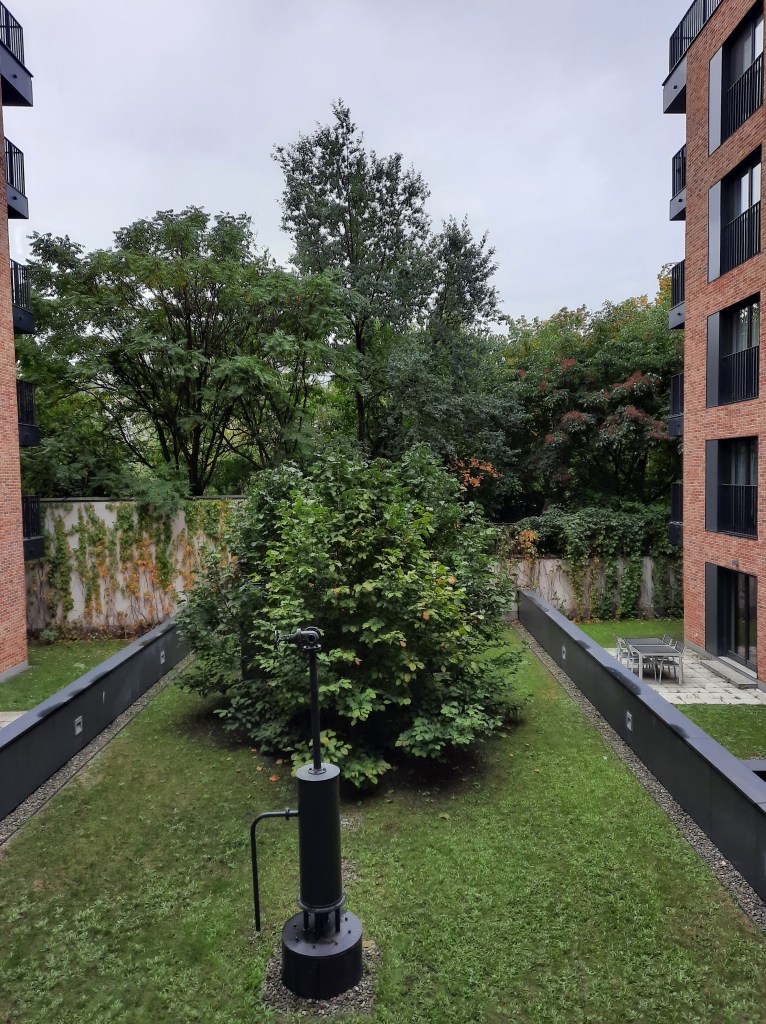
Last October. View from my window in Krakow center.

Krakow is the most popular tourist destination in Poland, with 14 million visitors in 2019. The city looks great, full of medieval buildings and the biggest old center in Europe. Most of the people speak English as they are used to interact with tourists. That is important for someone who doesn’t speak Polish. Coming here last July was a good thing. All the museums and restaurants were open. For example, visiting Shindler’s factory, I understood the plot from “Schindler’s List” movie. Laying on the hills the city has many spectacular landscapes. A must-see is the Wawel cathedral and castle, the residence of Polish kings before 1596. Then Warsaw became the capital of Poland.

View from Wieliczka Salt Mine

Close to the city, there are many other attractions, the Carpathian mountains with the famous resort Zakopane situated about 110 km to the south. There are hills, small towns, lakes, and nice sightseeings. Other cities in proximity are Katowice with wide-open spaces reminding of US cities, Częstochowa and Ostrava in Czechia.

View of Zakopane from surrounding mountains

Other positive things? The food tastes better and is cheaper than in Romania. Big malls and better roads.

What are the shortcomings? The winter is colder here than in Bucharest. Also, for me, the Polish language is hard to understand, but my colleagues are friendly.

Coming to Krakow was a great decision. A great life experience so far. Maybe I will post later some tourist experiences around Krakow.

I had a dream in Washington D.C.

Two years ago, on a trip to East Coast, I visited Washington D.C. The US capital has many museums and plenty of tourist attractions. It is really an interesting city. It was the place in the US in which I learned most things.

Like all the visitors, I took a picture in front of the White House.

At that time, Donald Trump was the US President. The victory sign was my hope that one day this period of hate will end. That day has come. Donald Trump was not voted for a second term. Hence the timing for this post.

I did not resonate with the values promoted by Donald Trump. In my opinion, a country governed by fake news and lies goes in the wrong direction. Lying is a norm in day to day life in a dictatorship, but not in a democracy. I know that because I lived in Romania before 1989.

A day after the picture in front of the White House, still in Washington, I witnessed a scene that impressed me.

In Washington D.C. there are many memorial monuments. Including the famous Lincoln Memorial and Vietnam War Memorial. One of these memorial monuments is Martin Luther King jr. Memorial.

Next to Martin Luther King’s memorial, I saw an old man together with his family, children, and nephews. The old man was in a state of deep emotion. He was trying to convey his feelings to his family. I saw gratitude in that man’s looks towards Martin Luther King’s statue. His family moved on from the memorial. He remained for a while next to the monument. It was then I took the picture below.

The monument, inaugurated in 2011, is inspired by the line  “Out of the mountain of despair, a stone of hope”. From the memorable discourse, “I have a dream”.

“I have a dream” is maybe the most famous speech in US History. Martin Luther King had that speech during the March to Washington in August 1963.

At the time the man in the picture above was grieving next to the monument, Martin Luther King was gone from this world for fifty years. Yet, people are still honoring his memory.

Seneca once said that gratitude ages very fast. We rarely see this feeling expressed in the modern world.

The United States owe to Martin Luther King the fact that they are not a segregated nation. He paid that price with his life.

That scene in Washington D.C. made me think about the fact that for politicians, the test of time is the most important. If people will honor a politician’s memory years after they depart from this world, it means the politician fulfilled his or her mission. For those aiming for a political career, this should be the ultimate goal.

My political dream is for responsible leaders. Leaders who will think beyond themselves, their relatives, and friends in the first place. I hope that the human race will finally move over this form of tribal leadership.

The speech “I have a dream” was not prepared. It was improvised by Martin Luther King when Mahalia Jackson shouted to him “Tell them about the dream”.

My favorite paintings

During times like this, when most of the museums around the world are closed I thought to post something about my art-related experiences. I will mention here only paintings that I admired from close distance in museums or expositions around the world. Of course, there are many others I wish to see. Hopefully, I will have that chance someday. I was lucky to see many of the most important galleries in Europe and the United States and I have a collection of memories from those visits.

I will start with a disclaimer. There is a big difference between admiring a painting at a close distance in a museum and looking at its picture on the internet. The pictures listed below do not impress me and I do not expect to inspire my readers. Seeing them in a museum it’s a different experience. But this is all we can do these days.

This is a subjective selection and it is for sure influenced by my life experiences. Here are the paintings listed in chronological order:

Leonardo – Annunciation (1472) Uffizi, Florence

While visiting Uffizi in Florence I’ve seen many annunciation paintings, as religion was the main theme for painters until the 17th century. Yet, when I saw this painting I was intrigued. It seems to have so many senses and symbols hidden. The characters are surrounded by mystery, it was just different from all I’ve seen before. Maybe I was impressed because it was the first time in my life when I was seeing a major artwork.

Leonardo – Annunciation 1472 Uffizi, Florence

Raphael – Portrait of Pope Julius II (1511) National Gallery, London

This painting impressed me most of all I’ve seen at the National Gallery in London. I didn’t know about this artwork before seeing it. I watched it amazed for several minutes.

I did not have the sensation that it was made to look better than in reality. Yet, it was a different reality which I can’t express in words. The artist captures so well the feelings of the character in the painting.

After watching this painting I understood the sense of words written on Raphael’s epitaph:
“Here lies that famous Raphael by whom Nature feared to be conquered while he lived, and when he was dying, feared herself to die.”

For reference, Pope Julius II is the one who commissioned Michelangelo to paint the Sistine Chapel. The Pope died in 1513 after he was able to see the Sistine Chapel painted. Interestingly is that before that he was also leading his armies on the battlefield as their commander. He believed in imposing religion by the sword, which was common during his time. If you want to find out more about him you can read “Agony and Ecstasy” by Irving Stone or simply watch the movie.

Raphael – Portrait of Pope Julius II, 1511 National Gallery, London

El Greco -View of Toledo (1596) MET, New York

The contrast of colors in this painting is fascinating. Another example of a painting I did not know and discovered in a gallery. El Greco paints here Toledo, the city where he spent most of his life and where he also died. This is not the only El Greco painting that I like, he was an artist well ahead of his time. The way he uses the colors and his characters (in other paintings) are very modern. Because of his modernism, people in the 17th and 18th centuries did not appreciate his works. He was misunderstood, as it was the case with other artists that had a vision beyond the horizon of his times.

El Greco -View of Toledo (1596) MET, New York

Rubens – Old Woman and Boy with Candles (1616) Mauritshuis – Hague

I’ve discovered this painting in the Hague gallery. I am not a big fan of Rubens. I’ve seen many of his paintings around the world. Rubens created the biggest paintings in terms of size in museums. And the characters in his paintings were also big.

However, this is a small painting where he paints using the “chiaroscuro” technique he learned from Caravaggio.

I was attracted by how this painting looks but mainly because it is an allegory that can be interpreted in many ways. This way it’s like life itself.

One possible interpretation is a quote from Rubens: “Light can be taken a thousand times from another light without diminishing it”. In the museum it was written the local interpretation: “The renewal of life with the transfer of light from the candle, soon to die, held by the old woman to the freshly lit one held by the youth.” Then there was the religious interpretation of three hands with a light in the center. Each reader could have his/her own vision of this painting and that’s the beauty of it.

Probably, Rubens himself liked this picture as he kept it with him until the end of his life.

Rubens – Old Woman and Boy with Candles (1616) Mauritshuis – Hague

Vermeer – Girl with a Pearl Earring (1665) Mauritshuis -Hague

This was the main attraction in Hague. At the time I’ve seen this painting it was accepted the theory that the girl with a pearl earring did not exist in reality. It was believed that she was created by the imagination of Vermeer.

I did not believe that theory but that was just my intuition.

Later, in 2018, a new study of the painting was done with X-Rays and other methods. This year, in April, they published the conclusions. The examination had revealed the presence of tiny eyelashes around the girl’s eyes, invisible to the naked eye. Research also established the existence of a green curtain in the seemingly empty background of the painting that has faded to black over the centuries. 

These are indications that the girl was real.

“Speculating on who the girl was, with her enigmatic expression, wide eyes, unusual blue turban, and huge pearl earring remains part of the fun. The fact that she is still a mystery keeps people coming back and keeps her exciting and fresh.” -The Guardian

In my opinion, this is the last classical masterpiece. It took another 200 years for the art of painting to reinvent and by the creation of impressionism to add new amazing artworks.

Vermeer himself was considered a second class artist during his life and was forgotten after his time. He was rediscovered almost 200 years later.

Vermeer – Girl with a Pearl Earring (1665) Mauritshuis -Hague

Van Gogh – Starry Night (1889) MoMA -New York

The most beautiful association between blue and yellow. This painting is one of the most famous in the world. The painting is often associated with the words of Vincent van Gogh: “Why, I wonder, wouldn’t the shining dots in the sky be as easy to reach as the black dots on the map of France? Just like we were on the train to Tarascon or Rouen, we use death to travel to the stars. “

The painting depicts the city of Saint-Remy-de-Provence where Van Gogh was interred in a hospital after his breakdown in 1888 when he cut his ear.

Van Gogh – Starry Night (1889) MoMA -New York

Van Gogh – Wheatfield with Crows (1890) Van Gogh Museum – Amsterdam

Some consider this as Van Gogh’s last painting. I remember it was nicely presented in the museum. Since it was a museum dedicated to Van Gogh it was a perfect way to finish the exposition. The wheat field is located in Auvers-sur-Oise and it was painted in July 1890.

“Wheat Field with Crows remains as Vincent van Gogh’s most contentious painting. The many interpretations of the work are probably more varied than any other in Van Gogh’s oeuvre. Some see it as Van Gogh’s “suicide note” put to canvas, while others delve beyond a superficial overview of the subject matter and favor a more positive approach. And some more extreme critics cast their vision even further – beyond the canvas and the brushstrokes – in order to translate the images into an entirely new language of the subliminal.”- http://www.vincentvangogh.org

“Van Gogh used powerful color combinations in this painting: the blue sky contrasts with the yellow-orange wheat, while the red of the path is intensified by the green bands of grass.” – Van Gogh Museum

The artist shot himself in this wheat field and died the next day in a hospital. His paintings remained to inspire the world for the future.

Van Gogh – Wheatfield with Crows (1890) Van Gogh Museum – Amsterdam

Magritte – The Lovers II (1928) MoMA -New York

I’ve seen many Magritte paintings in Brussels. In that city exists even an entire museum dedicated to Magritte’s works. There I discovered an interesting artist and found out more about him. Yet, the painting I like most from his creations was in New York.

“Frustrated desires are a common theme in René Magritte’s work. Here, a barrier of fabric prevents the intimate embrace between two lovers, transforming an act of passion into one of isolation and frustration. Some have interpreted this work as a depiction of the inability to fully unveil the true nature of even our most intimate companions.” – MoMA

“René Magritte lovers are unable to communicate or touch, they are forever apart.” – http://www.dailyartmagazine.com

The painting is intriguing and has many hidden symbols and possible interpretations.

Magritte – The Lovers II (1928) MoMA -New York

Dali – The Persistence of Memory (1931) MoMA -New York

Surrealism at its peak by Dali. This painting is at MoMA since 1934.

The general interpretation of the work is that the soft watches are a rejection of the assumption that time is rigid. This idea is supported by other images in the work, such as the wide expanding landscape, and other limp watches shown being devoured by ants.

“Three of the clocks in the painting may symbolize the past, present and future, which are all subjective and open to interpretation, while the fourth clock, which lies face-down and undistorted, may symbolize objective time.” – http://www.dalipaintings.com

“Those limp watches are as soft as overripe cheese—indeed, they picture “the camembert of time,” in Dalí’s phrase. Here time must lose all meaning. Permanence goes with it: ants, a common theme in Dalí’s work, represent decay, particularly when they attack a gold watch, and they seem grotesquely organic. The monstrous fleshy creature draped across the painting’s center is at once alien and familiar: an approximation of Dalí’s own face in profile, its long eyelashes seem disturbingly insect-like or even sexual, as does what may or may not be a tongue oozing from its nose like a fat snail.” -MoMA

Dali – The Persistence of Memory (1931) MoMA -New York