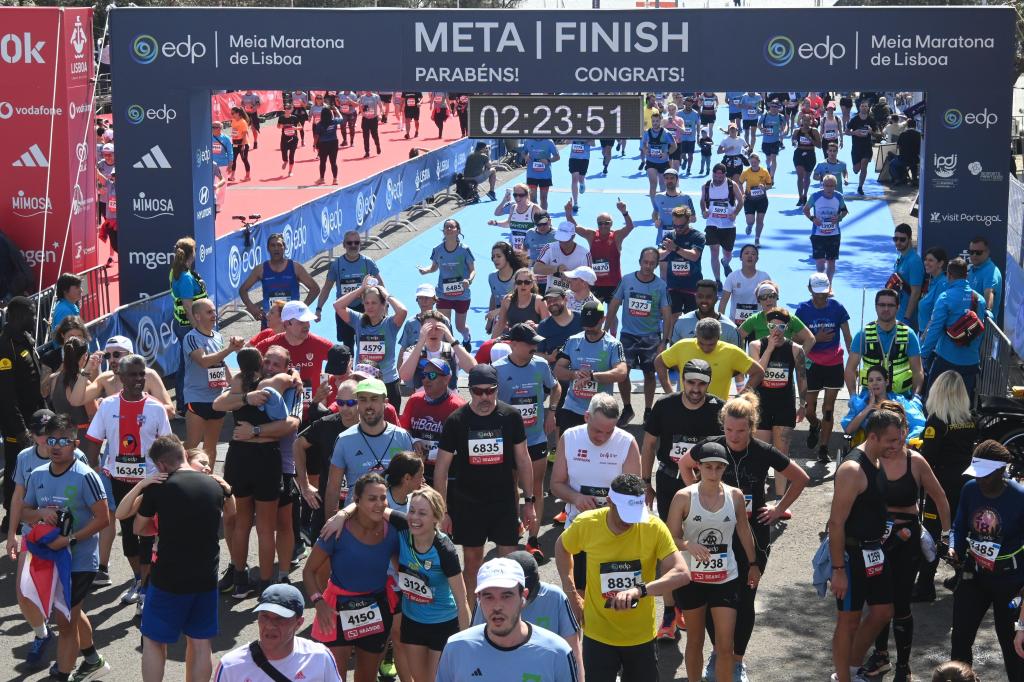
Valencia half-marathon

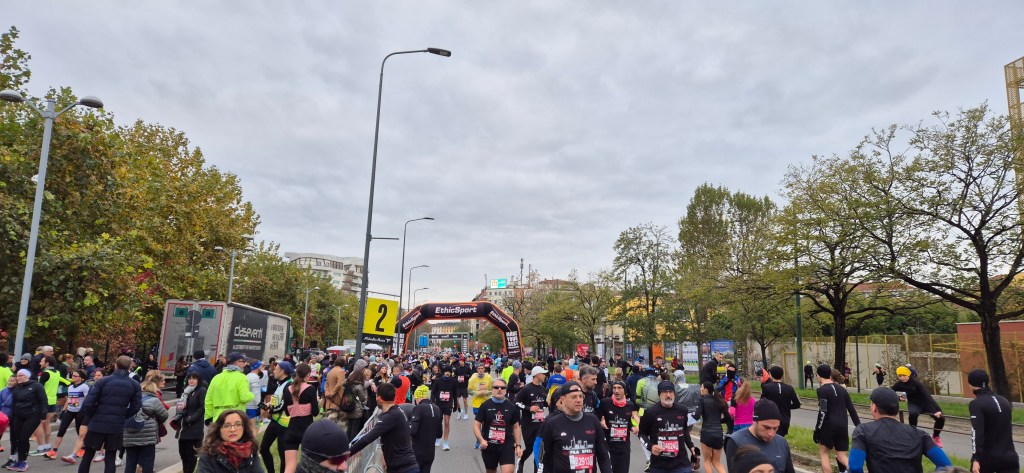
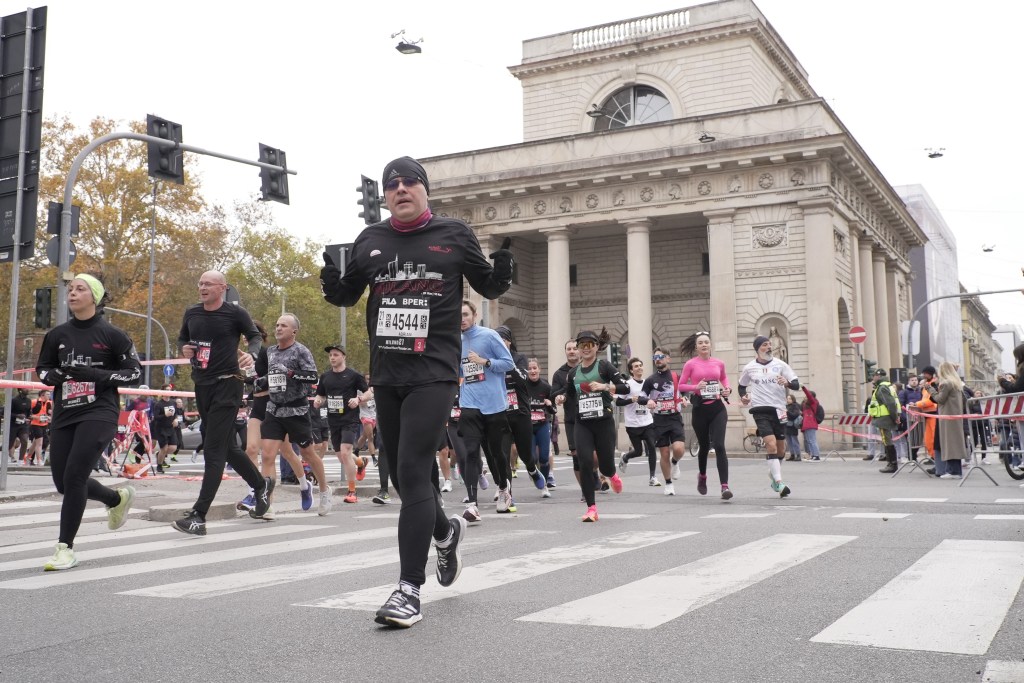
This year edition of Valencia half-marathon was a real success. It was a perfect organization, the best from all the races I ever ran. During the race a new world record was established by Yomif Kejelcha from Ethiopia with 57:30. The weather and environment were perfect for running.

Runners warming up

There are countless positive aspects to highlight about this event. I recommend that every major marathon organizer send a representative to run in Valencia and take notes. For runners, the course is flat with ample space for warm-ups, and it never felt overcrowded. Organizers provided water in bottles, gels, and isotonic drinks along the route. If you’re aiming for a personal best, Valencia is the place to be, the true city of running.

Before the race

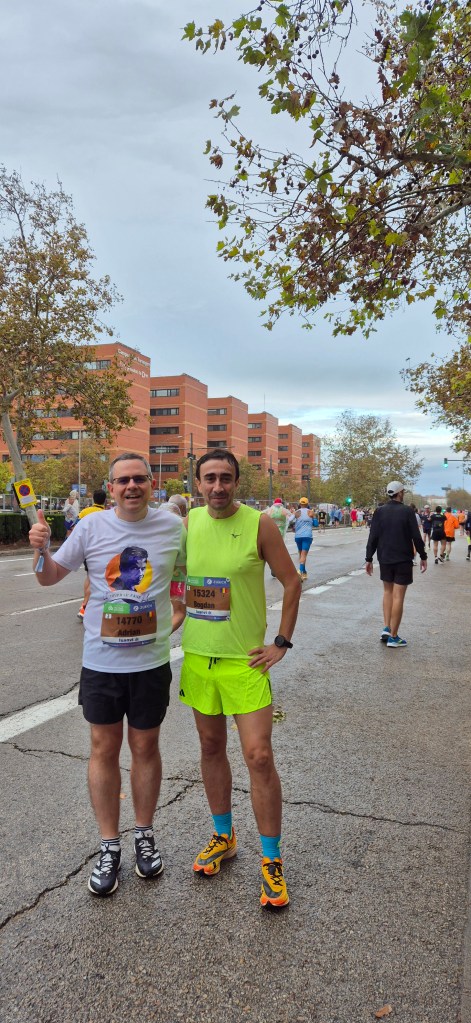
I traveled from Bucharest to Valencia with my colleague Bobo, and we stayed in a hotel conveniently located near the start and finish lines. We warmed up before the race began and started together.

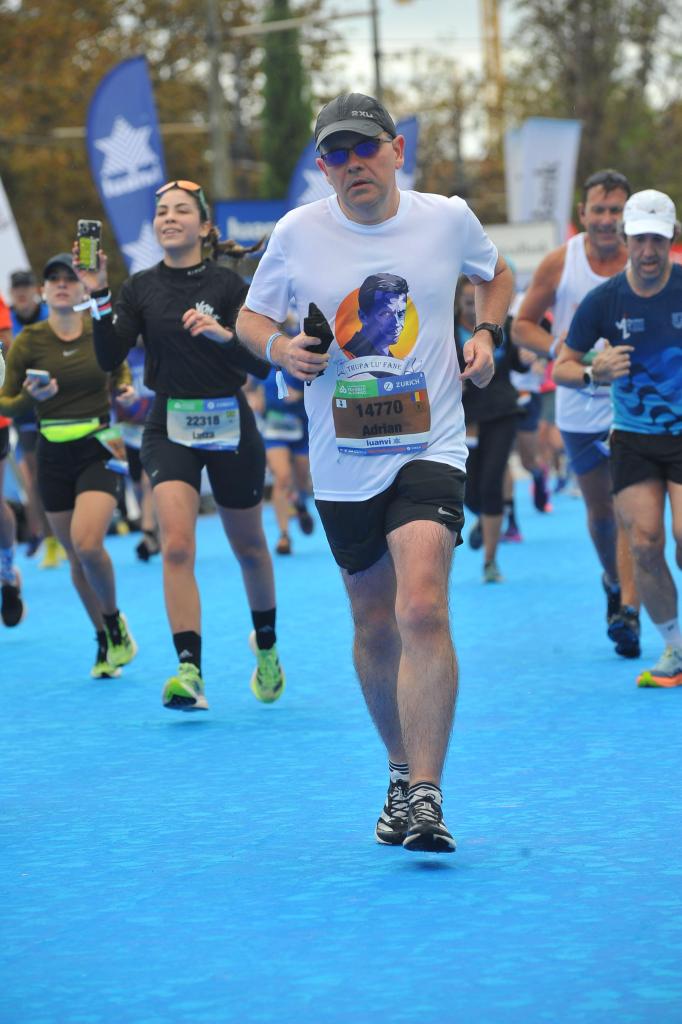
At the finish

My race was going well until the 15-kilometer mark. I clocked 10 km in 55:40 and 15 km in 1:23:17, maintaining a pace of 5:33/km. For context, I passed 15 km in Cardiff in 1:25:56. Unfortunately, I experienced stomach issues that slowed me down significantly, forcing me to walk the last kilometer, which took me a frustrating 10 minutes. My official finish time was 2:07:47- not ideal, but I persevered, received my medal, and added another super half-marathon to my list.
Over 24,000 participants finished the race, and the support along the route was phenomenal. I had heard before the event that they were aiming to break the world record and bring it back to Valencia, and I could feel the positive energy during the race. Light rain helped keep us cool as we ran.
Bobo had an outstanding race, running a negative split and gradually increasing his pace. He achieved his personal best of 1:42:05. Congratulations to him on a fantastic performance!

Bobo achieved a personal best in Valencia

Bobo’s achievement wasn’t a surprise; he dedicated a lot of time to training this year. I logged 1,200 km, while he ran a third more and incorporated various exercises. In running, results stem from hard work. There’s no substitute for proper training.

After the race

My T-shirt for this race was from “Trupa lui Fane”, a gift from Stefan just before leaving Bucharest. Runners from Trupa lui Fane have recently excelled, with four finishing under three hours at the Bucharest Marathon and winning multiple medals at the Balkan Championships. Bobo’s progress is another testament to the effectiveness of Stefan’s coaching. I also want to thank Stefan for training me remotely in the last years!

Valencia half-marathon is part of Superhalfs. You need to finish all six half-marathons to get the special medal. This was my 5th race with only Berlin left to finish the circuit. In Valencia the first Romanian to ever finish Superhalfs was Cosmin Gabinat. We congratulate him for this achievement! Here you can find a list with all Romanians participating in Superhalfs , 111 people registered at the end of 2024. Given the statistics, the next Romanians to finish Superhalfs circuit will be in Berlin.

Despite my challenges and results, I had an amazing time in Valencia and highly recommend this race to anyone looking to achieve great results!

Cardiff half-marathon

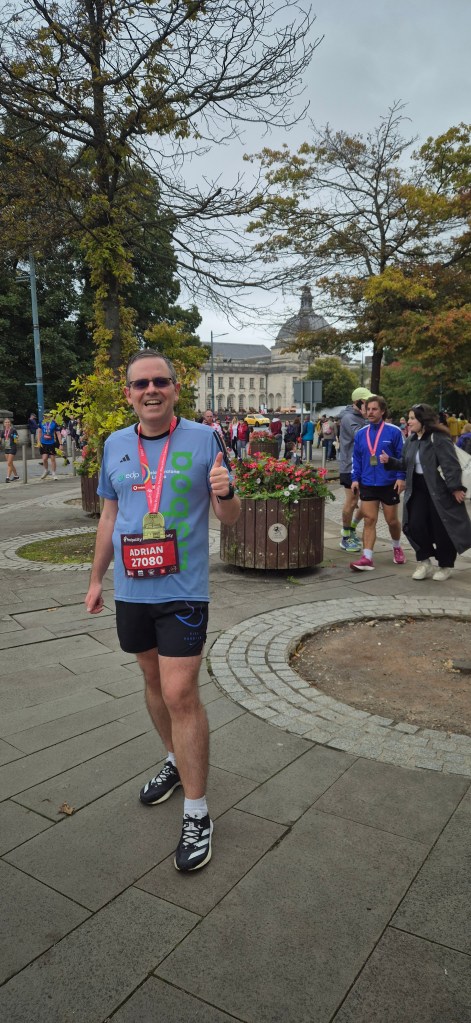
Cardiff half-marathon is part of Superhalfs which makes it one of the most attractive races in England. Initially my thought was to run there because it’s one of the 6 half-marathons you need to finish to complete the Superhalfs series. I didn’t know much about Cardiff or the race before going there; hence, this half marathon was a pleasant surprise for me.

By the time I wanted to register for the event in Cardiff, the registration was already closed. Generally, such races sell out more than six months before the event date, so you need to plan your participation well ahead of time. For example, by October 10, 2024, the Cardiff Half Marathon for 2025 was sold out. According to the organizers, all spots were sold within 12 hours of the registration opening.

If you are late and still want to run there, you can get help from a sports travel agency. Such agencies guarantee your participation and accommodation for a fee. They may also organize training sessions and a pasta party for their clients. This time, I went with Interair, a German sports travel agency, and I was happy with their services; everything was great.

Before the race

On October 6th, it was a good time to run in Cardiff, with temperatures around 12 degrees Celsius and light drizzle at the start. There was enough space to warm up before the race. The runners were organized in waves, as is normal for a half marathon with 28,000 participants.

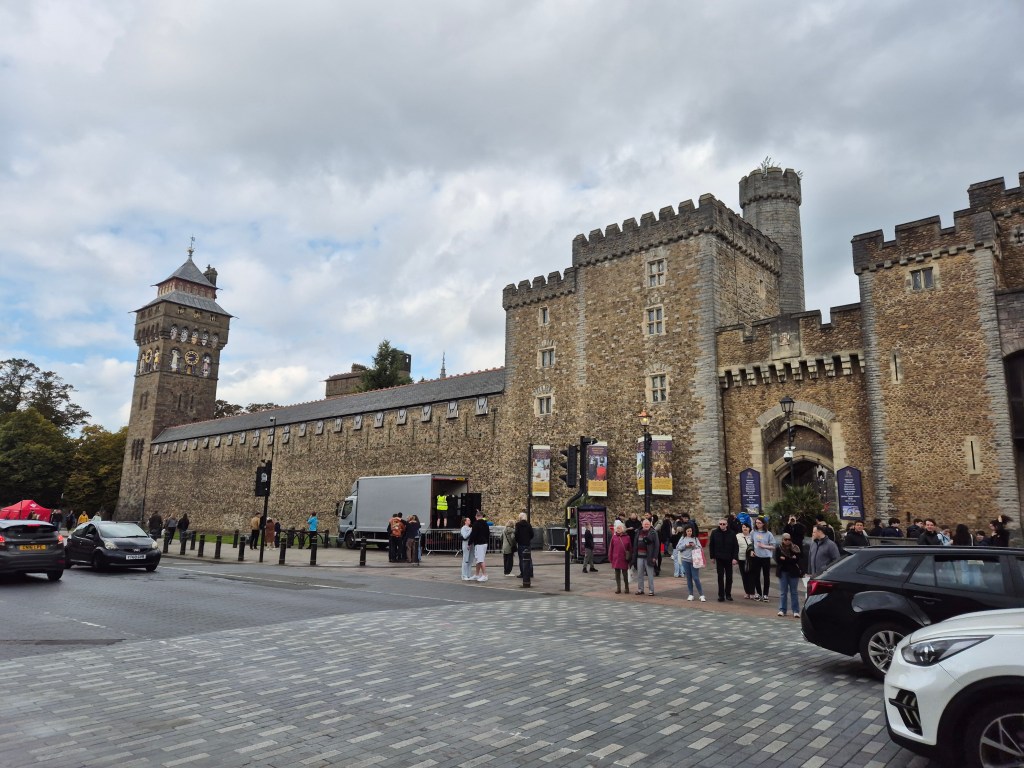
The start is at Cardiff Castle, and the route winds through the city, including the bay area, before returning to the center and the castle. The first part of the race is either descending or flat; from kilometer 15, it starts to ascend, with some hills around kilometer 18, and towards the end, there is a significant difference in altitude.

I started with a pace of around 5:40 per kilometer and maintained that until kilometer 10 when the two-hour pacers went ahead of me. I made an effort to keep them in sight for as long as I could. By the 18th kilometer, I was confident that I could finish in under two hours. Then the small hills came, and I thought there was no way I would finish in less than two hours. Fortunately, with a final burst of energy, I finished in 1:59:58!

After the race

During the race, I used two GU gels and drank water twice, at kilometers 10 and 15. Water stations were available every 5 kilometers and also at kilometer 18.

One must remember that in England, races are marked in miles—13.1 miles as opposed to 21.1 kilometers in the rest of Europe. In this context, it’s useful to have an accurate GPS watch or to keep pace with the pacers if achieving a specific time is important to you.

As you can see, I’ve run many races in Europe, and I have never seen so many supporters encouraging runners as I did in Cardiff. The respect for runners is high in the UK compared to elsewhere. There were thousands of people spread over the half marathon distance, showing support for the runners. This can significantly boost one’s motivation to finish the race. I believe this played an important role in my success in finishing under two hours for the first time this year.

Cardiff Castle

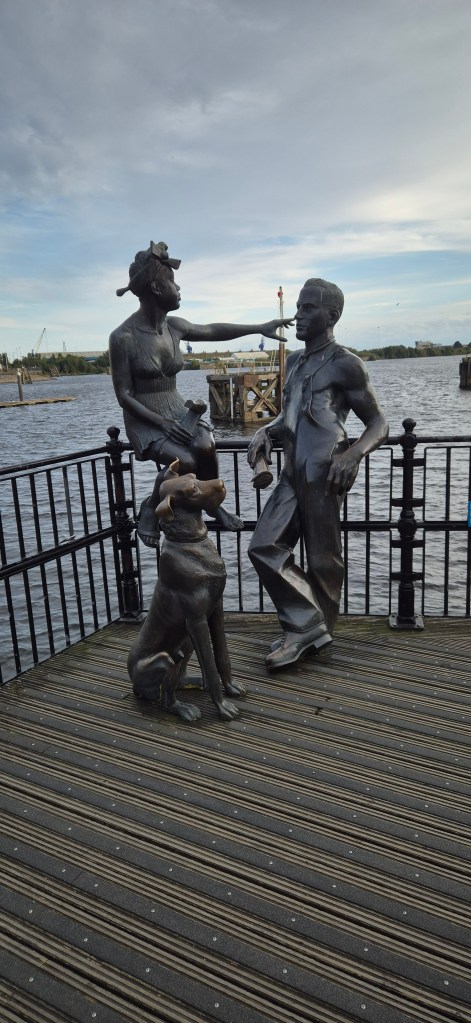
The other pleasant surprise was the city of Cardiff. The capital of Wales has a beautiful, typical British castle worth visiting. You can explore the bay area, the old market, and the city center. There is a village museum outside the city and a cathedral, but I did not have time to see them. There are nice restaurants and many people partying during the weekend.

Cardiff bay area

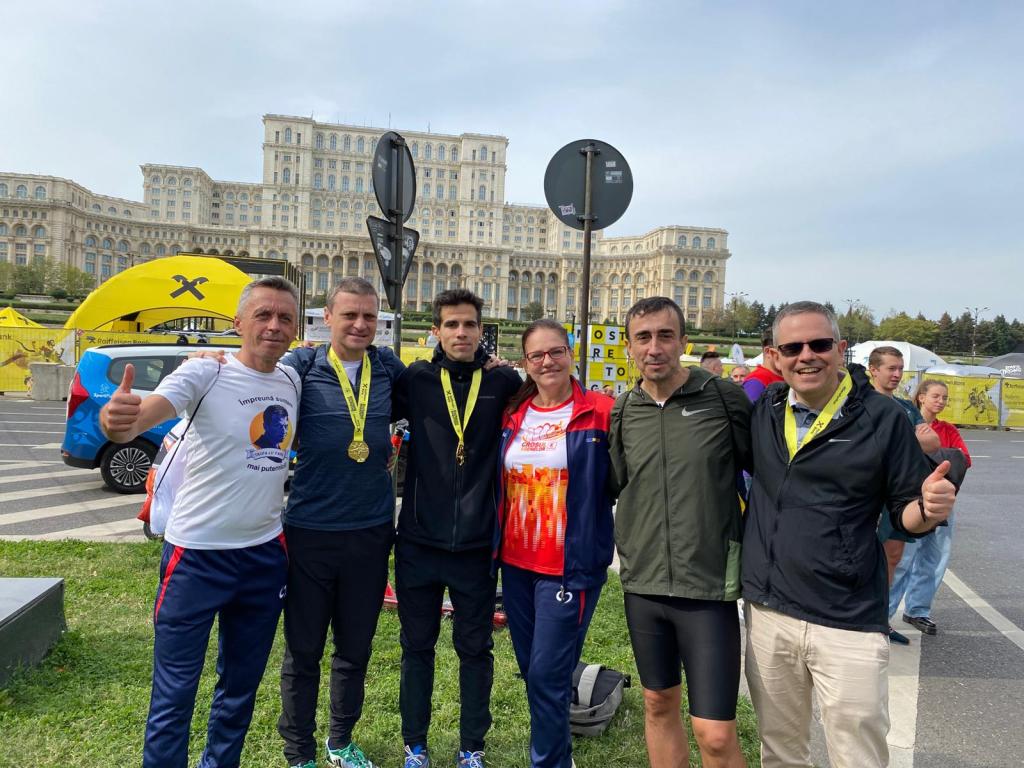
The weekend after Cardiff, I traveled to Bucharest to watch the Bucharest Marathon and encourage my colleagues from “Trupa Lui Fane”. They achieved great results, with four of them finishing the marathon in less than three hours! That reflects a lot of hard work and training. There were also good results in the 10K, half marathon, and relay races. Many thanks to our coach, Stefan Oprina, who has been training me remotely for the last four years!

With colleagues and coach after their race in Bucharest

Cardiff was a great experience, and I encourage you to try it; it will be fun!
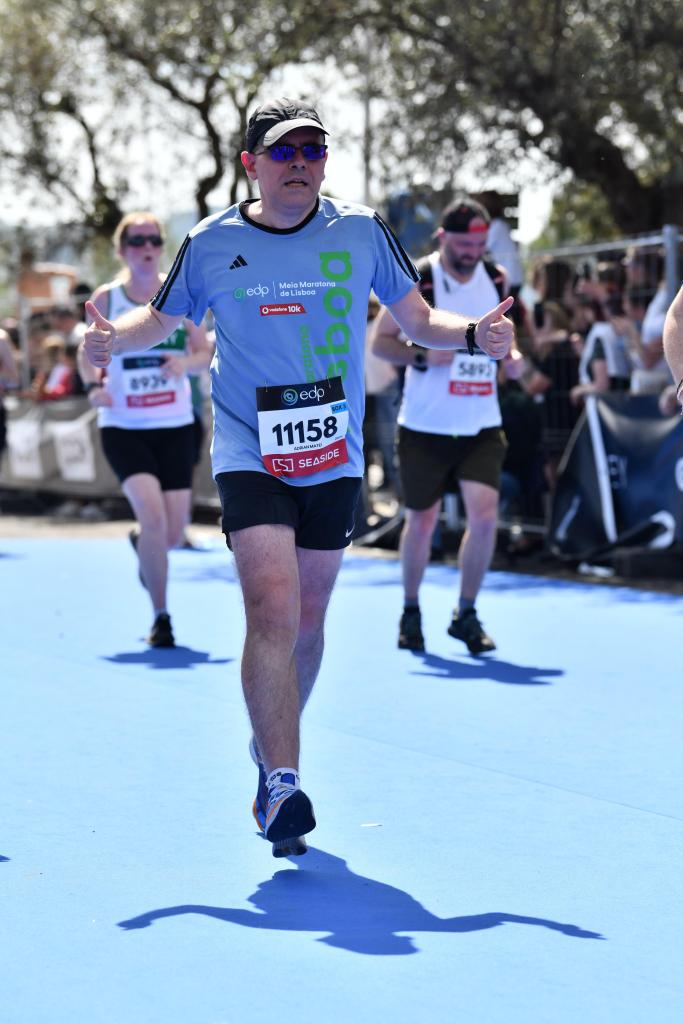
Chess – now and then

This post is split into two parts. The first part talks about my chess activity, and the second part is about the world of chess on the eve of a special celebration. The two parts are independent, and the second one is more interesting.

Part I

Recently, I played in two chess tournaments in Krakow. They were both of classical chess time controls, which lasted 3-5 hours per game.
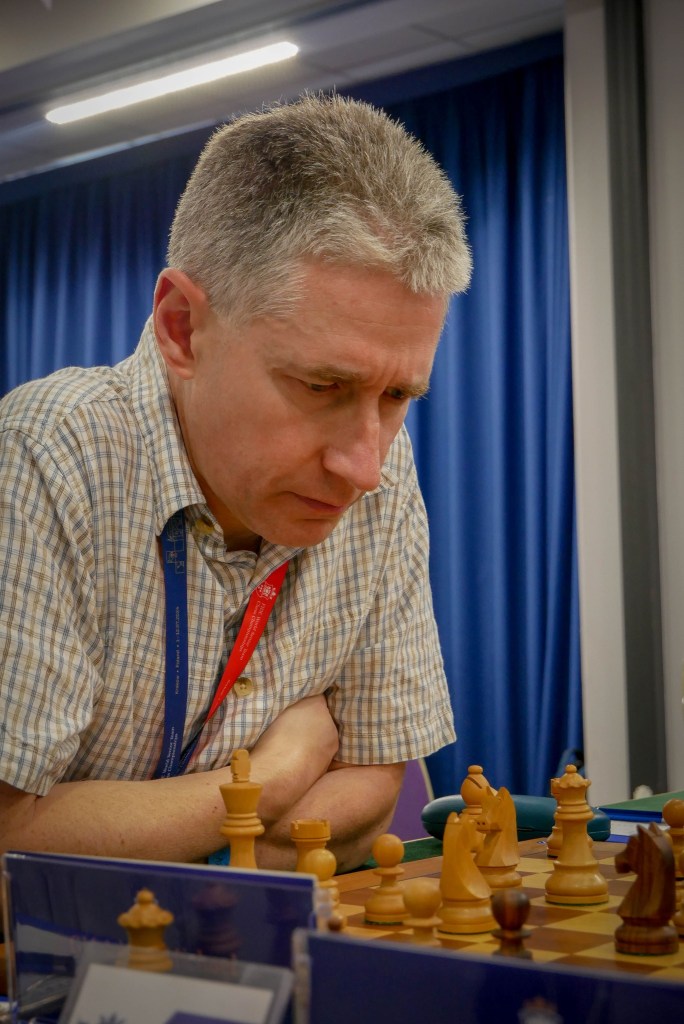
First was the 35 edition of the International Chess Championship of Malopolska. I played in the B group of this tournament, for players rated between 1750 and 2000. The venue was Galaxy Hotel on the shores of the Vistula River. Many foreigners participating in this tournament were kids from Ukraine from Lviv Chess Academy. They had T-shirts with their club name on them. They played well; of the international players, the Ukrainians were the only ones who gained ELO points. There were also two players from Romania I did not know who also played in the Grenke tournament. We chatted during those days in Krakow; they were also impressed by the Grenke tournament. We all agreed that the chess level played in Krakow was much better than in Karlsruhe at the same rating. If you want to win games, go to Grenke; if you want to play good chess, come to Krakow. My result could have been better, but my games were exciting and fun, even when losing. That made me want to play one more time.

International Chess Championship of Malopolska

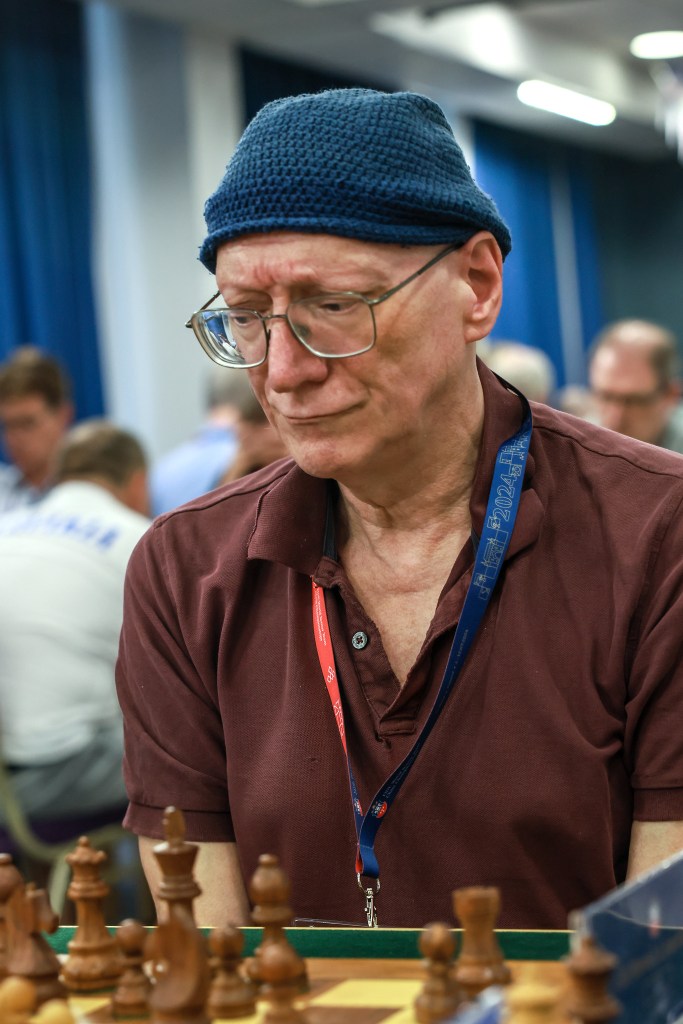
The second tournament was the 12th edition of the Cracow International Chess Championship. I played the B group of players again, rated below 2200 ELO. The group consisted of 185 players from 27 countries. I was the only Romanian this time. The venue for this tournament was Hotel Premier in Krakow, situated outside of the city center but easy to reach by car or bus. The special guests of the tournament were the Botez sisters, who streamed their games online. They have a well-known Youtube channel with 1.6 million subscribers. They were born and lived in Canada, but their parents are Romanian. Also, more than 15k people were watching their games live during the tournament. They finished with 5.5 points from 9 rounds each, while my result was 5 points from 9. I will share one of their rounds below to show how difficult playing an official chess game is. Their coach’s commentary is instructive.

Live streaming from BotezLive channel

I’ve discovered a powerful connection between sleep and chess results. The nights I slept well, I ended up with 5.5 points out of 6 games, while when I did not sleep well, I got 0 out of 5 games. It is not that I was biased. I tried to play better in each game. In one of the games, I had a winning position but made a mistake and lost.

Cracow International Chess Championship

With these tournaments, my results for the 25 classical games I played in 3 tournaments this year are 13 points, a little over 50%. I won 11 games, made 4 draws, and lost 10 times.
This concludes my chess games this year, as I don’t have enough vacation days left. I will focus only on running, with three half-marathons planned for autumn, the first of which is Cardiff.

Part II

On July 20, 2024, the International Chess Federation (FIDE) celebrates 100 years of existence. On that day, in 1924, 14 countries, including Romania and Poland, signed a document establishing FIDE in Paris. This part of the article is a small tribute to chess history.
If you want to understand the rest of this post, please watch the documentary below. No chess knowledge is required, only a sense of humor. Stephen Fry went to Thessaloniki in 1988 and made a movie about the 28th Chess Olympiad. The chess Olympiad is played every two years and is a team event; it is the most crucial chess team event.

This was the last Olympiad before the fall of Iron Curtain in 1989. Many things have happened since. Yet, in the chess world time flows differently. Grandmaster Anand, 55 years old, who played at that event for India is rated 11th player in the world today, 36 years later.

In July 2024, in Krakow, the World Senior Team Chess Championship was held for players over 50 and 65. This tournament was played in Galaxy Hotel, the same venue as my first tournament in Part I. In chess, there are only two categories for veterans: 50+ and 65+. I’ve counted 20 to 30 players from the Thessaloniki Olympiad playing in Krakow 36 years later. Team England 65+ featured two players from Stephen Fry’s documentary: John Nunn and Jonathan Mestel. However, the rest of the players in the documentary continue to be close to chess; Jonathan Speelman plays in many chess tournaments each year, and Nigel Short plays in a chess tournament this year.

What happened with the members of the USSR Olympic team who won in Thessaloniki? Kasparov retired from chess 20 years ago and moved to politics, being one of the most important Russian opposition leaders. Karpov also stopped playing chess about five years ago. Artur Yusupov retired for many years. Beliavsky plays for Slovenia and is an active player. Ivanchuk, at 55, is the 100th player in the world, is still very active, and plays for Ukraine. Jan Ehlvest plays for the United States at the World Senior Team Chess Championship in Krakow.

World Senior Team Chess Championship in Krakow

John Nunn and Jonathan Mestel played for the England team for the first time at the 22nd Chess Olympiad in 1976 in Haifa. That was almost 50 years ago. Nunn played on the primary team of England until 1994 and later moved to the senior teams. England won the World Chess Championship in Krakow in the 65+ category. They did not win in 1988 but continued and won in 2024. This is indeed true in a different context. As you can see in chess, playing strong for a very long time is possible.

England’s team won the World Chess Championship for seniors 65+ in 2024

Another English player has even more impressive results in time. Michael Adams played for the first time for the England team at the Chess Olympiad in 1990. He has played in the main team ever since and is expected to play even this year. At 53, rated 2672, Michael Adams is the 55th player in the world and the third player in England. However, as he is over 50, he also played in Krakow’s senior championship 50+ section.

Michael Adams in Krakow

Unlike other sports, the world of chess has changed slowly over time. These people are in their seventies, still going strong, and very sharp mentally. Studies have shown a much lower risk of mental diseases for people who play chess.

Chess is an individual game and such the history of FIDE is made of many such individual histories and dramas. It offers many lessons of life for people willing to pay attention.

Across the world, many events celebrate the anniversary of chess. In Bucharest, a special event was held at the Triumphal Arch to mark the 100th anniversary of FIDE. In Krakow, a chess photography exposition was opened. In London, in Trafalgar Square, on July 7th, more than 23000 people gathered to play chess in a special yearly event.

World Chess Torch at the Triumphal Arch in Bucharest

FIDE motto, “Gens Una Sumus,” translates to “We are one family.” FIDE has 201 state members in 2024. Another chess Olympiad, the 45th edition, will begin in September in Budapest. Chess has a history of over 1500 years but has never been as popular as it is today.

Summer traditions from Krakow

Krakow is the most popular tourist destination in Poland. Summer in Krakow is gorgeous, with perfect weather and some fun traditions. If you are in the city in June when these events occur, you should not miss them.

The Great Dragon Weekend

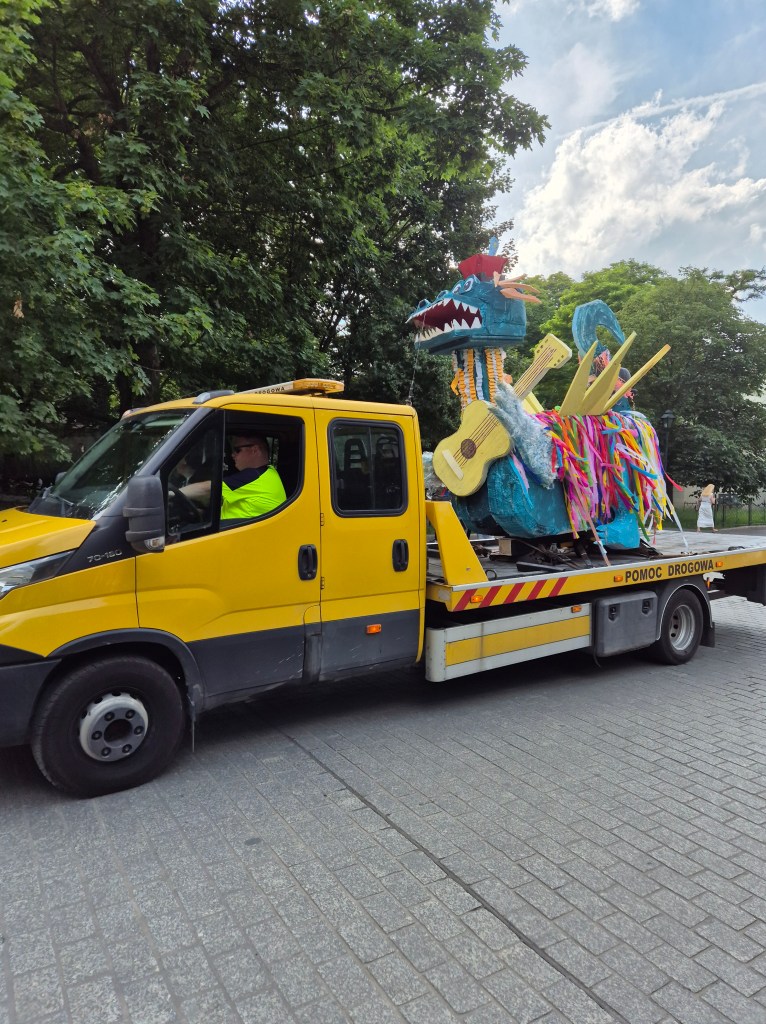
Parade of Dragons 2024

One of Kraków’s most unique and enjoyable annual events, the Great Dragon Weekend, is organized by Groteska Theatre and inspired by the city’s most famous legend. The Dragon story is about the foundation of Krakow. In 2024, on June 9th, the 24th edition of the show was organized.

Children created dragons in a parade. Kids have a lot of imagination

Over two days of colorful pageantry, large-scale puppetry, and family fun, the weekend consists of two main events: Saturday night’s light and sound spectacular, in which giant dragons float down the Wisła, followed by Sunday afternoon’s parade of colorful beasts created by children. It was a diverse parade, with lots of dragons designed by kids.  I attended both events this year for the first time since I have been in Krakow. I found two video clips on YouTube covering both events and shared them here.

Singing dragon

Wianki

Wianki is not a Krakow tradition but a Warsaw custom that came to Krakow in the mid-19th century. In its modern form, as a cyclical mass event, Krakow’s Wianki has existed since 1992, when the Krakow City Hall took patronage over this event. In Poland, summer starts at the summer solstice on June 22nd. The summer solstice, known as Kupala Night, is a crucial moment of the year in Slavic tradition when all of nature – and the humans who are part of it – fully bloom. Ancient rituals and customs were intended to provide participants with purification, fertility, and happiness. Kupala Night is associated with several activities and rituals, such as collecting herbs and flowers and decorating people, animals, and houses with them, entering water, bathing, pouring water on it, sending wreaths on water, lighting bonfires, dancing, singing, jumping through fire.

Wianki in Krakow

In Polish, wianki means wreath. The wreath was an obligatory attribute of games. It was made before the holiday from wild herbs and flowers. The ceremonial use of the merchant wreath is also associated with a magical understanding of its shape.

Lajkonik

 The Lajkonik is a man dressed as a warrior from the East. He rides a prancing white hobbyhorse through the city streets and, with his mace, deals out good luck blows.

Lajkonik

There are some theories about the origin of this tradition. The most reliable is that in 1287, Mongol armies arrived close to the city. They decided to spend the night by the Vistula, close to the village of Zwierzyniec, and to attack the town in the morning. They were discovered there by raftsmen, who overpowered the sleeping army, thus saving the city from ruin and plunder. They soon changed into Mongol costumes and rode into the town on the horses they had seized as trophies. They scared the whole city with fear, yet more quickly, the townsfolk came to rejoice.

This show has been happening in Krakow for over 700 years, a long tradition. Every year, it is celebrated on Thursday, one week after Corpus Christi. It is a parade of people costumed in Mongols or Polish clothes from the Middle Ages accompanied by bands playing traditional music.

Lajkonik Parade

Fascinating traditions take place in Krakow in June. If you’re here, be sure not to miss them.

PS. All the videos above I found on Youtube, they are not made by me.

Helsinki

From the cities where I ran this year, it was my first time in Helsinki. To my surprise, Helsinki is not a classical European city with an old center and historic buildings. Initially, I thought that Suomenlinna Island offered military protection to the city of Helsinki until I learned that the fortress on the island had been developed before the city.

Before becoming the capital of Finland in 1812, Helsinki had 3000 inhabitants at the beginning of the XIX century. The country gained its independence from Russia in 1917.

Helsinki has monuments reminding people of its time as a Russian gubernia. Compared with the rest of Europe, Finland was occupied before 1917. It had no influence later, while in the former communist countries (part of the European Union today), the Soviet occupation happened after World War II. Finland had the Winter War with the Soviet Union, so keeping these monuments is surprising.

The Helsinki Cathedral is a Lutheran church built in 1852 during the Russian leadership. It is built in the shape of a Greek cross, and the pediment rests on six Corinthian pillars. In front of the church is the statue of Alexander II, the Russian Tsar.

The landmark picture of Helsinki

At the same time, another symbol of Helsinki is the Uspenski Cathedral, a Christian Orthodox cathedral built in 1868. It is the largest Greek Orthodox church in Northern Europe.

Uspenski Cathedral

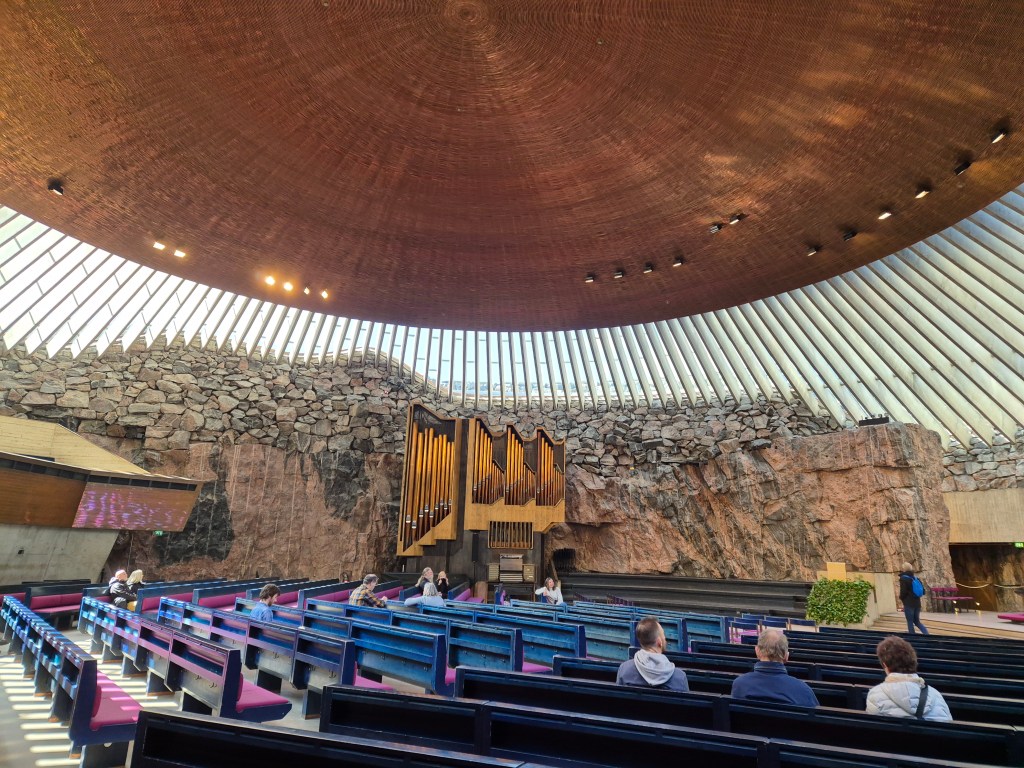
For me, the most impressive church in the city is Temppeliaukio Church, or Church of the Rock, which dates from 1969. The interior was excavated and built directly out of solid rock, and natural light enters through the skylight surrounding the center copper dome. I liked this combination of modern architecture and rocks, reminiscence of the ancient Christian churches.

Temppeliaukio Church

Compared to other significant European cities, Helsinki has few cars and people on the streets. It has low pollution and an excellent life index. In the harbor, a typical Scandinavian marketplace has served customers since 1889. Here, you can find a lot of food, mostly fish but also sweets and beverages, and many shops with traditional products on sale.

Old Market Hall

Of course, there are many blocks and buildings like in any European city, but I couldn’t find any relevant or interesting images to post here.

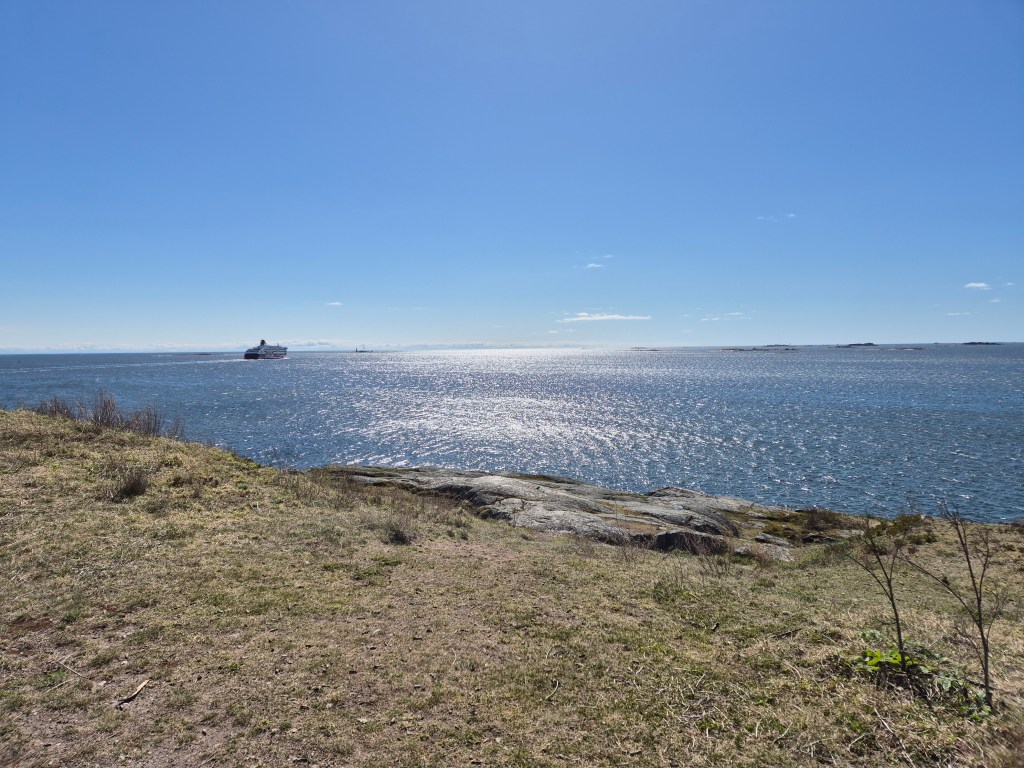
The next stop is on Somenlinna islands, once a solid military fortress and now a place for tourists. Suomenlinna is now one of Helsinki’s most popular tourist attractions and a popular picnicking spot for the city’s inhabitants. The island is reachable on a 15-minute boat trip from Helsinki, and you can use a regular tram or bus ticket to travel. The island has many houses and museums on the island’s history, as well as a military museum. I would say that the entire island is a museum of life in the XIX century. From here you have lovely views of the sea and Helsinki.

View from Suomenlinaa island

In the above picture, you can see a ferry going from Helsinki to Tallinn. The trip takes about two hours. During weekends, the ferry is full of people traveling from Helsinki to Tallinn to buy cheaper alcohol. In Finland, beer costs around 8 EUR in restaurants and 3-4 EUR in supermarkets.

Helsinki has many parks. One of them is Sibelius Park, a memorial to the great Finnish composer. In the center of the park is a Sibelius monument, reminding of the organ pipes. It consists of more than 600 hollow steel pipes welded together in a wave-like pattern. The park is closed and in restoration until the end of 2024.

Sibelius monument

Helsinki is different from other cities due to its many islands, lakes, and trees, which make it look like a vast area of wild nature. The city is beautiful, and late spring and summer are perfect times to visit it.

Lakes and trees are a common view in Helsinki

Based on the above, I recommend Helsinki as a lovely city to visit during a two-to-three-day city break.

Prague half-marathon

In 2024, Prague set a record for participants, with over 13,500 people at the finish. The previous editions had about 10,000 finishers, so there was a significant increase this year. More importantly, 57% of the participants were foreigners. The fact that the race is part of the SuperHalfs helps increase the number of participants.

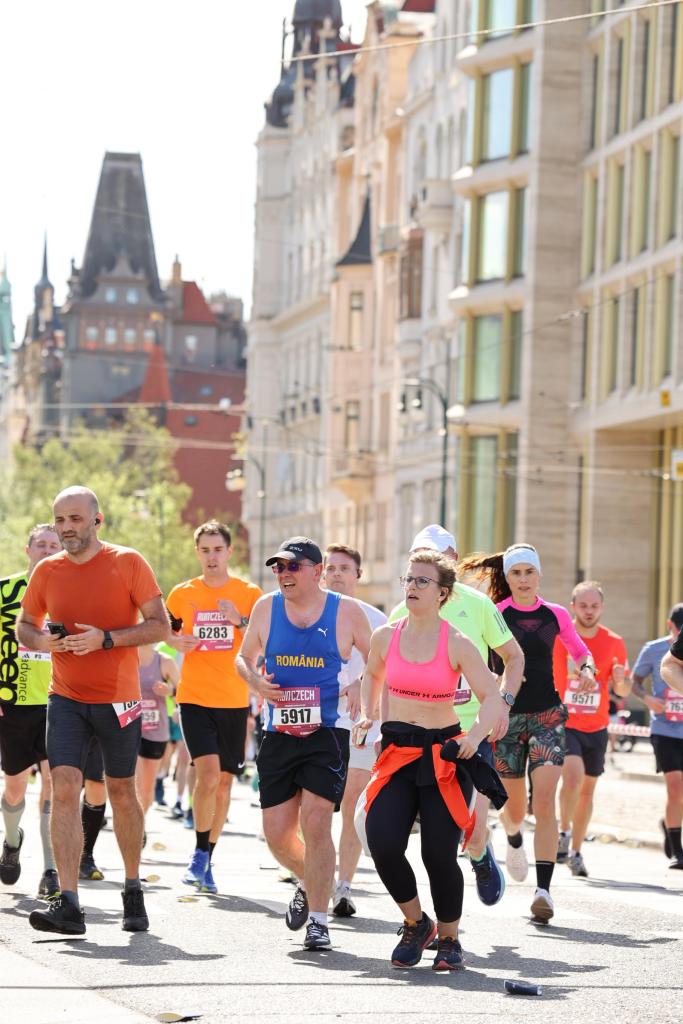
On April 6th, the day of the race, it was hot in Prague. The temperatures reached 28 Celsius, and the sun was shining. These are not the best conditions for running a long distance.

The race route goes along the Vltava River and crosses five bridges between both sides of Prague. It continues in the old center through Venceslas Square and next to the famous astronomical clock. I am not a big fan of running on cobblestone. I prefer running on asphalt and visiting tourist attractions slowly and not during a run. The finish was in the same place as the start in Bubenské nábř. area.

During hot weather, it is essential to choose carefully how you dress

My race went okay in these circumstances, as I know how to run safely in hot weather. If you want to survive a race in hot weather, you need to do a few things: stop and drink water or isotonic at every hydration point, wear a cap, wear a tank top (not a T-shirt), keep the pace in the safe zone, have a couple of gels with you.

I finished at 2:14 without any incident. It was my third-worst time ever, but that did not matter as I checked my third super half race and did not focus on time.

I am very serious about the weather problem while running. In Prague, 102 people fell on the street during the race for different reasons. Of these runners, 36 went to hospital. The authorities declared a trauma plan (a local form of a disaster plan). There was a campaign hospital called Golem at the finish line in a huge tent with air conditioning and ambulances driving people there and into the hospital. I lost the count of fallen runners I saw during this race. It was much worse than in Lisbon. In fact, the sound I heard most during the race was the sound of ambulances. The medical help was very well organized. As a kid in the 80s, I remember watching a Czech serial called “Sanitka” ( The Ambulance) on TV. It was like seeing scenes from those series in Prague that Saturday.

Muj cas

There are many news articles about the problems at the Prague half-marathon, all in the Czech language. I found this post by a Cardiologist, Hanka Štefaničová, who, as a participant, described what happened during the race very well.

What I learned. At the end of the race, there was a problem. The runners who finished had to go on a tight corridor guardrail by fences for 200 meters to get the medals, and then they would get water, bananas, and other refreshments from the organizers. A few volunteers handled medals to racers at the end of these fences. But too many people finished simultaneously, and the queue of racers waiting because of this bottleneck was very long. Imagine the situation: you run under the sun for more than 2 hours, then you have to stop under the sun for 10 minutes or more to wait for the medal. If you get no water, you will collapse.

After getting the medals, some runners understood the gap, took water bottles, and gave them to the people in the queue. I drank 2 such bottles until I got the medal. That saved the other runners and me while waiting in the queue. I know those were ad-hoc volunteers because they all had finishers’ medals on their chests. They were not organizers. At the time, I took the medal and was happy to get the baggage and talk to Bogdan after the race. It didn’t cross my mind to stay and become one of the ad-hoc volunteers to give water to people waiting in the queue. In my mind, I was a participant who finished the race and not an organizer. Sometimes, you need to get out of your role, become human, and do what it takes to help others, even if no one has asked you or is not expecting you to do that.

With Bogdan, after the race. He had a good race in these circumstances, finishing in 1:50

Some statistics are relevant to what happened. For races with many runners, I look at the time of the runner who finished precisely in the middle of all the runners. If the race has 10k finishers, I look at the time of the runner who finished exactly at 5k at the finish. The table below clearly shows how external factors influence race results.

CityDateFinishersMiddle time
Warsaw18.03.2024134221:55:20
Lisbon18.03.2024132472:02:40
Prague06.04.2024135572:03:40
There are considerable differences in time when the weather is hot. The route in Warsaw is more difficult than the other 2. I can say that as I ran all 3 half-marathons (Warsaw in 2022).

I have some suggestions for the organizers. For example, they could give runners bottles of water instead of glasses. The volunteers were overwhelmed and did not have enough time to pour water into glasses to give to runners. At the finish, they could have more people to handle medals. Also, if possible, provide water to people once they finish and don’t let them wait under the sun. Set the check time posts in the farthest areas of the route, where people need to turn around. This is a simple mechanism to avoid cheating.

Despite the problems mentioned above, the organizers did a good job overall. A positive note for the area to leave and pick up baggage: it was the best organized I have ever witnessed. The rest of the nice things are expected for major half-marathons: SMS with your result, pictures after the race, refreshments during and after the race.

As for my plans, I traveled by plane four out of five consecutive weekends in March and April for events covered in this blog. It is time to rest and train before my next half-marathon in Helsinki in May.

Trupa lui Fane’s motto: “Together we are stronger!”

Grenke chess tournament 2024

Five years ago, when I played in the Grenke chess tournament, I said to myself that if I had the chance, I would like to return to play this tournament in Karlsruhe. Years passed, and the Grenke Open was canceled until this year because of COVID-19 and some other reasons. This year, it was announced on short notice that the event would happen again. It is impressive what the organizers managed to do in less than two months!

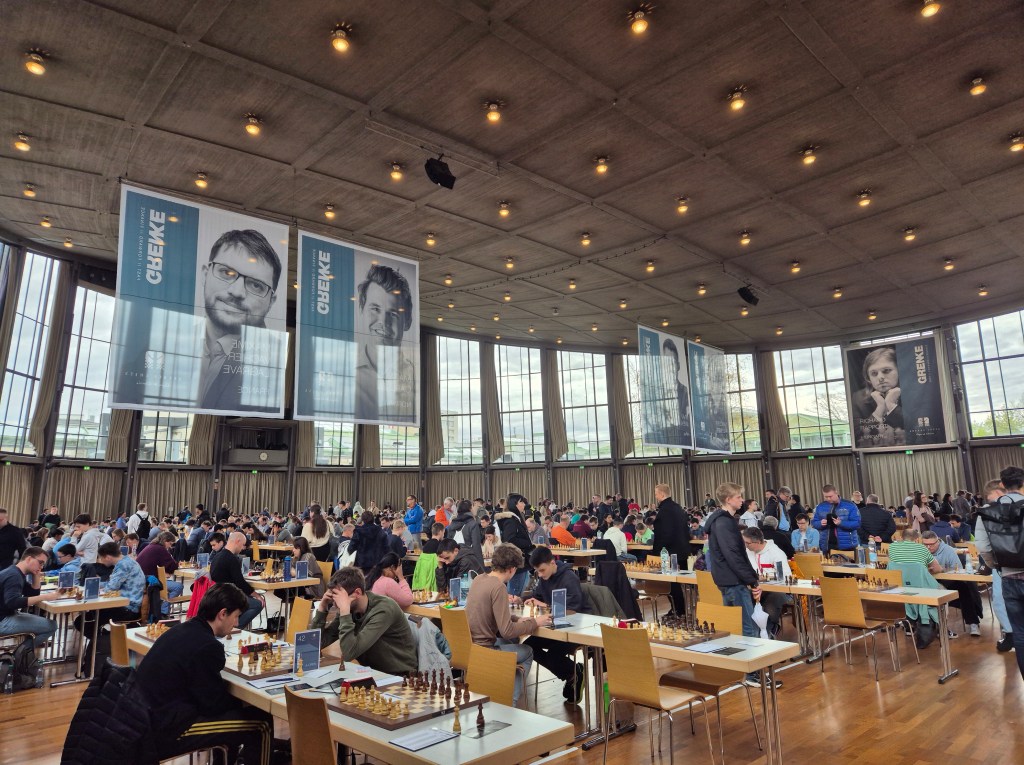
The atmosphere of thousands of people playing chess simultaneously differentiates Grenke Chess Festival from other tournaments worldwide. These people range from the best players to absolute beginners, mainly from Germany and other countries.

At the start of the previous edition of the tournament, there were about 2000 players, but this year, after five years of pause, around 2600 players joined, making Grenke the biggest chess tournament in the world. This happened because the popularity of chess has been rising since the Queen Gambit series.

The festival consists of 4 different tournaments. The classic tournament had only 6 players, among the best in the world. The Open A tournament is open for players with an ELO rating above 2000. The B open is for players below 2000, and the C open is for beginners with less than 1600 ELO FIDE. All the open tournaments were 9 rounds played for 5 days: one round on Thursday, March 28th, and then 2 rounds daily for the next 4 days.

According to some statistics, were 935 players in the A-open, 1177 in the B-open, and 500 in the C-open. One interesting fact is that if the number of rounds is smaller than log2(n) -1, where n is the number of participants, you can end up with more than one player having a maximum number of points at the end of the tournament, which makes it hard to establish a winner. For example, in tournament B, log2 (1177) – 1 > 9 (number of rounds), but fortunately, there was just one winner with 8.5 out of 9.

The main playing hall

I played the B open with an ELO rating of 1857. I scored 5.5 out of 9 games: 5 wins, 1 draw, and 3 losses. Two of my losses were against players above 1900, including the last winner of the B tournament. The third lost game was against a lower-rated player in a completely won material and positional position. I guess I just relaxed too soon and blundered one piece and the game. I ended up at position 244 from 1177, which was better than my initial ranking of 303. As a result, I lost 3 ELO rating points. For comparison, 5 years ago, I was rated 1874 and made 6 points out of 9, losing 9 rating points and finishing 109 out of 797 players. The overall result was better last time, but the rating performance was better this time. This is possible when you play against people with higher ratings.

Overall, I am happy with my result because I don’t spend time preparing for chess.. Five years ago, I was more serious about training and playing than I am now. You can’t make progress in chess if you don’t work on it.

Part of the tournaments B and C area

Some sensation from the tournament was the draw obtained in round 2 by a junior Romanian FIDE master against the 9th player in the world, Arjun Erigaisi ( also the rating favorite of A-open). The winner of the classic chess tournament was Magnus Carlsen, the best player in the world. The winner of the A-open was Hans Moke Niemann, known in the chess world for the trial against Magnus Carlsen.

Some recommendations for people interested in participating in future editions. The playing venue is great, the space and the conditions are perfect. They have wooden boards and pieces for everyone ( they needed more than 1300 boards and pieces this time). The tables are big, the chairs are good, you have enough space during the game. The only downside is the noise. You can’t be silent in an ample open space with more than 1500 simultaneously. This was not a problem for me, but I saw some players wearing earplugs. This recommendation is good for people who can’t focus because of noise. Don’t come to Grenke if this is your first tournament. The reason is that 4 days with double rounds means intensively playing chess for 7-8 hours each day. It may be like running a marathon by an untrained person.

Excellent conditions to play chess in Karlsruhe

I also have some recommendations for the organizers: Send SMS/WhatsApp messages to players with the pairings for the next round. Make some announcements in English, not only in German.

The chess world has changed a lot in the last five years. Now, all the top tournaments have live coverage on YouTube, with Grandmasters covering the games. Recently, players of different strengths have come to play in tournaments with tools, stream their games online, and have someone else comment live on them. For me, this is useful as I can learn more from the games of a 2000 ELO-rated player (close to my level) than I can learn from 2700+ players.

I would happily return to this tournament because of the unique positive vibe and energy.

As in this article, I compared this edition with the one five years ago and chose to end with a song on this theme.

Lisbon half-marathon

My running season this year began with the Lisbon half-marathon. Lisbon is part of Superhalfs, a series of 6 half-marathons you can complete in five years for an extra medal. Together with Bogdan, we registered for this race for a long time.

I returned to Lisbon after ten years and found the city had changed positively. Many buildings were renovated, the cost of living was good compared to central Europe, and people were very relaxed.
On March 17th, we took a morning train to Pragal station and followed the crowds to the start. The first negative surprise was that the organizers blocked the people from getting to the start line for a long time. The problem was that we had no space for warmup before the race. We stayed only in crowds until we went over the start line. This was the worst organization of a start to a half-marathon I have ever witnessed, and you can see I have some experience.
The run starts from Pragal, on the other side of the Tagus River from Lisbon. First, you cross the April 25th bridge. The Lisbon half-marathon is the only way a pedestrian can cross this impressive bridge. If you are afraid of heights, this might be an interesting challenge.

Then, the runners continue off the bridge in Lisbon. The first 5 km are in general descending which is appropriate for speed. From km 7 until the end, the race is flat on the shore of the Tegus River. The finish is next to Belem Tower in front of the spectacular Jeronimos Monastery.

At the start on the other side of the river Tagus from Lisbon

The second negative surprise was the temperature. That day, the weather went up to 27 degrees Celsius, but the main problem was that with a humidity of 80-90%, you feel the temperature is 35 degrees Celsius. If you don’t hydrate well, you risk not finishing the race. On a positive note, the organizers added ad hoc more hydration points towards the end of the race.

During this race, I saw at least 15 people who had fallen and were taken by ambulance or treated on the spot. This is a negative record. I’ve never seen that many people injured in a race. About 250 people abandoned the race.

At the finish lane

As for me, I wanted to finish in less than 2 hours, and after 9 km, it seemed possible. Unfortunately, at that moment, the third negative surprise happened. As I later found out, I had some food poisoning from the day before, which made me look for a toilet. After solving the problem, I continued the race at around 6’30” pace until the finish line, which I crossed at 2:19. This was my worst time ever in a half-marathon, but I am happy that I finished the race. Even in this challenging situation, I managed to be in the top 10000 from 13200 finishers.

Happy people at the finish

On a positive note, Bogdan had a perfect race in such circumstances, finishing at 1:46:46 ( a time that happens to be my personal best). It was an excellent result for him, being 3062 out of all runners or the top 23%.
All’s well that ends well. Both of us finished the race on time and got medals. Later, I underwent antibiotic treatment, and I was fine.

With Bogdan after the race

Please find some insights for people interested in running this half-marathon in the future. Register at least half a year in advance as the race is quickly sold out. Try to get to the start as early as possible. We arrived at 8:55 ( while the race was scheduled for 10:05), but it needed to be earlier. The organizers created some bottlenecks around the start, and it took a lot of work to get there. The start and finish are not on the same spot, and you can’t bring stuff to leave at the garderobe and pick it back up after the finish. If it is a hot day, please wear a cap. It makes a big difference.

They say that the more challenging the race, the longer you will remember it. This was definitely a race I’ll remember.

Revolution songs from the previous century

The XX century was turbulent, with many revolutions and wars. In this post, I will write about some of the songs that encouraged the fighters to combat those bloody events.

The criteria for the songs were to be composed in the XXth century and to cover events from the same century. For this reason, I had to eliminate pieces like “The Internationale,” “Warszawianka,” or “Ay Carmela !” which were composed in the XIXth century. Another criterion was to add only songs I like. It is a subjective list, and I don’t claim to be an exhaustive list. It is essential to mention that I don’t associate myself with the message of all the songs. It would be impossible to sustain both communist and anti-communist causes simultaneously. However, that doesn’t stop me from appreciating beautiful and motivating songs. Conversely, I chose not to write about some events because I failed to find lovely songs with my subjective taste. Some pieces were contemporary with the revolutions they referred to, while others were composed before or later. I chose to cover only revolutions and not World Wars.

From a chronological perspective of the XXth century, the first six decades were dominated by communist or anarchist revolutions. In comparison, the last four decades were democratic revolutions fighting against dictatorship.

The first revolution of the XX century we cover here was the 1905 uprising in Russia. In our times, we remember those events in the movie “Battleship Potemkin” by Serghei Eisenstein from 1925. That movie remains a masterpiece of cinematography and propaganda. It is possible that the song “Potemkine” by Jean Ferrat, composed in 1965, was inspired by that movie.

We continue with the Mexican Revolution from 1910-1920. The most known song from that period, “La Cucaracha,” was from the previous century. Therefore, I chose “La Adelita,” a song about the women “Soldaderas” participating in the revolution.

The next event was the Russian Revolution of 1917. The most known hymn of the “great revolution” is “The Internationale,” which dates from the 1870s. For the same reason as above, I chose “Farewell of Slavianka,” composed in 1912 by Vasily Agapkin and played during the events.

After the Russian Revolution, there were many tries by communists to seize power in different European countries. Most notable would be the revolution in Germany during 1918-1919. A representative piece of that revolution is “Brüder, Ergreift Die Gewehre,” written by Max Barthel, although some things are unclear about this song.

The Spanish Revolution happened in the 1930s. There are many beautiful songs from that time. My first choice would be “Ay Carmela !” but since it was from the previous century, I selected “Si me quieres escribir,” a song of the Left forces composed in the 1920s. It has to be added that “A las barricadas” is, in fact, “Warszawianka” melody with Spanish verses.

The Cuban Revolution started in 1953 and succeeded in 1959. The well-known song “Hasta siempre comandante” was composed in 1965 as a response to a farewell letter from Ernesto Che Guevara to the Cuban people. Che Guevara was an Argentinian anarchist who, after the success of the Cuban revolution, left Cuba to support the uprisings in other countries, in Congo and later in Bolivia, where he was murdered.

We can say that communist and anarchist revolutions died with Che Guevara. The subsequent revolutions covered here are fights for democracy.

In 1956, the first anticommunist uprising in Europe took place in Hungary. There was no official song for that event, but 10 years later, in 1966, an Italian journalist, Pier Francesco Pingitore,  wrote the lyrics commemorating those events. It was called “Avanti ragazzi di Buda” to remember the young students who participated in that rebellion. The Hungarian uprising was crushed the same year by the Soviet Army.

The Spring in Prague happened in 1968. Again, it was a fight for freedom and democracy. The Warsaw Pact countries’ armies occupied Czechoslovakia and crushed the democratic movement. Romania was the only country from the Warsaw Pact without sending troops and condemning the aggression instead. The Prague Spring had a huge impact all over Europe. Many poems and melodies were composed for the revolution in Prague. I had to select four songs: one in Czech, two in French, and one in Italian. Guicini’s song refers to the self-immolation of Jan Palach in Prague in 1969, a moment with broad impact at the time and over the years. His death is covered in other songs, like this one from Salvatore Adamo:

“Y en a qui meurent au printemps
Comme des éclairs, comme des flambeaux
Barrant la route un court instant
Aux chars d’assaut” -Mourir dans tes bras

The following two events are not revolutions in the classical sense. In 1970, Salvador Allende became president of Chile, moving the country to socialism. In 1973, there was a coup d’etat, which led to Salvador Allende’s death and starting of dictatorship in Chile. “El pueblo unido” was composed in Chile in 1973, a few months before the coup.

In 1974, Greece changed the ruling regime from dictatorship to democracy after the unsuccessful Cypriot coup followed by the Turkish invasion of the island. Mikis Theodorakis, the famous composer, returned to Greece and had concerts where they sang his composition “To Yelasto Pedi,” among others.

In 1989, there was a significant event in Eastern Europe, and democracy was instated in East Germany, Poland, Hungary, Czechoslovakia, Romania, and Bulgaria. This is the only event I witnessed live from the last century’s revolutions. I chose a wonderful Czech song from that time.

I really enjoyed doing the research for this article because I discovered many beautiful songs. It is not easy to match the objective history with the subjective pieces. It was a complex century, but at least they wrote beautiful music. I recommend this webpage as a starting point if anyone is interested in doing a similar job or wants to learn more on such a topic.

Disclaimer: Don’t listen to these songs before you go to sleep.

If you wonder what the usage of this post my answer is that it can be used as a playlist to be listened to during running or exercising.

Playlist with all the songs described in this post

10000 km run in 8 years

I started running in 2015. After 8 years, I recently crossed a distance of 10k km running. I am happy with my motivation to continue running for 8 years at an average of 2 miles (3.2 km)/day. The 10k km is not a long distance for 8 years. People who want performance in running should aim for at least twice as much as I did. A professional runner covers a distance four times longer than I did within the same time, so 10k km in just two years!

Statistics say I ran, on average, over 100 km each month. The total time spent on running is 41 days, or 1.5% of 8 years. It was the best time invested in one activity as it gave me much health in return. My average pace was 5’52” per km. I ran alone for 6 out of the 8 years.

Of great help for me was running with the running group “Trupa lui Fane”. Although I moved to Krakow in 2020, we continued the collaboration remotely all these years. Many thanks to Stefan Oprina and “Trupa lui Fane” members for their support!

With “Trupa lui Fane” in May 2023

I crossed the 10k km mark at the last training before running the half-marathon in Bucharest. This way, the first and the last of the 10k km were run in the same stadium (the one in the picture above).

My first half-marathon was 8 years ago at Bucharest MIB. As mentioned in a previous post, to celebrate this distance milestone, I chose to run this year’s edition of the same half-marathon in Bucharest on October 15th. I participated in 6 of the last 8 editions of MIB.

With Bobo at the start. He finished 12 minutes ahead of me. Great run!

The organization for this event was amazing, as usual. Music bands, water and isotonic, pacemakers, and many volunteers make it a great event. The only thing I would like to see improved is the opportunity for runners to buy their photos at a good resolution and without a watermark. The pictures are free now but with a watermark, as shown above and below.

I wasn’t in good shape for this half-marathon, but I know my limits well. It was also hot that day, not ideal for running.

About the half of a half-marathon

I kept my pace around 5’30” for most of the race, with the last 2 km being the most difficult, and ran harder for the final straight line. My official time was 1:57:40.

I met many people I knew before or during the half-marathon. This was cool and makes MIB my favorite race. You get in line with someone you know, exchange a few words, and continue the race. Precisely like in life, only at a different pace.

Crossing the finish line

I registered for 3 half-marathons in the spring 2024 to celebrate this achievement. Lisbon on March 10th, Prague on April 6th, and Helsinki on May 11th. Lisbon and Prague are part of the “super halves”, while Helsinki has a unique story. Superhalfs are a series of 6 essential half-marathons in Europe. You get an additional medal if you finish all 6 in 5 years or less.

Celebrating with colleagues after the finish

Running shaped my personality and helped me deal with many things in life. I met great people while running. It is a walk of life that you can do at a slower or faster pace, how you like it. During the first years, it was hard to motivate myself to go outside in cold weather and run. I had no coach at the time and did everything alone. Today, I am happy I chose to continue running those days despite the hardships.

I had no talent for running and no experience before I started to run. It is never too late to change your life and run, even if this is not your strength. If I could do it, everyone can.

“I’m learning to fly, but I ain’t got wings.” – I saw running as a way to learn to fly.