Reflections on the SuperHalfs Series: My Experience and Insights

The SuperHalfs program has grown rapidly in popularity. With increasing demand and limited slots available for each race, the organizers have removed the time limit to complete all six events in the series. This move allows more runners to gradually work toward finishing the series over time.

As of May 2025, only 1,113 runners have completed the entire series. This is an impressively small number. Nearly 100,000 people have participated in at least one of the six races. Given these numbers, I thought it might be helpful to share my personal journey and offer some insights for aspiring SuperHalfs finishers.

While you can find the list of finishers on the official SuperHalfs website, gathering deeper data requires some effort. I used ChatGPT to generate code that helped me analyze the number of finishers by country. Here are the results:

CountryNumber of finishers
Spain193
Great Britain185
Germany136
Denmark100
Portugal92
Italy74
Czechia42
France38
Poland28
Netherlands26
Brazil22

The numbers are interesting. Not a surprise that Spain and Great Britain are on top. In Spain people run fast, they have half-marathons with 2.5 hours time limit to finish, while in the rest of Europe is 3 hours. The UK, meanwhile, has a rich running culture and offers wonderfully organized races. I highly recommend racing in the UK for an unforgettable experience. The first 5 countries from the list are also organizing races from series. Italy is the first country that has many finishers but doesn’t have a race in the program. Interesting Brazil is the only non European country that has many finishers.

Before the Berlin Half-Marathon this spring, only about 480 people had completed the series. Berlin added nearly 700 new finishers in one go, largely because it was newly included in the program just last year.

The SuperHalfs calendar includes three spring races—Lisbon, Prague, and Berlin—and three autumn races—Copenhagen, Cardiff, and Valencia. Since 2025, demand has surged, and most events now use a lottery system to allocate entries.

If you’re not lucky in the lottery, there’s an alternative: official travel agencies offer guaranteed race entries. I used one of these agencies—Germany’s Interair—for the Cardiff Half-Marathon when I joined the event late and couldn’t find an open spot. Their service was excellent.

If you are not lucky winning the lottery, you can use one official travel agency. This agency will guarantee your participation in the race. I had used a travel agency only once during my campaign for the Cardiff half-marathon. I decided to join this race too late and there were no available spots. I used the services of the German travel agency Interair and I was very happy with them.

I’ve written posts about my experiences in each of the six races. Here are a few personal impressions:

  • Top Picks: For me, the best races are Valencia and Berlin. Both offer outstanding organization and scenic, fast courses—ideal races to conclude your series on a high note.
  • Cardiff: A very well-organized race with amazing crowd support. However, the course is not flat. It is less ideal if you’re chasing a personal best.
  • Copenhagen: The course is flat, but I had some concerns when I ran it in 2022. The start was chaotic because there were no wave starts. The course became crowded. Pedestrians were crossing in front of runners, especially in the city center. The finish area was also quite congested. Hopefully, these issues have since improved.
  • Lisbon: Be mindful of the weather—it can get hot. The course begins with a downhill section, then transitions into rolling terrain before flattening out from kilometer 7 onward.
  • Prague: My least favorite race. The course includes cobblestone sections in the city center, which can be tough on the legs. Weather can also be unpredictable. A simple way to improve the course would be to extend the riverside sections and avoid the city center altogether. Interestingly, Prague also has the smallest field of runners among the six races.

Here are some highlights of Superhalfs races. Best finish is in Berlin. Valencia has the best atmosphere. It also has the best organization at the start. Cardiff boasts the best public. The best routes are in Valencia and Berlin.

The SuperHalfs program is a fantastic way to combine travel, fitness, and personal achievement. Running a half-marathon isn’t about proving anything to others – it’s a personal journey. And this series makes that journey unforgettable.

If you’re considering joining, act fast. As the series continues to gain traction, getting a spot will only become more challenging.
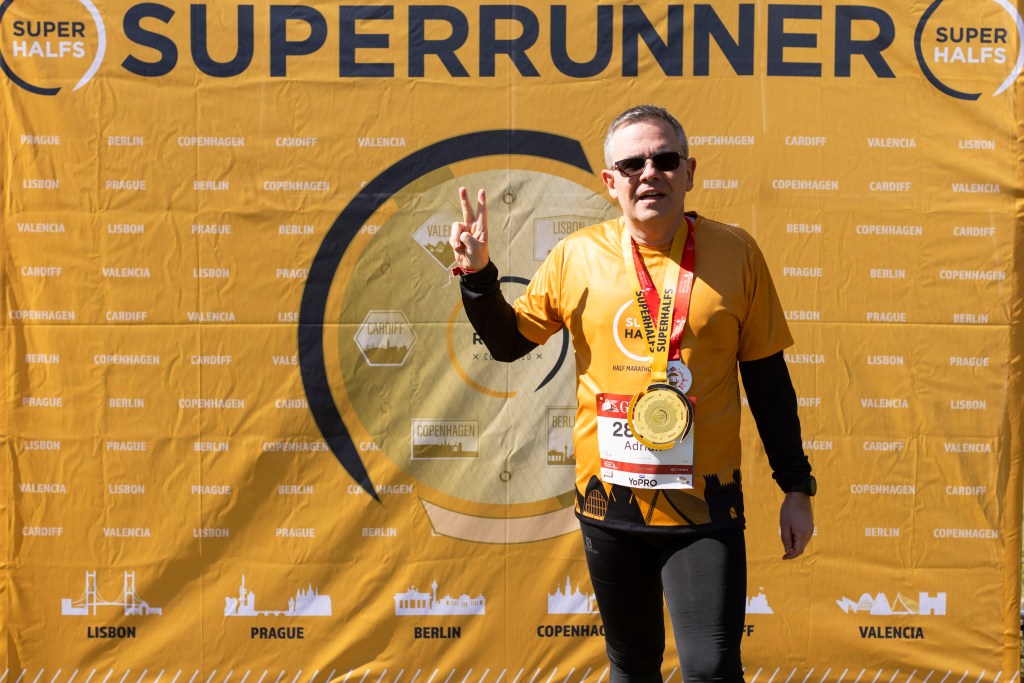
Superhalfs, a mission accomplished

Berlin Half-Marathon 2025: A Memorable Finish at the Brandenburg Gate

The 2025 edition of Berlin half-marathon concluded my Superhalfs journey. Ending the series with the most impressive finish of all the races was a good decision. This took place at the Brandenburg gate. More than just an architectural masterpiece, the Brandenburg Gate stands as a powerful symbol of European unity. Before 1989, it marked the border between East and West Germany. It also served as a stark reminder of the Iron Curtain that divided the continent after World War II. As someone who lived through the communist era, crossing that finish line under the Brandenburg Gate carried deep, personal significance.

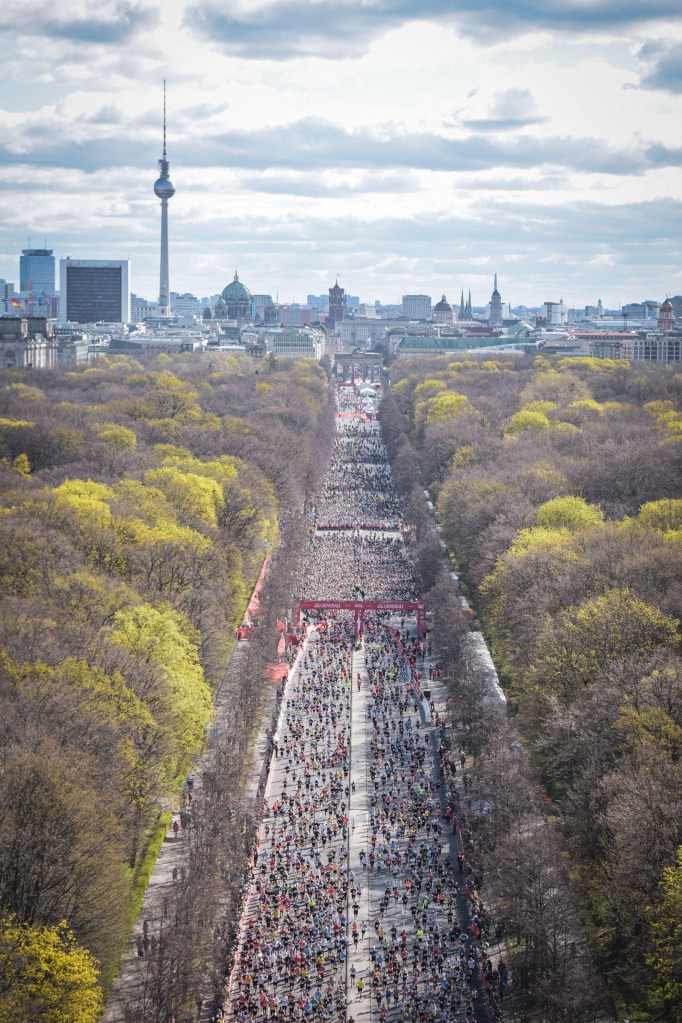
In the distance you can see the runners split in starting waves. Also some highlights of Berlin landmarks

This year’s race drew an incredible 35,000 participants to the start line. It was a chilly morning, with temperatures hovering between 4°C and 6°C. Runners could come with extra clothes that they donated before the start. It is good to get warmer before the start but not fun to sweat a lot during the race. The runners received a poncho at the end of the race to keep them warm in the cold wind.

At start they played Chariots of Fire by Vangelis to get the crowd in the mood for the race.

The race was very well organized with waves of people based on their earlier official times in other races. The start was from 10:05 AM but different waves started every 15 minutes. For example, I was in the wave of people with targeted time from 1:52 to 2:00 which started at 10:35.

A group of runners at the start

Berlin’s course is flat and spacious, offering plenty of room to pick up the pace when you feel strong. Hydration points offered water and isotonic drinks at several stations. At the 12th kilometer mark, every runner received a free Maurten gel. Pacers were available for most goal times. For those interested, you could have your time engraved on your medal. You could also buy official race photos.

A band was singing this song around 10th kilometer. I will always associate this song with the Berlin half-marathon

I was not fully recovered after the pulled hamstring injury in January. I was cautious about the risk of not finishing the race. Nevertheless, this was my last Superhalfs race and I really wanted to achieve a time under 2 hours.

I started conservatively, averaging 5’49″/km for the first 5 kilometers, then slightly quicker at 5’45″/km over the next 5. By the 12th kilometer, we passed Potsdamer Platz and continued into East Berlin. The architecture here is unmistakably different. The former communist-era buildings are less charming. However, the atmosphere became increasingly cheerful. Bands played songs, and people encouraged the runners.

Around 15th kilometer

From the 16th to the 18th kilometer, we ran along Karl-Marx Allee. It is a grand boulevard so reminiscent of Moscow that it has stood in for the Russian capital in films like The Queen’s Gambit. Feeling strong, I picked up my pace to 5’23″/km for the final stretch. The last two kilometers are a straight shot down Unter den Linden boulevard. With one kilometer to go, I was still feeling good. I pushed to 4’56″/km as I passed under the Brandenburg Gate. I crossed the finish line in 1:59:32 — mission accomplished.

The spectacular finish of Berlin half-marathon

Our running group, “Trupa lui Fane,” had four members at this race. Bogdan ran an impressive 1:42:08, missing his personal best by just 3 seconds. Andreea and Mihai, the younger, faster duo, also had great races. Andreea finished in 1:35:47. Mihai finished in a blistering 1:25:04. For both, it was their second Superhalfs event after Prague.

Trupa lui Fane group before the race

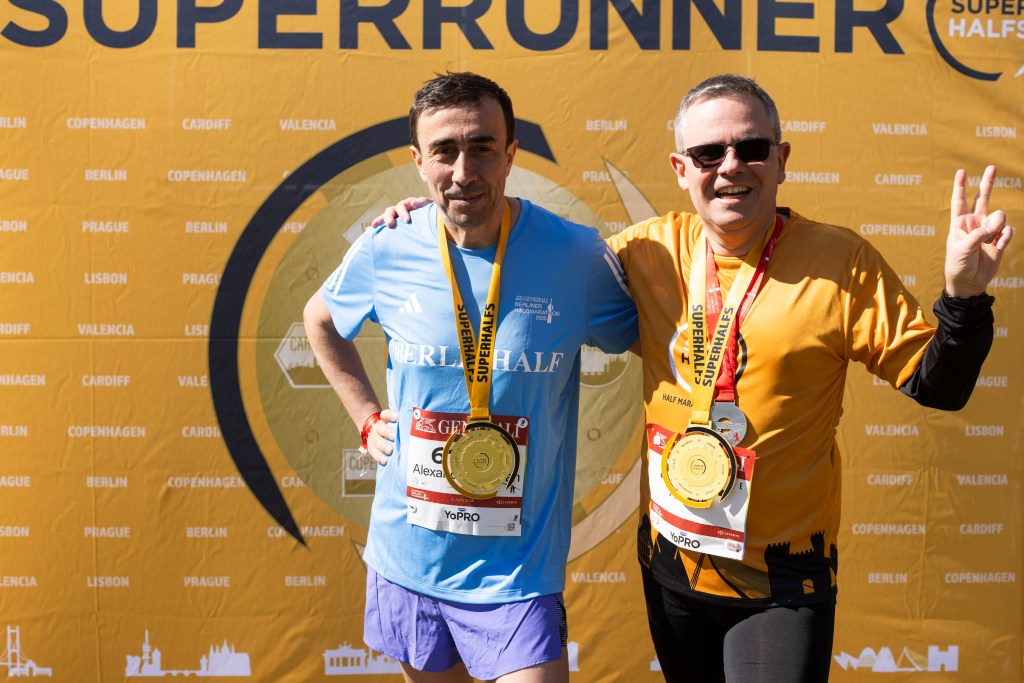
Berlin was the final Superhalf race for Bogdan and myself. It was a project we started in 2022 in Copenhagen. We finished it in two and a half years. As mentioned the first Romanian finished the program last October. In Berlin another group of five Romanians got the Superhalfs medals. And speaking of medals, it’s a hefty one. It weighs 360 grams. That’s 60 grams for each of the six races.

With Bodgan once we got the Superhalfs medals. It was a 2.5 years journey!

I highly recommend the Berlin Half Marathon. Alongside Valencia, it stands out as one of the best running experiences in Europe. A heads-up for those eyeing next year’s race: a big change is coming. Entry for 2026 will be decided by lottery, with registration open from April 10 to May 22, 2025. The lucky draw results will be announced by email starting June 2, 2025. So remember: for Berlin, training hard isn’t enough… you’ll need luck too!

P.S. My next race is 10k on May 10th in Bucharest.

Running in Potsdam

During the first weekend of June, I was in Potsdam with Bobo, a friend, running at the 16th edition of ProPotsdam Schloesserlauf. It was a perfect time for a short visit to Berlin and Potsdam before the race.

In front of Brandenburg Gate
With Marx and Engels
Television tower in Alexanderplatz
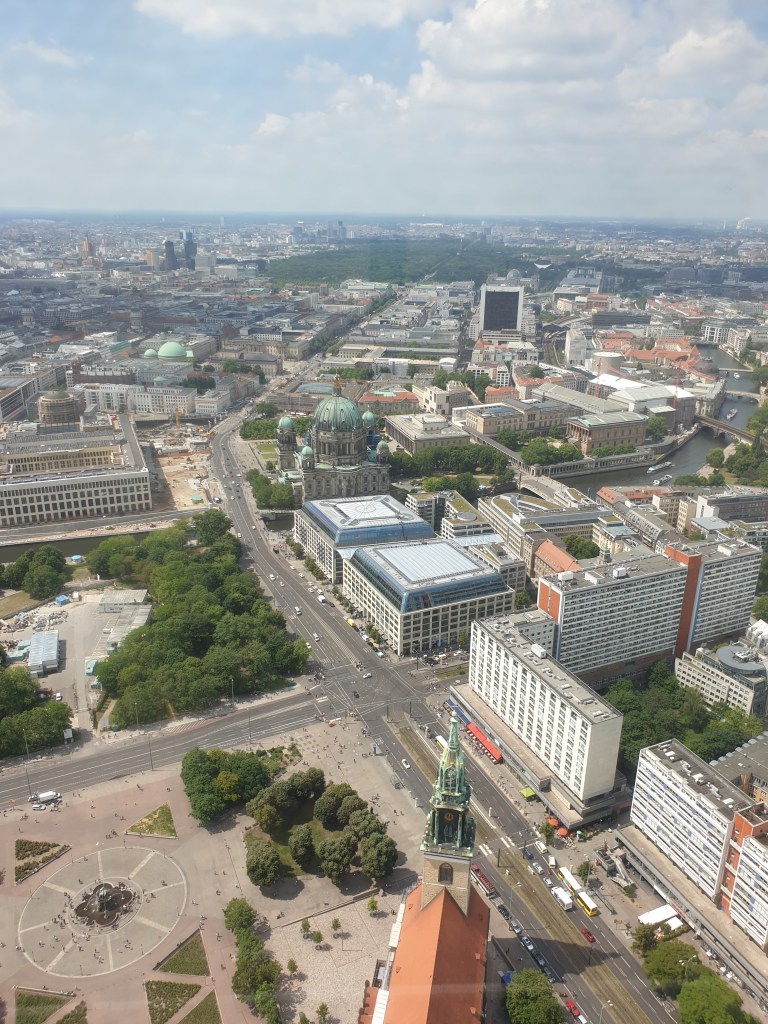
View of Berlin from the television tower
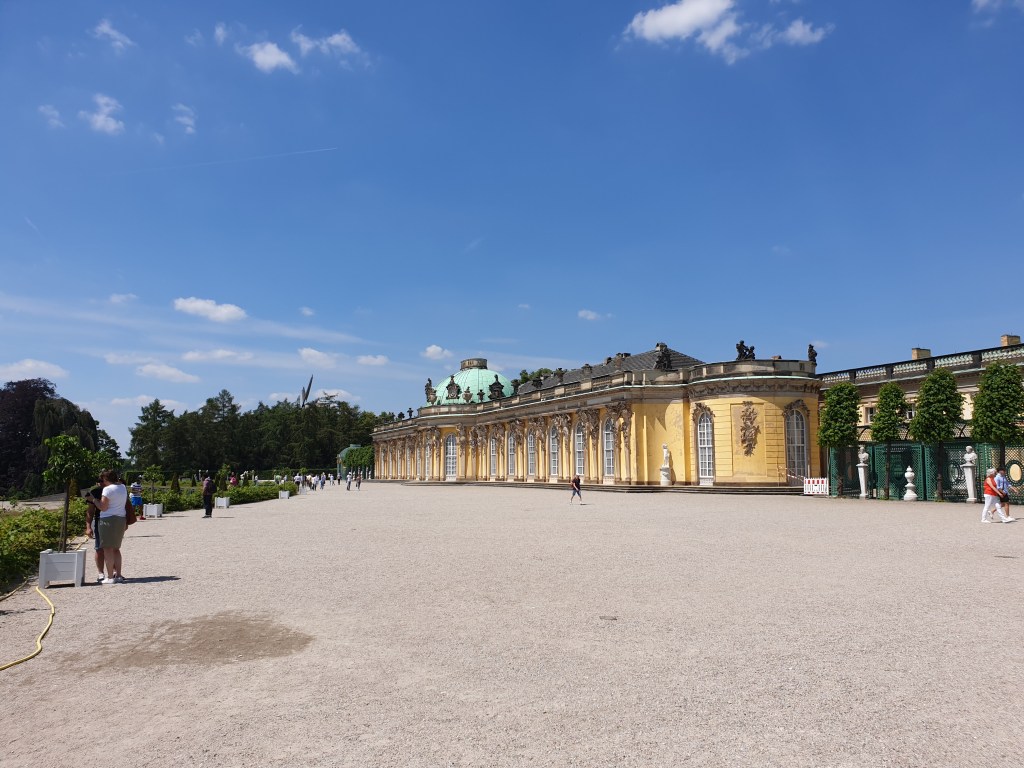
Sanssouci Palace in Potsdam
Charlottenhof Palace in Potsdam
View of Charlottenhof garden on a summer evening

As for the race itself, there were two options, either 10km or half-marathon (21.1 km). Usually, I run half-marathons but this time we had two busy days in Berlin before the race and a returning flight soon after the course so I chose to run 10 km. It was a wise decision as June 2nd was a hot day in Potsdam and the race included a somehow steep climb near the Sanssouci Palace.

My objective was to finish the 10 kilometers race in less than 50 minutes. Unfortunately, I missed this goal by 30 seconds as my official time was 50 minutes and 29 seconds. Nevertheless, the whole trip was a cool experience and I am very happy I ran there.

With Bobo after the race

The race itself was very well organized. The sightseeing was beautiful as we ran around the Potsdam castles. My only suggestion for the organizer would be to group the participants at the start according to their expected finish time. For me, it was very hard to advance during the first kilometer because it was very crowded in front of me. Because of that, I ran the first kilometer in 5 minutes and 30 seconds. I kept my energy and accelerated during the last kilometer in 4:39. I had a chance to finish under 50 minutes if I would start sprinting one kilometer earlier.

There were 1477 runners who finished the 10-kilometer race. Of these, 772 were women and 705 men. It was the first time I run a race of such size where the majority of runners are women. It is great to see so many women running long distance races as this has a positive impact on health. My rank was 182 from 1477 finishers in the general standings and 21 in my age category.

I noticed in both 10 km and 21.1 km competitions almost all the participants finished their race. I think it is a cultural thing in Germany to achieve your commitment.

Those castles had been built a few hundred years ago by the rulers of Prussia. At that time the only reason for thousands of common people running around the castles would be a riot. Fortunately, society evolved and continues to do so. These days so many people choose to exercise as it improves their health and life.