Valencia half-marathon 2025

The best proof that what I wrote last year about the Valencia Half-Marathon was true is the fact that I decided to run it again this year.

With limited race options, I have to choose carefully where to compete. The Valencia Half-Marathon makes that decision easy, it’s one of the best-organized and most enjoyable races in Europe. For returning runners, registration is even smoother: the organizers give priority to those who ran in the previous edition.

If you’re trying to run Valencia for the first time, you’ll need to enter a ballot in November. If you don’t get in, there’s still hope. Several official travel agencies offer guaranteed race entries as part of their packages.

This post isn’t about repeating what I said last year. It’s about sharing what was new. I also want to share what I learned this time around.

What Was New This Year

The Wardrobe Service

This year, I paid 6 EUR to leave my luggage at the start area wardrobe. It was absolutely worth it. Not having to run with my phone or other items made the experience much more comfortable.

Slippery Grids on the Course

After kilometer 10, the route passes along a street full of metal grids covering subway vents. When it rains (as it did this year and last), these grids can get very slippery. Tip: stay on the left side of the road, where the surface is safer.

The Energy of the Drummers

One of the things I love most about Valencia is the number of live drumming bands along the course. The beat of the drums has an incredible effect. It pushes you forward in a way that no playlist ever could.

My Race

I learned from last year’s mistakes. This time, I didn’t eat too much before the race. I made sure to finish my breakfast more than two hours before the start.

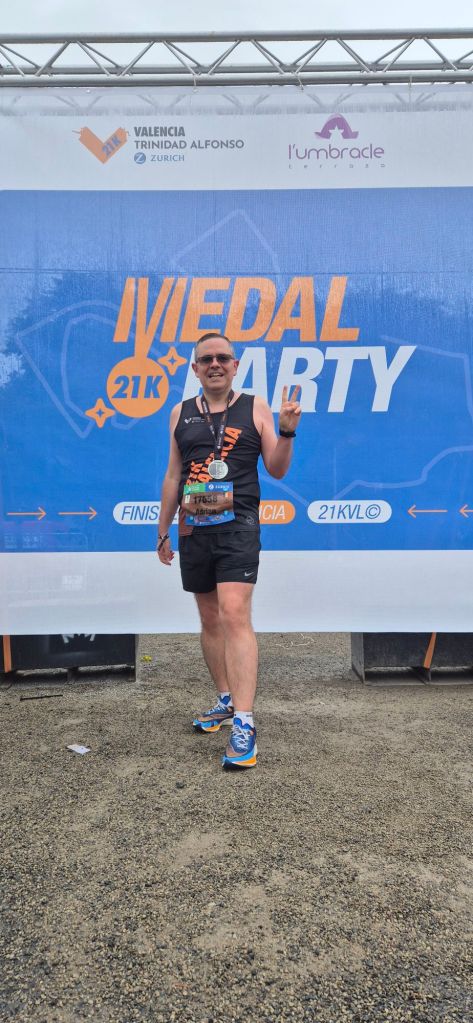
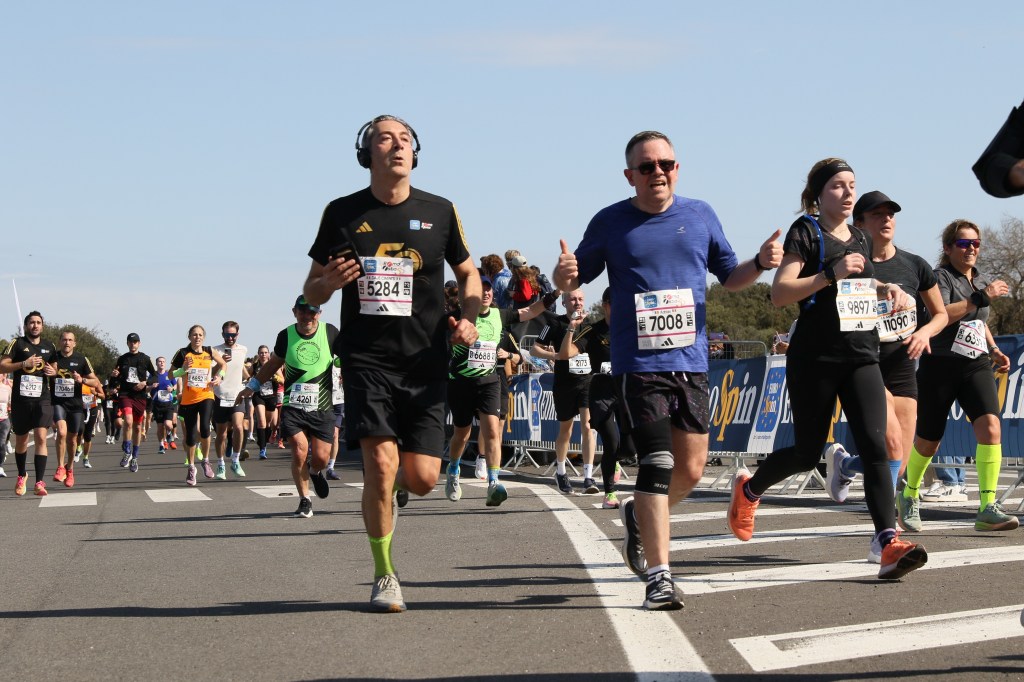
I started in wave 7 at 9:01 a.m. and took it easy at first, running the first 5 km at around 6:00 min/km. I planned to pick up the pace later. However, by kilometer 15, I realized I wasn’t going to finish under two hours. At that point, I decided not to push too hard. Whether it’s 2:02 or 2:03 doesn’t make a huge difference. I crossed the finish line in 2:04:11, an average result, but still 22 minutes faster than in Tallinn!

After the race

Our Team – “Trupa lui Fane” in Valencia

This year, five of us from Trupa lui Fane ran in Valencia. That made the whole experience even better. We shared the excitement, compared strategies, and celebrated together after the race.

“Trupa lui Fane” in Valencia

Everyone had a strong performance, close to their personal bests:

  • 🥇 Mihai1:24:54, our fastest runner, finishing among the first 2,000 participants
  • 💪 Andreea1:34:52, the only one to set a new personal best
  • 👟 Bogdan1:44:24, two minutes slower than last year
  • 🔥 Sorin1:56:06, at his first SuperHalfs race, very close to his PB

Congratulations to all of them for their fantastic results!
And a big thank you to our coach, Ștefan Oprina, for helping us become better runners over time!

Valencia remains, without question, my favorite half-marathon in Europe.

Later that day in Valencia I met someone who didn’t look quite happy with his result.

Not everyone looked happy that day

Valencia 2025 reminded me once again why I love running. It’s the rhythm, the people, and the stories. These moments stay with you long after you cross the finish line.

PS.1 A Seagull and a Song

On race morning, I woke up early, opened the window, and saw a lonely seagull flying above the hotel. It reminded me of a Joe Dassin song I’ve always loved:

“Moi, de temps en temps, je me sens pareil
À cet éternel exilé
Lui, qui ne sait pas replier ses ailes
Moi, qui ne sais pas m’arrêter.”

A small, poetic moment before the adrenaline of the start line.

PS.2 Remembering the Floods of 2024

The day before the race, Valencia held a large protest. It was in memory of those who lost their lives during the 2024 floods. Last year, we left the city on Monday after the half-marathon. The next day, torrential rain caused devastating flooding that claimed 224 lives in the province. One year later, people are still unhappy with how the authorities responded.
It’s a sobering reminder that life is unpredictable. Every race, every trip, and every day, is something to be grateful for.

PS.3 Goodbye, Mihai Suba

On Sunday, October 26, the day of the race, Grandmaster Mihai Suba (1947–2025) died near Valencia in Spain. Before 1990, Romania had only three chess grandmasters — and Suba was one of them, a true original. He made significant contributions to chess, particularly in middlegame theory and the Hedgehog system. I’ve read a few of his books; Dynamic Chess Strategy was a particular favorite. He was admired worldwide for his creativity and deep understanding of the game. May he rest in peace — and may his ideas continue to inspire players for generations.

Tallinn half-marathon

Another autumn begins, and with it a new running season.

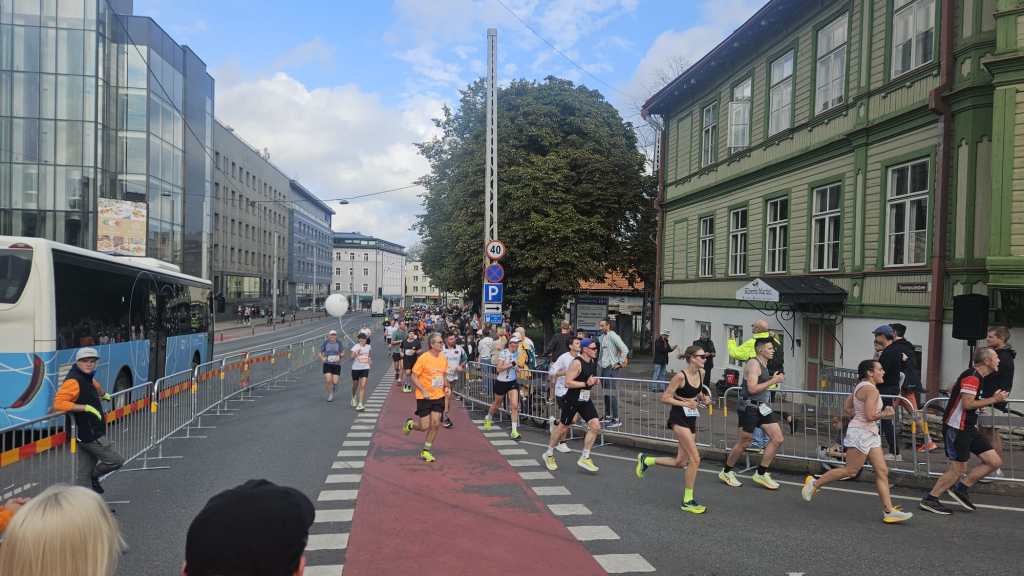
Every September, Tallinn hosts the largest running festival in the Baltic countries. Over one weekend, thousands of participants gather to run distances from 5 km to the full marathon. It’s the biggest and most vibrant event of its kind in the region. If you count all the finishers the number is greater than 1% of the entire population of Estonia.

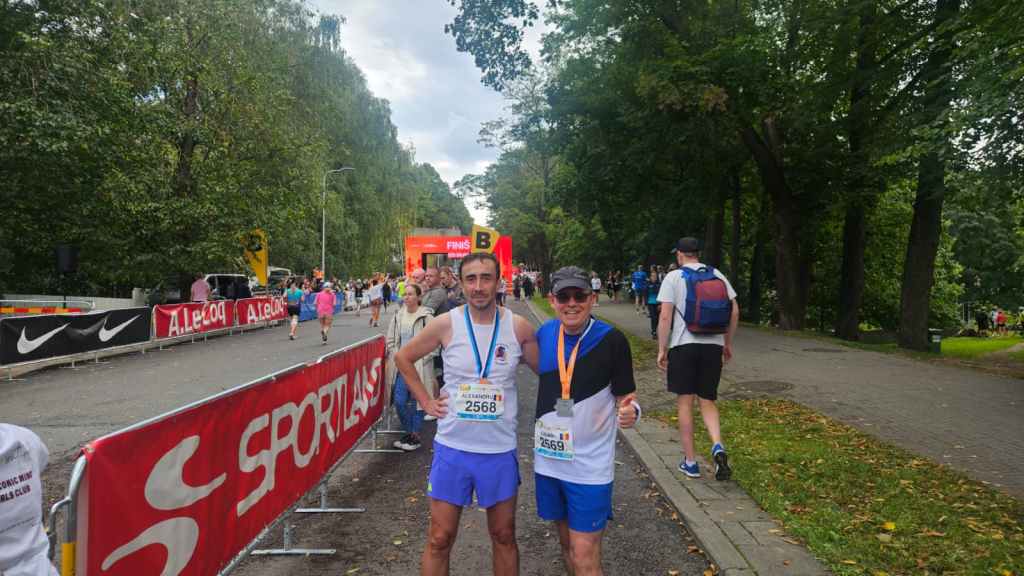
At the beginning of the race

Choosing the Half-Marathon

As usual, I signed up for the half-marathon. My goal was simple: to enjoy the race without any pressure about results.

The course in Tallinn is flat. It is flatter than most half-marathons in Europe. This makes it a great choice for both beginners. It is also ideal for experienced runners chasing a personal best.

Somewhere in the middle of the race

The Race Experience

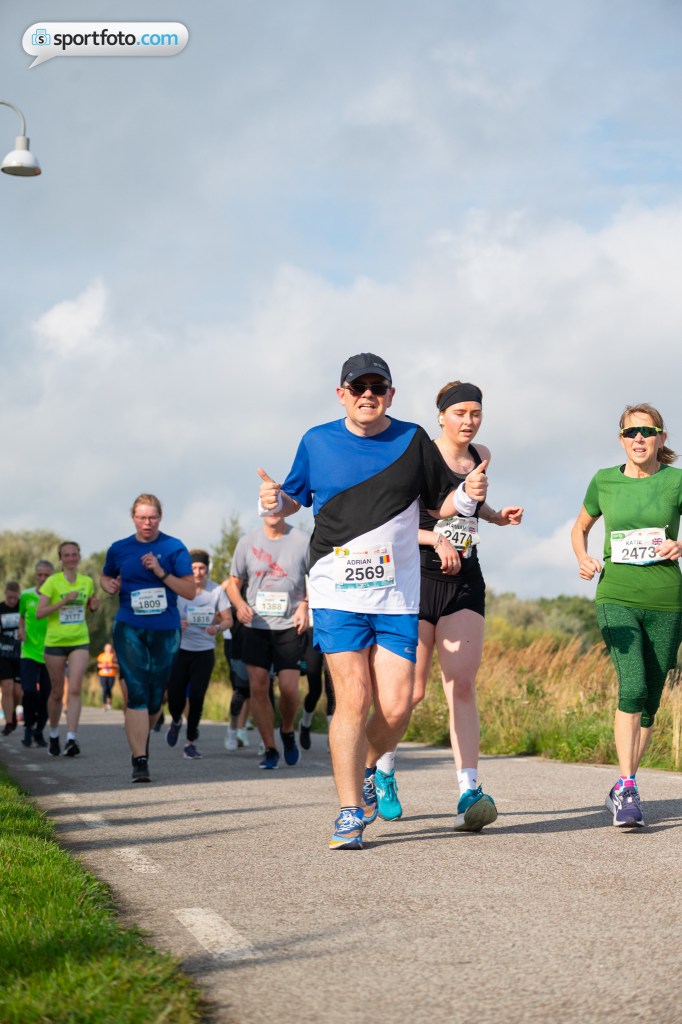
The organization was excellent. Runners received free public transport for three days. Drinks were available every 4 km. At kilometer 12, energy gels were handed out. The atmosphere was festive: live bands played along the route, jugglers entertained, and spectators cheered with genuine warmth. There were no frustrating interruptions. No pedestrians suddenly crossed the track. At the finish, runners had the option to buy online their race photos.

The weather was perfect too: cool, dry, and comfortable for running.

Close to the finish lane

Mistakes Along the Way

Still, I made several mistakes that cost me the race. The start was at 9 AM, and my hotel served breakfast only from 7:15. I ate too much, too late, finishing at 7:35, which left me no time for a proper warm-up.

The first kilometer is downhill, and I ran it too fast—5’08”, much quicker than my target pace. Almost immediately, I felt the food rising back up, and by kilometer 5 I was close to dropping out. From there until kilometer 12, every step was a struggle. Fortunately, gels and water helped me hold on.

I shifted my focus to simply finishing, ignoring the clock. In the end, I crossed the line in 2:26, my slowest half-marathon ever. But I accept full responsibility. The race was perfectly organized; the mistakes were mine alone.

As the Norwegian explorer Fridtjof Nansen once said: “Have you not succeeded? Continue! Have you succeeded? Continue!” That’s what I intend to do.

For this race I chose a T-Shirt with Estonian flag colors on it

Running with Friends

My colleague Bogdan had an excellent performance, finishing in 1:44, a strong start to the season. Running alongside friends always makes the experience better, no matter the result.

With Bogdan after the race

Post-Race Joy

After the race, we headed to Tallinn’s beautiful city center for lunch and to share impressions. On one street, a singer was performing pop songs. Soon, a group of joyful runners joined him. They sang together, people from Sweden and other countries, united by music and the shared experience of the race.

It was a beautiful moment: strangers from across Europe celebrating together, voices blending in the heart of Tallinn. That’s the Europe I love.

A Personal Milestone

On a personal note, this race also marked a symbolic milestone for me. I’ve now run the equivalent of 300 marathons. This is a total of 12,660 km since I started running ten years ago. It has been an incredible journey so far, and despite setbacks like this race, I’m excited to continue.

Tallinn half-marathon is a race I highly recommend. The course, the atmosphere, and the city itself make it unforgettable, even if this time, it wasn’t my best day.

10 Years of Running: My Journey through Two Cities

This May marks 10 years since I started running. A full decade of runs, finish lines, and the quiet rhythm of feet on pavement. One month earlier I crossed the 12,000 km distance. I’ve written before about other key milestones in this journey, crossing the 6,000 km and later the 10,000 km marks. Both were moments that made me stop, reflect, and appreciate how far I’ve come.

A Tale of Two Cities

The 6,000 km mark was more than just a number, it marked the end of an era. I had spent five years running in Bucharest, where this journey began. Those were the years of building a base, getting to know my limits, and discovering what running meant to me.

Since then, I’ve spent the last five years running in Krakow, a city that’s become just as meaningful. New routes, different seasons, a different pace of life and yet, the same sense of satisfaction after every run.

Racing More Than Ever

After passing the 10,000 km milestone in late 2023, I didn’t slow down. Quite the opposite. I’ve run eight half-marathons and one 10k race in the last 2,000 km alone. This has actually been the most race-filled period of my running life.

What made it even better? Every race was in a different European city. Running became an excuse to travel, a way to combine city breaks with something I love. Explore during the day, race in the morning, and leave with new memories. I’ve shared stories from those races in earlier posts, but they continue to be highlights of the journey.

The Support Behind the Scenes

A big part of what’s kept me going has been the remote coaching and encouragement from Ștefan Oprina. He’s been in my corner all this time, offering structure, insight, and motivation. Having someone experienced guiding me, even from afar, has made a big difference. So thank you, Ștefan!

Setbacks and Slower Paces

Of course, not every step has been smooth. In January 2025, I pulled a hamstring. This likely happened because I pushed too hard on a treadmill session. I was running for 30 minutes at a steady, fast pace. That was a wake-up call. It’s been my only injury, but it reminded me that rest and balance are just as important as discipline.

Lately, my pace has slowed. I haven’t gone under 1:59 in a half-marathon recently. That’s been tough to accept at times, but I’m optimistic that things will pick up again, hopefully starting this autumn.

Looking Ahead

Next up: a race in Tallinn this September. And I’m genuinely looking forward to it. It’s not just about the result. It involves showing up and exploring a new place.

Because at the end of the day, that’s the most important thing: the journey continues.

With “Trupa lui Fane” in Bucharest – May 2025

A Personal Duathlon: Running and Chess in Bucharest

A traditional duathlon typically combines running and cycling. It’s less well-known than the triathlon, which includes swimming, cycling, and running—in that order. In both formats, the winner is the person who crosses the finish line first.

While I was in Bucharest this May, I experienced a rare coincidence. Two major sporting events were scheduled for the same weekend. One was the Bucharest Half-Marathon, and the other was the Bucharest Chess Grand Prix.

I wanted to participate in both, but unfortunately, the starting times overlapped. Luckily, the running festival included a 10 km race on Saturday morning, which ended before the chess tournament began. That turned out to be the better option. Not only did it fit my schedule, but running 10 kilometers requires significantly less energy than a half-marathon.

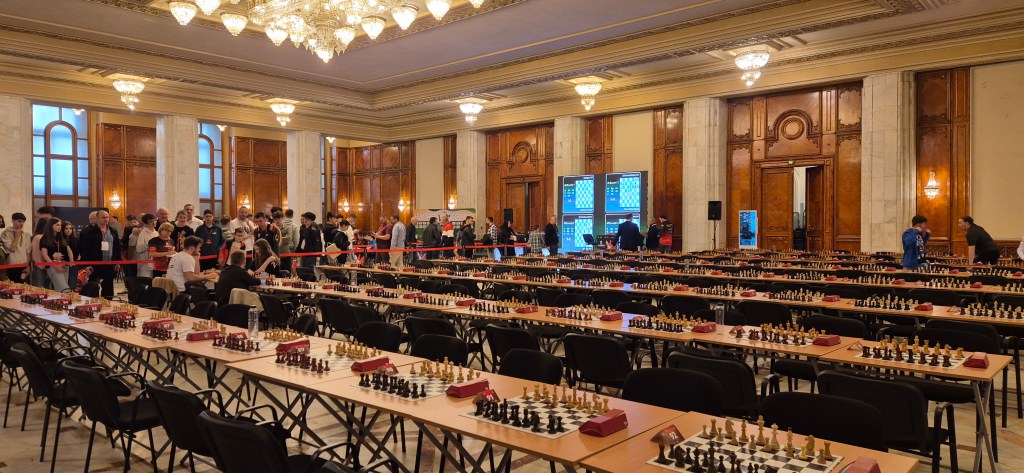
The venue for the chess tournament. Also the finish for the running was in front of the same building

I set myself a simple goal: to finish in the top half of both competitions. For the 10K run, this meant aiming for a time under 58 minutes based on the previous year’s results. For chess, it was more ambitious: scoring at least 5 out of 10 points. My best previous performance had been 4.5 points at the 2022 edition, and I hadn’t done much preparation this time.

The Running Phase

The last kilometer of the race

The day began with the 10K race, an event as well-organized as ever. The weather was perfect for running: cool (6–8°C) with a light drizzle. I started at a pace of about 5:20 per kilometer and maintained it for the first half. I was feeling strong. I sped up for the second half and dropped below 5 minutes per kilometer. I even sprinted the last 200 meters at a pace of 4/km.

I finished with an official time of 52:08, far better than expected. I placed 312th out of 2,957 finishers, putting me in the top 10.5%. However, this statistic is somewhat misleading, as most of the stronger runners competed in the half-marathon on Sunday. So, the field for the 10K wasn’t as competitive.

After the race with colleagues from Trupa lui Fane

A major factor in my performance was the training I did for a month with “Trupa lui Fane” in Bucharest. That preparation made a big difference. For context, I ran the Berlin Half-Marathon in 1:59:32, while the 10K time I just achieved projects to about 1:55:00 for a half-marathon. That gives me hope to break 1:55 at the upcoming Tallinn race.

Many thanks to Ștefan Oprina, who has helped me overcome health challenges and become a better runner over the years!

The Chess Tournament

Later that day at the chess tournament

After the run, I had time to shower and eat before the chess tournament began.

The tournament followed a 10 round Swiss format. That means each player is paired in each round with another player who has the same score. Each game was timed at 15 minutes per player. There was a 5-second increment per move. This is standard practice these days to avoid losses on time in winning positions. The schedule included 4 rounds on Saturday and 6 rounds on Sunday.

I started with 2 points from the first 4 rounds, not great, but acceptable. Sunday started well with a win. Then, I lost against a Candidate Master. I followed up with two more wins (one also against a Candidate Master). That brought me to 5 points from 8 rounds, achieving my goal of finishing in the top half. Unfortunately, I lost the last two rounds against stronger players.
In the end, I placed 213th out of 475 players. This result put me in the top 45%. Additionally, I gained 5 ELO points.

A New Type of Duathlon?

This experience made me think: what if we organized duathlons that combined very different events like running and chess?

One idea is to use a simple average of ranks or scores across both disciplines to determine an overall winner. A more refined method could involve using normalization. Each result could be compared to the best and worst performances in each category. This approach allows fair comparisons.

I was thinking of a way to compare results from independent events. In this case a rough formula could be:

Eval = 2×ELO Performance−Race Time (seconds)

The idea is to reward high chess performance. The higher the performance, the better. It also aims to penalize long race times. The lower the race times, the better. I’ll work on refining this formula in a future post.

A Special Chess Anniversary

This year marks the 100 year anniversary of the Romanian Chess Federation. With almost 500 players this was the biggest chess open tournament ever organized in my country. It attracted many strong players and also gave me the chance to reconnect with my chess roots.

I was delighted to see my former coaches again.

I first met Iulian in 1992 when he visited our class during a math lesson. He had just opened a chess club and invited students to join. Our teacher asked who already knew how to play chess, and a few of us raised our hands. He encouraged us to learn more about the game. Shortly afterward, I joined the club, and chess became a lifelong journey. Iulian didn’t play this year, but he was there coaching five juniors. I was part of his first generation of students; since then, many others have followed. Here we are 33 years later still enjoying the game.

With Iulian my first coach

Cristian, a chess master, coached me between 2018 and 2020 before I moved to Poland. He was one of the referees at the tournament and continues to coach young players. During our time working together, I focused a lot on the psychological aspects of chess—understanding how emotions influence decision-making. Chess often goes beyond logic; it’s also about how you manage your internal state.

With Cristian

I’m deeply grateful to both of them for their impact on my life.

Seeing them again, by chance, after several years was one of the weekend’s highlights. We’ve kept in touch, but nothing compares to meeting in person.

There’s a quote I really believe in:

“In life, what matters most is the people you meet and the books you read.”

What is life?

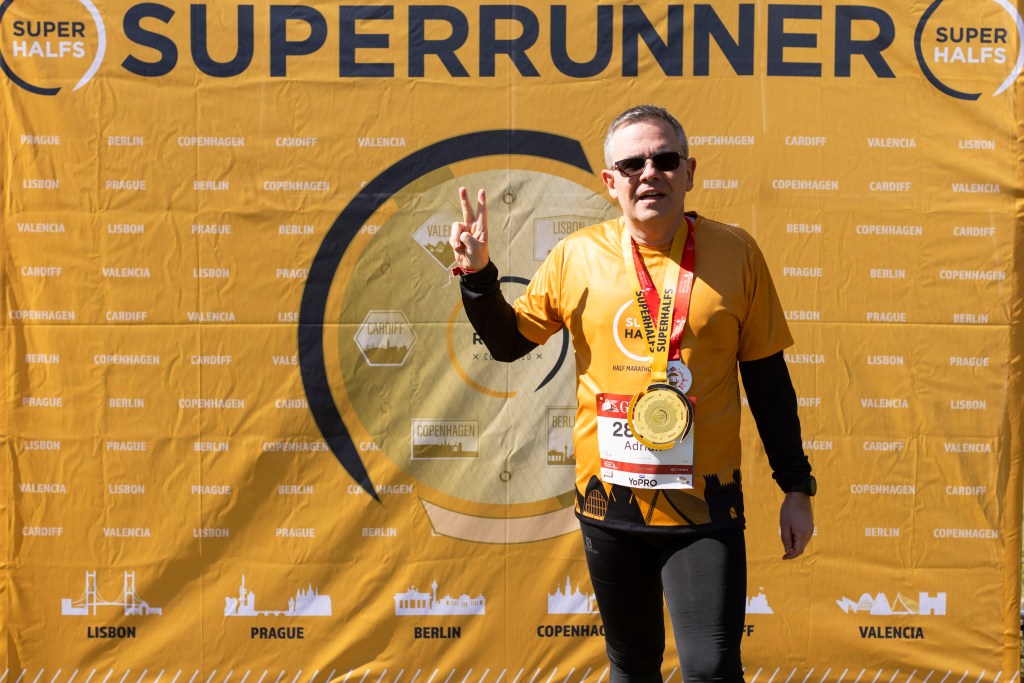
Reflections on the SuperHalfs Series: My Experience and Insights

The SuperHalfs program has grown rapidly in popularity. With increasing demand and limited slots available for each race, the organizers have removed the time limit to complete all six events in the series. This move allows more runners to gradually work toward finishing the series over time.

As of May 2025, only 1,113 runners have completed the entire series. This is an impressively small number. Nearly 100,000 people have participated in at least one of the six races. Given these numbers, I thought it might be helpful to share my personal journey and offer some insights for aspiring SuperHalfs finishers.

While you can find the list of finishers on the official SuperHalfs website, gathering deeper data requires some effort. I used ChatGPT to generate code that helped me analyze the number of finishers by country. Here are the results:

CountryNumber of finishers
Spain193
Great Britain185
Germany136
Denmark100
Portugal92
Italy74
Czechia42
France38
Poland28
Netherlands26
Brazil22

The numbers are interesting. Not a surprise that Spain and Great Britain are on top. In Spain people run fast, they have half-marathons with 2.5 hours time limit to finish, while in the rest of Europe is 3 hours. The UK, meanwhile, has a rich running culture and offers wonderfully organized races. I highly recommend racing in the UK for an unforgettable experience. The first 5 countries from the list are also organizing races from series. Italy is the first country that has many finishers but doesn’t have a race in the program. Interesting Brazil is the only non European country that has many finishers.

Before the Berlin Half-Marathon this spring, only about 480 people had completed the series. Berlin added nearly 700 new finishers in one go, largely because it was newly included in the program just last year.

The SuperHalfs calendar includes three spring races—Lisbon, Prague, and Berlin—and three autumn races—Copenhagen, Cardiff, and Valencia. Since 2025, demand has surged, and most events now use a lottery system to allocate entries.

If you’re not lucky in the lottery, there’s an alternative: official travel agencies offer guaranteed race entries. I used one of these agencies—Germany’s Interair—for the Cardiff Half-Marathon when I joined the event late and couldn’t find an open spot. Their service was excellent.

If you are not lucky winning the lottery, you can use one official travel agency. This agency will guarantee your participation in the race. I had used a travel agency only once during my campaign for the Cardiff half-marathon. I decided to join this race too late and there were no available spots. I used the services of the German travel agency Interair and I was very happy with them.

I’ve written posts about my experiences in each of the six races. Here are a few personal impressions:

  • Top Picks: For me, the best races are Valencia and Berlin. Both offer outstanding organization and scenic, fast courses—ideal races to conclude your series on a high note.
  • Cardiff: A very well-organized race with amazing crowd support. However, the course is not flat. It is less ideal if you’re chasing a personal best.
  • Copenhagen: The course is flat, but I had some concerns when I ran it in 2022. The start was chaotic because there were no wave starts. The course became crowded. Pedestrians were crossing in front of runners, especially in the city center. The finish area was also quite congested. Hopefully, these issues have since improved.
  • Lisbon: Be mindful of the weather—it can get hot. The course begins with a downhill section, then transitions into rolling terrain before flattening out from kilometer 7 onward.
  • Prague: My least favorite race. The course includes cobblestone sections in the city center, which can be tough on the legs. Weather can also be unpredictable. A simple way to improve the course would be to extend the riverside sections and avoid the city center altogether. Interestingly, Prague also has the smallest field of runners among the six races.

Here are some highlights of Superhalfs races. Best finish is in Berlin. Valencia has the best atmosphere. It also has the best organization at the start. Cardiff boasts the best public. The best routes are in Valencia and Berlin.

The SuperHalfs program is a fantastic way to combine travel, fitness, and personal achievement. Running a half-marathon isn’t about proving anything to others – it’s a personal journey. And this series makes that journey unforgettable.

If you’re considering joining, act fast. As the series continues to gain traction, getting a spot will only become more challenging.

Superhalfs, a mission accomplished

Berlin Half-Marathon 2025: A Memorable Finish at the Brandenburg Gate

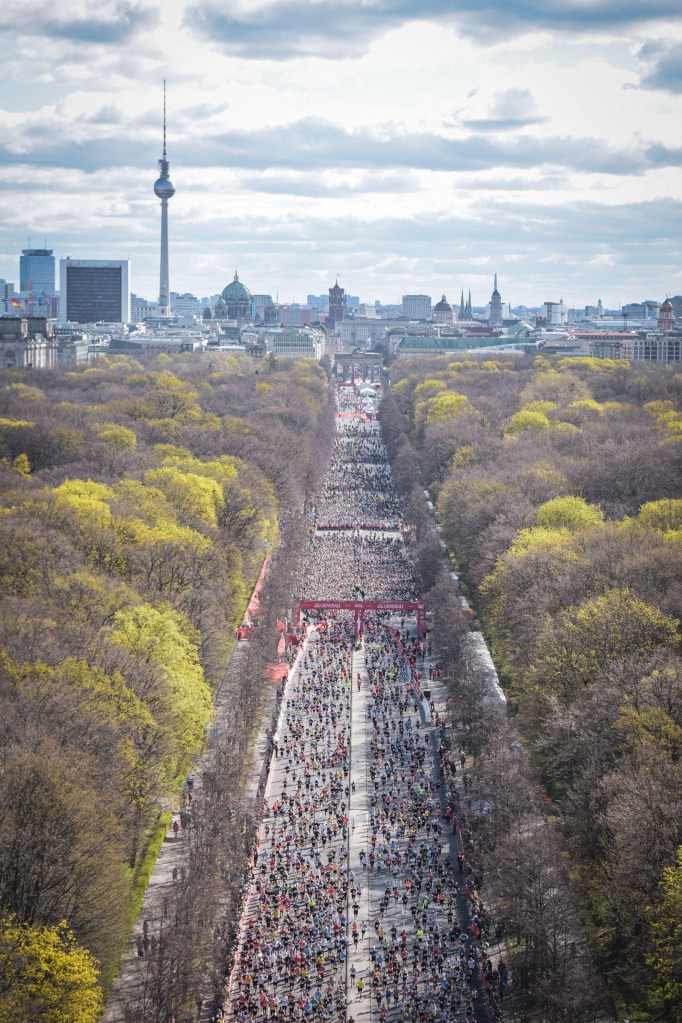
The 2025 edition of Berlin half-marathon concluded my Superhalfs journey. Ending the series with the most impressive finish of all the races was a good decision. This took place at the Brandenburg gate. More than just an architectural masterpiece, the Brandenburg Gate stands as a powerful symbol of European unity. Before 1989, it marked the border between East and West Germany. It also served as a stark reminder of the Iron Curtain that divided the continent after World War II. As someone who lived through the communist era, crossing that finish line under the Brandenburg Gate carried deep, personal significance.

In the distance you can see the runners split in starting waves. Also some highlights of Berlin landmarks

This year’s race drew an incredible 35,000 participants to the start line. It was a chilly morning, with temperatures hovering between 4°C and 6°C. Runners could come with extra clothes that they donated before the start. It is good to get warmer before the start but not fun to sweat a lot during the race. The runners received a poncho at the end of the race to keep them warm in the cold wind.

At start they played Chariots of Fire by Vangelis to get the crowd in the mood for the race.

The race was very well organized with waves of people based on their earlier official times in other races. The start was from 10:05 AM but different waves started every 15 minutes. For example, I was in the wave of people with targeted time from 1:52 to 2:00 which started at 10:35.

A group of runners at the start

Berlin’s course is flat and spacious, offering plenty of room to pick up the pace when you feel strong. Hydration points offered water and isotonic drinks at several stations. At the 12th kilometer mark, every runner received a free Maurten gel. Pacers were available for most goal times. For those interested, you could have your time engraved on your medal. You could also buy official race photos.

A band was singing this song around 10th kilometer. I will always associate this song with the Berlin half-marathon

I was not fully recovered after the pulled hamstring injury in January. I was cautious about the risk of not finishing the race. Nevertheless, this was my last Superhalfs race and I really wanted to achieve a time under 2 hours.

I started conservatively, averaging 5’49″/km for the first 5 kilometers, then slightly quicker at 5’45″/km over the next 5. By the 12th kilometer, we passed Potsdamer Platz and continued into East Berlin. The architecture here is unmistakably different. The former communist-era buildings are less charming. However, the atmosphere became increasingly cheerful. Bands played songs, and people encouraged the runners.

Around 15th kilometer

From the 16th to the 18th kilometer, we ran along Karl-Marx Allee. It is a grand boulevard so reminiscent of Moscow that it has stood in for the Russian capital in films like The Queen’s Gambit. Feeling strong, I picked up my pace to 5’23″/km for the final stretch. The last two kilometers are a straight shot down Unter den Linden boulevard. With one kilometer to go, I was still feeling good. I pushed to 4’56″/km as I passed under the Brandenburg Gate. I crossed the finish line in 1:59:32 — mission accomplished.

The spectacular finish of Berlin half-marathon

Our running group, “Trupa lui Fane,” had four members at this race. Bogdan ran an impressive 1:42:08, missing his personal best by just 3 seconds. Andreea and Mihai, the younger, faster duo, also had great races. Andreea finished in 1:35:47. Mihai finished in a blistering 1:25:04. For both, it was their second Superhalfs event after Prague.

Trupa lui Fane group before the race

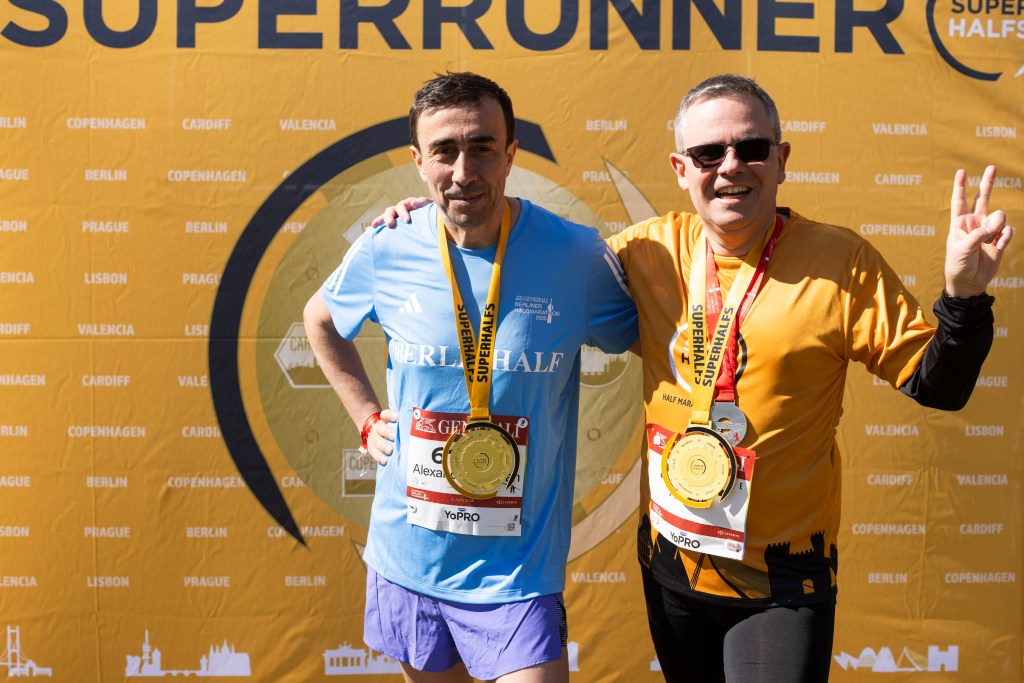
Berlin was the final Superhalf race for Bogdan and myself. It was a project we started in 2022 in Copenhagen. We finished it in two and a half years. As mentioned the first Romanian finished the program last October. In Berlin another group of five Romanians got the Superhalfs medals. And speaking of medals, it’s a hefty one. It weighs 360 grams. That’s 60 grams for each of the six races.

With Bodgan once we got the Superhalfs medals. It was a 2.5 years journey!

I highly recommend the Berlin Half Marathon. Alongside Valencia, it stands out as one of the best running experiences in Europe. A heads-up for those eyeing next year’s race: a big change is coming. Entry for 2026 will be decided by lottery, with registration open from April 10 to May 22, 2025. The lucky draw results will be announced by email starting June 2, 2025. So remember: for Berlin, training hard isn’t enough… you’ll need luck too!

P.S. My next race is 10k on May 10th in Bucharest.

Rome-Ostia half-marathon

For those passionate about running, Rome hosts two major half-marathons each year. The first is the Rome-Ostia Half Marathon, held at the beginning of March, and the second is the Wizz Air Rome Half Marathon, which takes place in October. These races offer distinct experiences: Rome-Ostia takes runners from the city to the sea along a highway, while the Wizz Air Rome route winds through the city’s iconic tourist attractions.

This year marked the 50th edition of the Rome-Ostia Half Marathon. The race was first organized in 1974 by a group of young Romans with a passion for exploring the sea. Over the years, it has grown into a major international running event, attracting around 12,000 participants, with 38% being international runners in 2025.

Over five decades, the average age of participants has increased from 30 to 50 years, reflecting a shift in society’s approach to running and fitness. Notably, the first edition had only six female runners, whereas today, one in three participants is a woman—a remarkable sign of progress in gender participation.

At the start of Roma-Ostia Half Marathon

Rome-Ostia is a race I truly enjoyed. The wide streets ensure a smooth run, with no pedestrians crossing your path. After an initial section with a few turns, the rest of the race follows a straight-line route toward the sea. The finish line, set against the backdrop of the coast, is spectacular. The race is well-organized, with plenty of volunteers and excellent medical assistance. It’s clear that the organizers have perfected the event over the years.

If you’re planning to run the Rome-Ostia Half Marathon in the future, here are a few key things to keep in mind:

  • Baggage drop-off: You must leave your bag before 7:45 AM so it can be transported to the finish line in Ostia. Some runners missed this deadline and had to run with their backpacks.
  • Course conditions: The entire race is on asphalt, with two key climbs—one at km 6 and a longer incline between km 10 and 12. Be sure to conserve energy for the second climb.
  • Water stations: There are only three hydration points, so make sure to use them wisely.
  • Return to Rome: After the race, you can take a bus or train back to Rome, but expect long queues. If you’re in a hurry, consider taking a taxi instead.
Having fun during the race

My race was almost in jeopardy due to a pulled hamstring injury I sustained in January while training on a treadmill. My recovery attempts weren’t successful until I started physiotherapy, which finally helped me get back on track. To protect my leg, I ran cautiously at 6’30” per km at the start. However, in the second half, I picked up the pace so my teammates wouldn’t have to wait too long for me. In the end, I finished in 2:11:29, far better than my 2:25 pre-race estimate.

Last meters of the race

This year, four of us from “Trupa lui Fane” participated in the race: Lucian, Andrei, Bogdan, and myself. Andrei and Lucian are serious runners with good performances. With a time of 1:16:44 Andrei was in top 100 of 10500 finishers. Lucian also had a good race finishing in 1:23:11. Bogdan started fast but struggled on the hills, finishing in 1:46:46, a solid result, especially at the start of the racing season. He has time to improve in upcoming events.

After the race by the sea

One of the best parts of Rome-Ostia is its breathtaking seaside finish. Crossing the line under the spring sun, with waves crashing nearby, is an unforgettable experience. I highly recommend this race to anyone looking for a scenic, well-organized, and historic event. Here’s to many more anniversaries of the Rome-Ostia Half Marathon!

PS. History section. The Rome Ostia half-marathon finishes just two kilometers south of the place where the legendary poet and film director Pier Paolo Pasolini was killed 50 years ago. His voice, bold and unyielding, stood against the tide of extremism – until extremism took his life. In today’s world, where radicalism and division rise once more, his story is one we cannot afford to forget.

A song by Fabrizio de Andre dedicated to Pier Paolo Pasolini

Short history of half-marathons

When registering for the 50th edition of the Roma-Ostia Half-Marathon, I became curious about the history of this race distance. I had always assumed the half-marathon was a more recent creation, but I wanted to learn more.

To understand the history of the half-marathon, we must first explore the origins of its full-distance counterpart: the marathon. The marathon’s roots trace back to the famous legend of Pheidippides, a Greek messenger who reportedly ran around 40 kilometers from Marathon to Athens to deliver news of a military victory. Legend says he collapsed and died from exhaustion after delivering his message.

Interestingly, there were no marathons or long-distance races exceeding 5 kilometers in the ancient Olympic Games. The marathon as we know it today began with the inaugural modern Olympic Games in Athens in 1896. That first race was in fact from Marathon to Athens as in the legend. For the first editions of the Olympiad, the marathon distance varied between 39-42 kilometers. The first Olympic marathons were races full of challenges, with the 1904 St. Louis Marathon being the probably the most strange running race of all times.

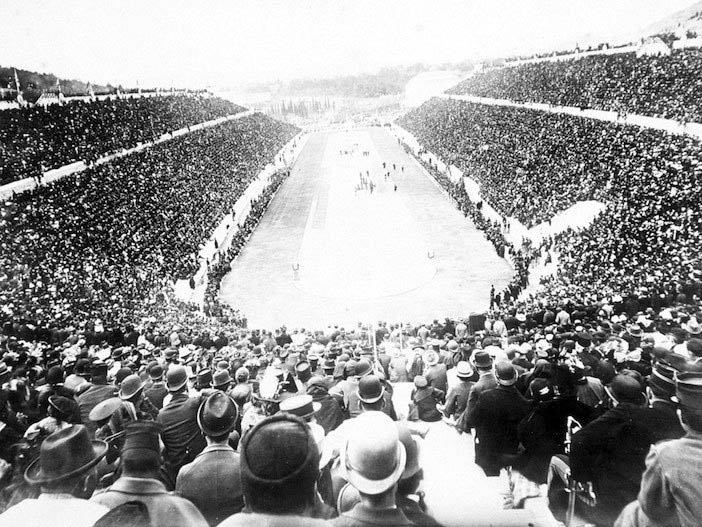
Spectators at Olympic Stadium in Athens waiting for the winner of the first Olympic Marathon

The marathon distance of 42,195 meters (26.2 miles) was officially established during the 1908 London Olympic Games. The race was originally planned to be 26 miles long, but at the request of Queen Alexandra, the starting point was moved to Windsor Castle’s lawn so the royal children could watch the start from the nursery. This adjustment added 352 meters, creating the now-standard distance.

London Olympic Marathon 1908 – the first race of 42195 meters

As the marathon gained popularity, races began appearing outside the Olympics. The Boston Marathon, for instance, was first held in 1897, inspired by the Athens Olympics. In the UK, the Polytechnic Marathon was established to train athletes for the Games, while in the continental Europe, the Kosice Peace Marathon, which began in 1924, is the oldest continuously running marathon on the continent.

While the marathon’s history is well-documented, the half-marathon’s origins are more ambiguous. The longest distance ran inside stadium at official competitions was 10 kilometers. There was a big gap between 10k and marathon and this is how appeared the need for an intermediary distance. Why they chose half-marathon instead of 20 kilometers or 15 miles? Because the marathon distance was standardized by mid of last century and meant the same thing everywhere in the world.

Wikipedia mentions as the first race the Route du Vin Half Marathon which started in 1961. But they also say that it was not the exact 21097 meters (13.1 miles) until 1990s. Given this situation other sources mentions the Freckleton half-marathon as the the first race to match this exact distance in 1965. There are also other events that claim to be the first half-marathon. For sure the first half was run in the 1960s. Regardless, the half-marathon emerged roughly 70 years after the marathon.

One reason for this unclear history is that the half-marathon remained relatively unpopular until it became part of the World Athletics Road Running Championships in 1992. This addition helped elevate its profile, making any half-marathon with more than 50 editions, like the Roma-Ostia, a truly special event.

The popularity of the half-marathon has skyrocketed in recent years. In 2019, more than 2 million participants ran half-marathons globally, double the number of marathon runners. Many major half-marathons now sell out months in advance, reflecting their appeal to both seasoned runners and beginners alike.

Social media and the internet have undoubtedly played a significant role in this surge. Seeing friends share their running experiences online has inspired others to try it themselves, discovering that long-distance running is achievable with consistent effort. The half-marathon, in particular, strikes a perfect balance, challenging yet accessible, making it the ideal entry point for many aspiring runners.

Half-marathon has a history of only around 60 years but the best times of this race are still ahead. You can contribute to this history too!

Athens Olympic Stadium where history of long distance races begins – and I was in Arcadia

Milano 21 half-marathon

Running becomes increasing popular in Europe. Milano has two important half-marathons, Stramilano in March and Milano21 in November. Both are flat, fast courses and are considered among the best routes in Italy. This year, Milano21 saw over 6,000 finishers, a 33% increase compared to the previous edition.

For years, Italy wasn’t a top destination for foreign runners due to a law requiring all participants in long-distance races to present a medical certificate. This rule was introduced after studies showed that improperly trained runners had a higher risk of heart attacks during long-distance events. However, since last year, foreign runners are no longer required to provide a medical certificate. Unfortunately, they aren’t included in the official rankings, which seems unfair, given they run under the same conditions as everyone else.

The race organization was solid, offering everything needed for a good half-marathon experience. However, the atmosphere was quite relaxed, with relatively few spectators lining the streets. On race day, temperatures ranged between 3°C and 5°C, cold but manageable for running.

The Milano21 route showcases some of Milan’s most iconic landmarks, including Galleria Vittorio Emanuele II, the Duomo, and Sforza Castle. While the course design highlights the city’s attractions, about three kilometers are on cobblestones, which can be challenging, especially if wet. Personally, I prefer running on flat asphalt rather than uneven cobblestones. If you want to visit the attractions you have time to do that before of after the race.

Runners at the start of the race.

The race’s start and finish were conveniently located near a shopping mall, allowing runners to store their belongings securely. My colleague Bobo and I stayed at a hotel just one kilometer from the starting line, making it easy to arrive on time. Although the November morning was colder than expected, we had ample space and time to warm up.

A good run in Milan

I started the race too fast, keeping pace with the 1:55 pacers for the first five kilometers. My optimism got the better of me, and I paid the price in the second half of the race. This time, I experimented with a new strategy, using three Maurten gels at kilometers 6, 12, and 18, and drinking water at kilometers 5 and 10. While the gels helped reduce discomfort, they weren’t miracle workers. Towards the end, I slowed down and finished in 2:04:30.

Running on cobblestones

The race itself was quite fast; I finished around 5000th out of 6000 runners. As mentioned earlier, I wasn’t included in the official rankings, but the organizers provided a list of all finishers’ times, so you can calculate your position if you’re curious. Although my time wasn’t exceptional, I was relieved to complete the race without any health issues. This autumn, I discovered I have lactose intolerance and took steps to avoid complications during the race, which paid off.

At the finish of the race

My colleague Bobo had an excellent performance after setting a personal best in Valencia. He completed the race in 1:44:15, a great result for him. A funny moment occurred during the race when a tram turned onto the course, and the police briefly stopped runners to let it pass. Similarly, a police car crossed paths with the runners, adding an unexpected twist to the race!

With Bobo at the finish of the race

Milano21 was my final race of 2024, marking a personal milestone of completing six half-marathons in one year. From an organizational perspective, if you’re considering running a European race, here’s my ranking from best to worst: Valencia, Cardiff, Milan, Lisbon, Helsinki, and Prague. Keep in mind that the growing popularity of these events means you need to register months in advance. Even Milano21 was sold out before race day.

Until next time

For now I am back to running on the treadmill until spring when I’ll run in Rome and Berlin. Traveling for races is such a rewarding experience, it not only boosts physical fitness but also significantly improves mental well-being. Running and visiting Milano was fun!

Valencia half-marathon

This year edition of Valencia half-marathon was a real success. It was a perfect organization, the best from all the races I ever ran. During the race a new world record was established by Yomif Kejelcha from Ethiopia with 57:30. The weather and environment were perfect for running.

Runners warming up

There are countless positive aspects to highlight about this event. I recommend that every major marathon organizer send a representative to run in Valencia and take notes. For runners, the course is flat with ample space for warm-ups, and it never felt overcrowded. Organizers provided water in bottles, gels, and isotonic drinks along the route. If you’re aiming for a personal best, Valencia is the place to be, the true city of running.

Before the race

I traveled from Bucharest to Valencia with my colleague Bobo, and we stayed in a hotel conveniently located near the start and finish lines. We warmed up before the race began and started together.

At the finish

My race was going well until the 15-kilometer mark. I clocked 10 km in 55:40 and 15 km in 1:23:17, maintaining a pace of 5:33/km. For context, I passed 15 km in Cardiff in 1:25:56. Unfortunately, I experienced stomach issues that slowed me down significantly, forcing me to walk the last kilometer, which took me a frustrating 10 minutes. My official finish time was 2:07:47- not ideal, but I persevered, received my medal, and added another super half-marathon to my list.
Over 24,000 participants finished the race, and the support along the route was phenomenal. I had heard before the event that they were aiming to break the world record and bring it back to Valencia, and I could feel the positive energy during the race. Light rain helped keep us cool as we ran.
Bobo had an outstanding race, running a negative split and gradually increasing his pace. He achieved his personal best of 1:42:05. Congratulations to him on a fantastic performance!

Bobo achieved a personal best in Valencia

Bobo’s achievement wasn’t a surprise; he dedicated a lot of time to training this year. I logged 1,200 km, while he ran a third more and incorporated various exercises. In running, results stem from hard work. There’s no substitute for proper training.

After the race

My T-shirt for this race was from “Trupa lui Fane”, a gift from Stefan just before leaving Bucharest. Runners from Trupa lui Fane have recently excelled, with four finishing under three hours at the Bucharest Marathon and winning multiple medals at the Balkan Championships. Bobo’s progress is another testament to the effectiveness of Stefan’s coaching. I also want to thank Stefan for training me remotely in the last years!

Valencia half-marathon is part of Superhalfs. You need to finish all six half-marathons to get the special medal. This was my 5th race with only Berlin left to finish the circuit. In Valencia the first Romanian to ever finish Superhalfs was Cosmin Gabinat. We congratulate him for this achievement! Here you can find a list with all Romanians participating in Superhalfs , 111 people registered at the end of 2024. Given the statistics, the next Romanians to finish Superhalfs circuit will be in Berlin.

Despite my challenges and results, I had an amazing time in Valencia and highly recommend this race to anyone looking to achieve great results!