Rome-Ostia half-marathon

For those passionate about running, Rome hosts two major half-marathons each year. The first is the Rome-Ostia Half Marathon, held at the beginning of March, and the second is the Wizz Air Rome Half Marathon, which takes place in October. These races offer distinct experiences: Rome-Ostia takes runners from the city to the sea along a highway, while the Wizz Air Rome route winds through the city’s iconic tourist attractions.

This year marked the 50th edition of the Rome-Ostia Half Marathon. The race was first organized in 1974 by a group of young Romans with a passion for exploring the sea. Over the years, it has grown into a major international running event, attracting around 12,000 participants, with 38% being international runners in 2025.

Over five decades, the average age of participants has increased from 30 to 50 years, reflecting a shift in society’s approach to running and fitness. Notably, the first edition had only six female runners, whereas today, one in three participants is a woman—a remarkable sign of progress in gender participation.

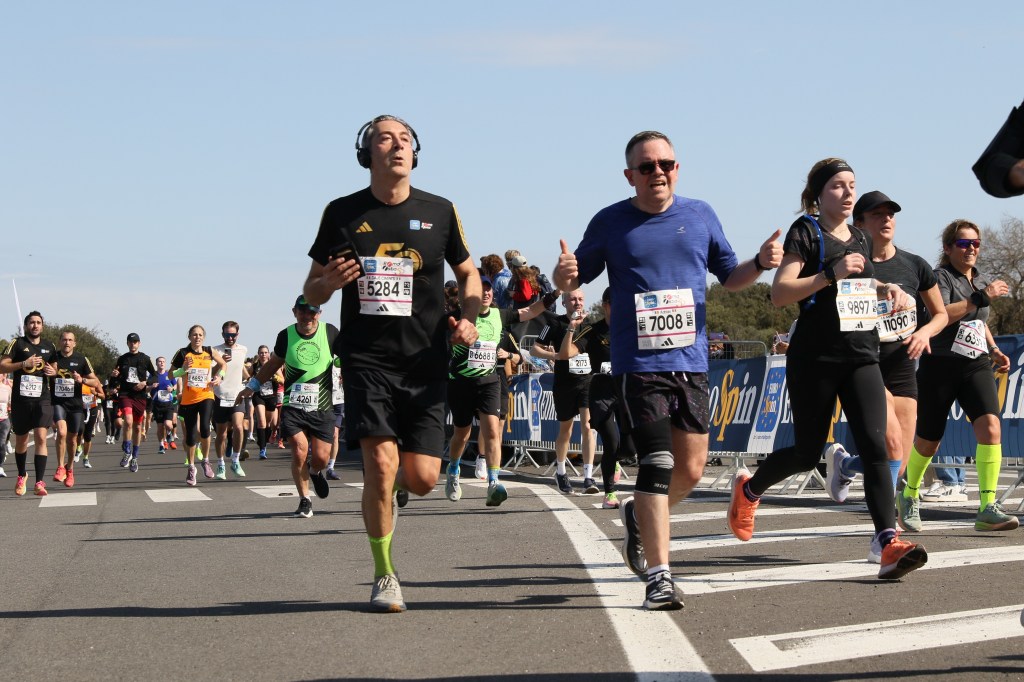
At the start of Roma-Ostia Half Marathon

Rome-Ostia is a race I truly enjoyed. The wide streets ensure a smooth run, with no pedestrians crossing your path. After an initial section with a few turns, the rest of the race follows a straight-line route toward the sea. The finish line, set against the backdrop of the coast, is spectacular. The race is well-organized, with plenty of volunteers and excellent medical assistance. It’s clear that the organizers have perfected the event over the years.

If you’re planning to run the Rome-Ostia Half Marathon in the future, here are a few key things to keep in mind:

  • Baggage drop-off: You must leave your bag before 7:45 AM so it can be transported to the finish line in Ostia. Some runners missed this deadline and had to run with their backpacks.
  • Course conditions: The entire race is on asphalt, with two key climbs—one at km 6 and a longer incline between km 10 and 12. Be sure to conserve energy for the second climb.
  • Water stations: There are only three hydration points, so make sure to use them wisely.
  • Return to Rome: After the race, you can take a bus or train back to Rome, but expect long queues. If you’re in a hurry, consider taking a taxi instead.
Having fun during the race

My race was almost in jeopardy due to a pulled hamstring injury I sustained in January while training on a treadmill. My recovery attempts weren’t successful until I started physiotherapy, which finally helped me get back on track. To protect my leg, I ran cautiously at 6’30” per km at the start. However, in the second half, I picked up the pace so my teammates wouldn’t have to wait too long for me. In the end, I finished in 2:11:29, far better than my 2:25 pre-race estimate.
Last meters of the race

This year, four of us from “Trupa lui Fane” participated in the race: Lucian, Andrei, Bogdan, and myself. Andrei and Lucian are serious runners with good performances. With a time of 1:16:44 Andrei was in top 100 of 10500 finishers. Lucian also had a good race finishing in 1:23:11. Bogdan started fast but struggled on the hills, finishing in 1:46:46, a solid result, especially at the start of the racing season. He has time to improve in upcoming events.

After the race by the sea

One of the best parts of Rome-Ostia is its breathtaking seaside finish. Crossing the line under the spring sun, with waves crashing nearby, is an unforgettable experience. I highly recommend this race to anyone looking for a scenic, well-organized, and historic event. Here’s to many more anniversaries of the Rome-Ostia Half Marathon!

PS. History section. The Rome Ostia half-marathon finishes just two kilometers south of the place where the legendary poet and film director Pier Paolo Pasolini was killed 50 years ago. His voice, bold and unyielding, stood against the tide of extremism – until extremism took his life. In today’s world, where radicalism and division rise once more, his story is one we cannot afford to forget.
A song by Fabrizio de Andre dedicated to Pier Paolo Pasolini

Short history of half-marathons

When registering for the 50th edition of the Roma-Ostia Half-Marathon, I became curious about the history of this race distance. I had always assumed the half-marathon was a more recent creation, but I wanted to learn more.

To understand the history of the half-marathon, we must first explore the origins of its full-distance counterpart: the marathon. The marathon’s roots trace back to the famous legend of Pheidippides, a Greek messenger who reportedly ran around 40 kilometers from Marathon to Athens to deliver news of a military victory. Legend says he collapsed and died from exhaustion after delivering his message.

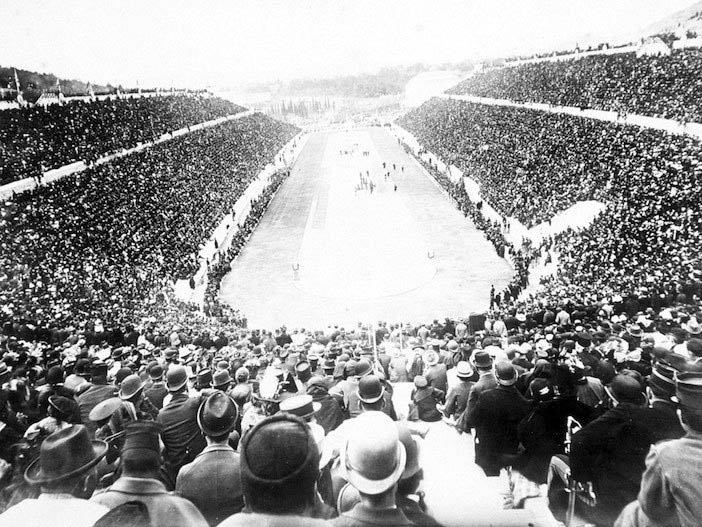
Interestingly, there were no marathons or long-distance races exceeding 5 kilometers in the ancient Olympic Games. The marathon as we know it today began with the inaugural modern Olympic Games in Athens in 1896. That first race was in fact from Marathon to Athens as in the legend. For the first editions of the Olympiad, the marathon distance varied between 39-42 kilometers. The first Olympic marathons were races full of challenges, with the 1904 St. Louis Marathon being the probably the most strange running race of all times.

Spectators at Olympic Stadium in Athens waiting for the winner of the first Olympic Marathon

The marathon distance of 42,195 meters (26.2 miles) was officially established during the 1908 London Olympic Games. The race was originally planned to be 26 miles long, but at the request of Queen Alexandra, the starting point was moved to Windsor Castle’s lawn so the royal children could watch the start from the nursery. This adjustment added 352 meters, creating the now-standard distance.

London Olympic Marathon 1908 – the first race of 42195 meters

As the marathon gained popularity, races began appearing outside the Olympics. The Boston Marathon, for instance, was first held in 1897, inspired by the Athens Olympics. In the UK, the Polytechnic Marathon was established to train athletes for the Games, while in the continental Europe, the Kosice Peace Marathon, which began in 1924, is the oldest continuously running marathon on the continent.

While the marathon’s history is well-documented, the half-marathon’s origins are more ambiguous. The longest distance ran inside stadium at official competitions was 10 kilometers. There was a big gap between 10k and marathon and this is how appeared the need for an intermediary distance. Why they chose half-marathon instead of 20 kilometers or 15 miles? Because the marathon distance was standardized by mid of last century and meant the same thing everywhere in the world.

Wikipedia mentions as the first race the Route du Vin Half Marathon which started in 1961. But they also say that it was not the exact 21097 meters (13.1 miles) until 1990s. Given this situation other sources mentions the Freckleton half-marathon as the the first race to match this exact distance in 1965. There are also other events that claim to be the first half-marathon. For sure the first half was run in the 1960s. Regardless, the half-marathon emerged roughly 70 years after the marathon.

One reason for this unclear history is that the half-marathon remained relatively unpopular until it became part of the World Athletics Road Running Championships in 1992. This addition helped elevate its profile, making any half-marathon with more than 50 editions, like the Roma-Ostia, a truly special event.

The popularity of the half-marathon has skyrocketed in recent years. In 2019, more than 2 million participants ran half-marathons globally, double the number of marathon runners. Many major half-marathons now sell out months in advance, reflecting their appeal to both seasoned runners and beginners alike.

Social media and the internet have undoubtedly played a significant role in this surge. Seeing friends share their running experiences online has inspired others to try it themselves, discovering that long-distance running is achievable with consistent effort. The half-marathon, in particular, strikes a perfect balance, challenging yet accessible, making it the ideal entry point for many aspiring runners.

Half-marathon has a history of only around 60 years but the best times of this race are still ahead. You can contribute to this history too!

Athens Olympic Stadium where history of long distance races begins – and I was in Arcadia