Warsaw half-marathon

Running culture in Poland is booming, and the Warsaw Half Marathon 2026 proves it. With record participation, excellent organization, and a fast (but strategic) course, this race has quickly become one of the top half marathons in Europe. Celebrating its 20th anniversary, the event attracted 25,000 registered runners and sold out two months in advance. If you’re planning to run the Warsaw Half Marathon in the future, early registration is essential.

Despite the typical “10% no-show rate,” 22,492 runners finished the race, marking a 54% increase from 2025. Warsaw is no longer an underrated race, it’s now a major destination for runners across Europe.
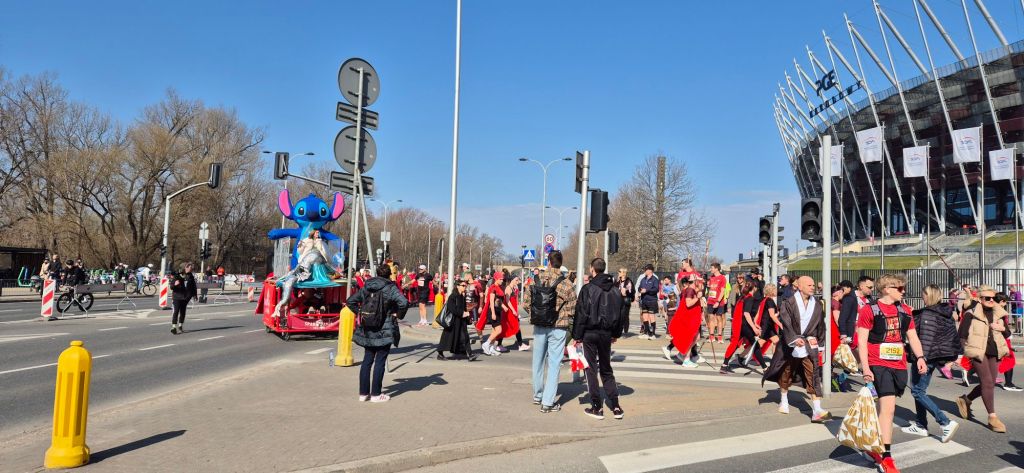
Interesting choreography: runners dressed as Spartans and the siren symbol of Warsaw

A Masterclass in Organization

The Warsaw Half Marathon stands out for its exceptional logistics and runner-friendly setup.

Wave starts were spaced 15 minutes apart, preventing overcrowding and ensuring a smooth race experience. Even starting toward the back, I had plenty of room to run and overtake others without friction, something rare in large city races.
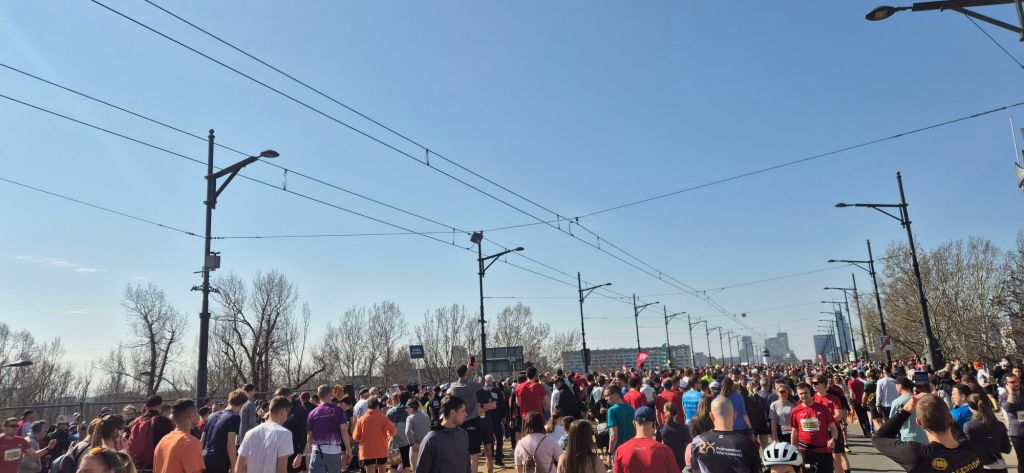
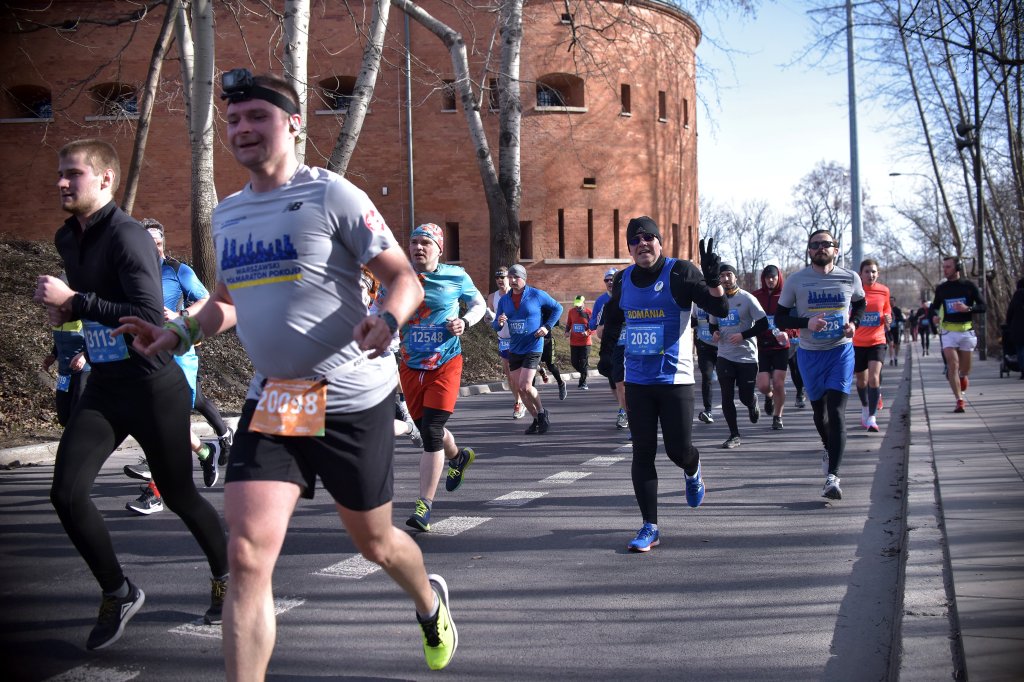
Runners at the start

Key Highlights:

  • Hydration stations every 4 km, with the final one at 18 km
  • Wide, spacious roads throughout most of the course
  • Free public transport for all runners on race day
  • Affordable professional race photos (€10)
  • Generous start/finish zones for warm-up and recovery

For anyone comparing European half marathons, Warsaw ranks among the best in terms of organization and runner comfort.
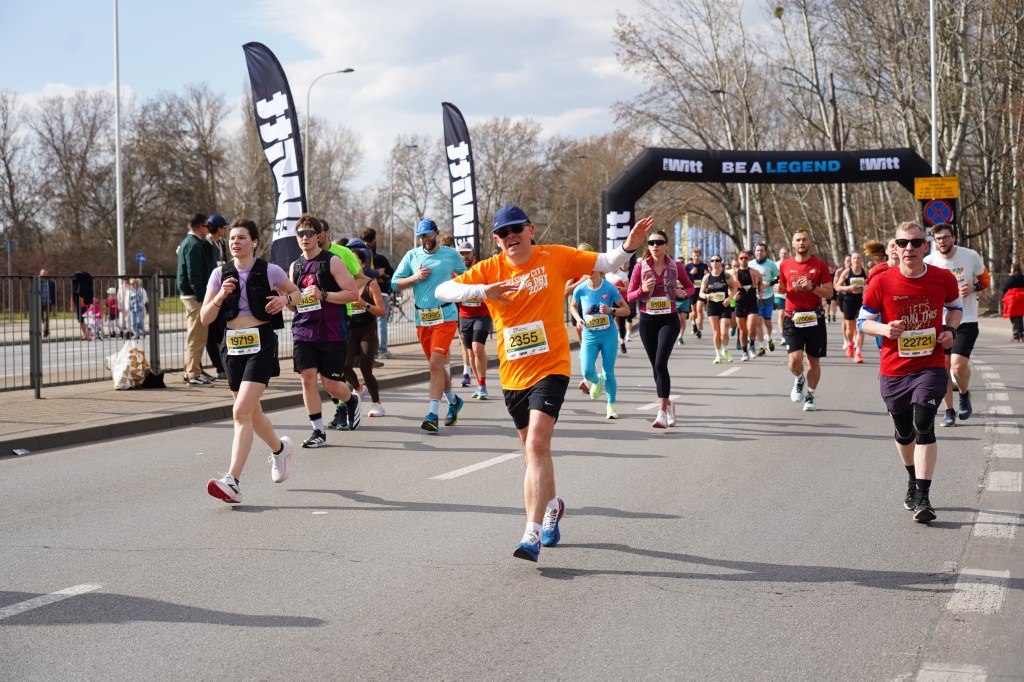
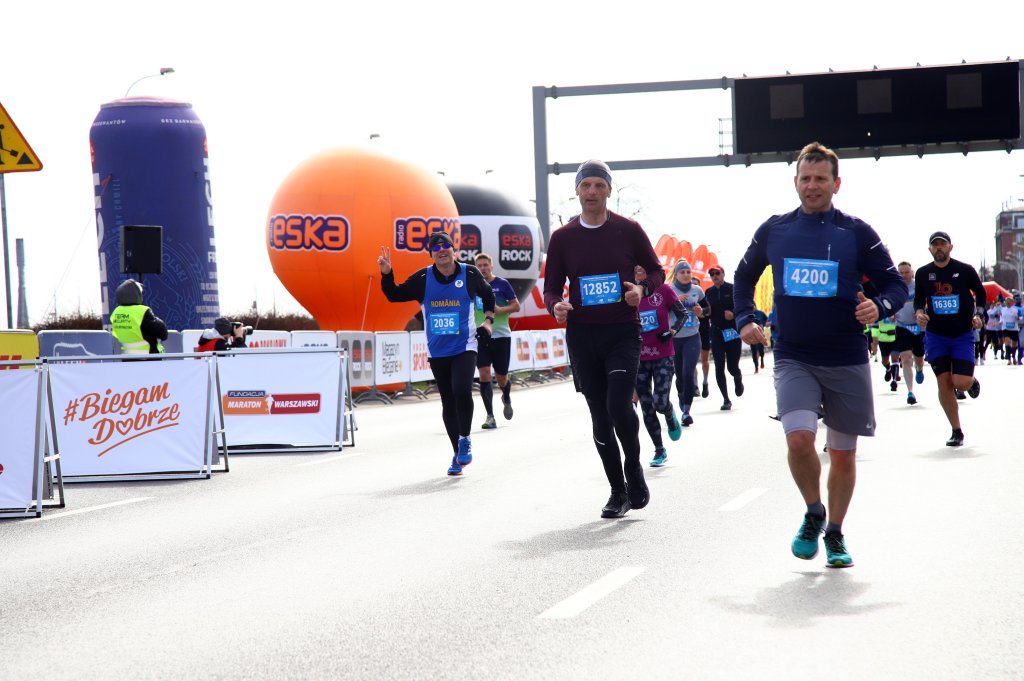
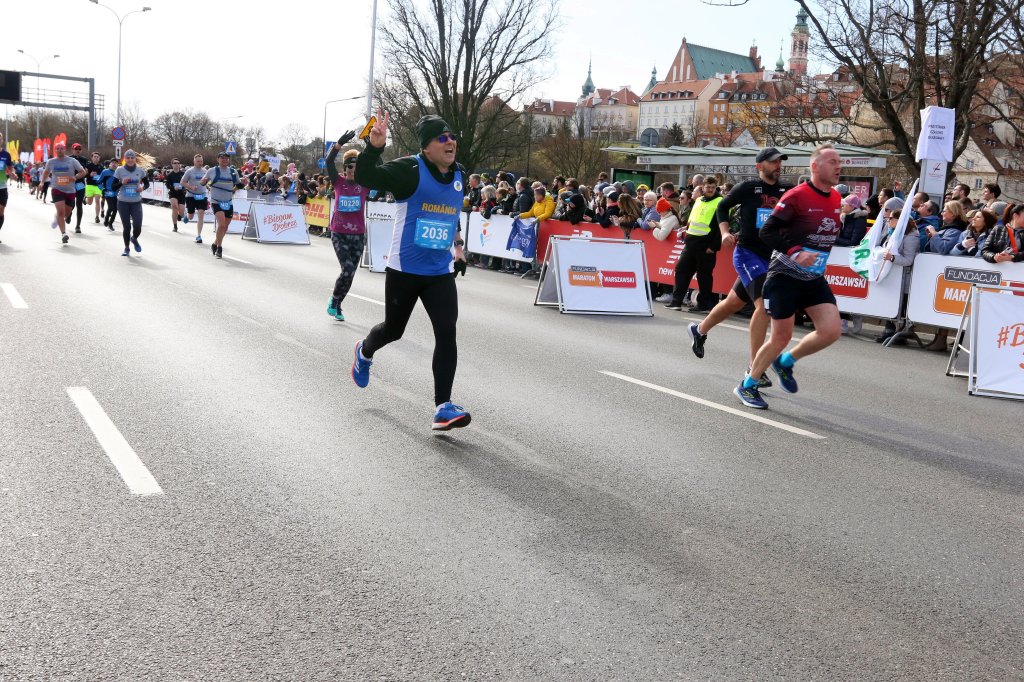
Enjoying the race

Strategy on an Ever-Changing Course

The Warsaw route evolves. Having run this race in 2022, I found this year’s path completely different. In 2026, we faced an immediate uphill climb in the first kilometer followed by a descent. The real challenge, however, was the climb between kilometers 14 and 16. My advice? Conserve your energy for that late-stage hill, then use the remaining distance to sprint home.

While the city center (first 4km) and the finish line were lively, the middle sections were a bit quiet. An American runner nearby noted the lack of crowds compared to races back home. However, the route’s sheer quality more than compensated for the sparse cheering.

Personal Milestones and Gear

The weather was perfect, a crisp 10-14°C. I started conservatively at a 5’40”/km pace for the first km. I gradually sped up and hit the 10 km mark in under 55 minutes. After a Maurten gel and conquering the kilometer 14 climb, I found my “second wind.” Over the final 5 km, I averaged 5’10”/km. In the last 200 meters, I even chased down the 1:55 pacer! I finished in 1:53:30—shaving 11 minutes off my Valencia time from last October. My Nike ZoomX Vaporfly 4 contributed to some of my success. They are easily the best shoes I’ve ever owned. But the other secret I will share it here after my next race.

I want to thank my coach Stefan Oprina for training me remote all these years! This helped me a lot to keep running.
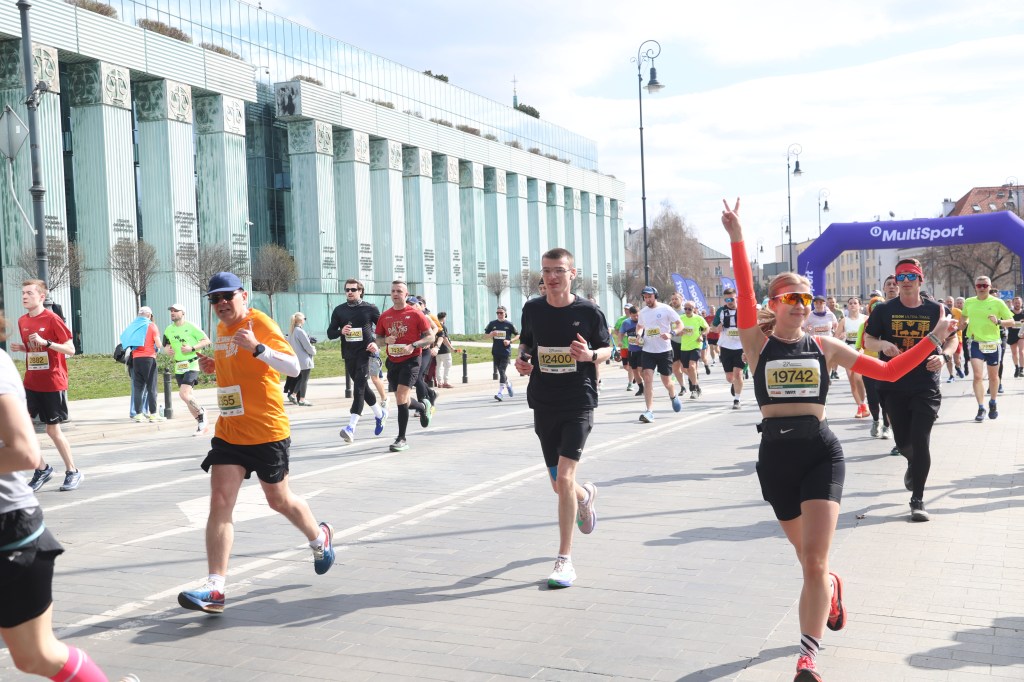
I see here that I am stepping on the heel which is not good, The ideal touch of ground should be with the front of the foot

Together with Bobo we ran in Warsaw in 2022, it was our first half-marathon abroad. It was a great experience back then and decided to repeat it this year. The route was very different than in 2022. We started in different waves and met only at the restaurant after the race.

Bobo, also had a strong showing at 1:42:08. While the kilometer 14 hills thwarted his PR attempt, he matched his Berlin time from a year ago. It was a great return for both of us. Compared to our Warsaw run in 2022, Bobo improved by 7 minutes. I improved by 1 minute. It’s great to run faster than four years ago!
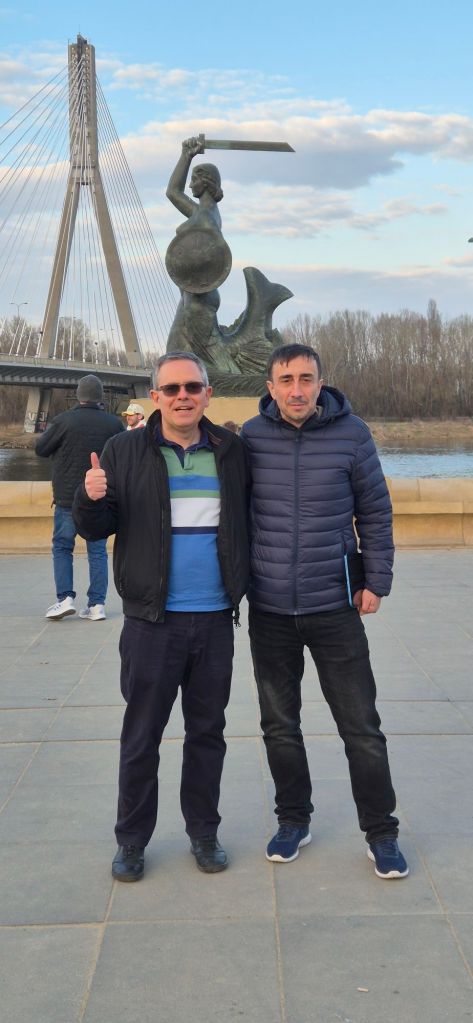
After a great run. The siren statue behind us is the symbol of Warsaw

Final Thoughts

Two of my colleagues joined us this year for their first long-distance race. Watching their promising start reminded me why I love this sport. This race was a phenomenal experience. I highly recommend it to anyone looking for a well-organized, spacious, and fast European half-marathon.

PS: On a personal note, this race helped me reach a huge milestone. Since I started in 2015, I have now run one-third of the Earth’s circumference at the equator. Next stop: 15,000 km!

Warsaw half-marathon for peace

This years’ edition of the Warsaw half-marathon was a run for peace. Given the current situation in Ukraine, it is vital to show solidarity with those suffering. Since the beginning of the war, millions of people had to leave their homes.

Together with my friend Bobo, we planned to run in Warsaw. He came by plane from Bucharest, while I took the train from Krakow.

That morning, March 27, there was only 3 degrees Celsius at the start of the race. Since we were well equipped, that did not influence the experience during the event. Around 7500 participants ran in the Warsaw half marathon.

Being a symbolical run for peace, we chose to wear shirts with our country’s name on them. We had badges with Ukrainian flag colors to support this country facing invasion.

The route was exciting and full of symbols. The start was on Muranowska street near a monument commemorating the Russian invasion of Poland in 1939.

With Bobo after the race in front of the monument at the start of the Warsaw Half Marathon

Also, on the same street was located Umschlagplatz. During WWII, the trains took around 300000 Jews from the Ghetto to the Treblinka extermination camp at this railway station.

Near the Warsow ramparts

The route continued to place Wilson. He was the US president that sustained Polish independence after WWI. For continuity in the relations with the United States, the night before the race, we witness a powerful speech of the current US president in the courtyard of the Warsaw Royal Castle. Then we crossed the bridge over the Vistula river.

On the other side of Vistula is the Prague district of the capital. It is here that during the Polish Uprising in 1944, the Russian troops waited for the Germans to annihilate the Polish resistance before crossing the river. The route continued near the National Stadium. These days the stadium is the headquarters for Ukraine refugees. Then we crossed the Vistula river again. This time on the left, we could admire the Siren statue, the symbol of Warsaw. The last 4 km were in a straight line with the finish near the Multimedia Park Fountain, a modern city symbol.

At the race finish. Happy and tired.

As I was expected to finish later than Bobo, we set the meeting point, after the race, upstairs from the fountains in front of Marie Curie’s statue.

Bobo finished 6’30” before me and waited for me at the statue. We did not race together as he was faster and better trained. Our estimations before the race were accurate. Bobo finished at 1:47:59, while my time was 1:54:27.

Bobo is very close to the finish line

I was happy because the result improved by 2’30” my time at the previous half marathon. Besides, I trained on the treadmill during winter, and running on a treadmill is not as good as running outdoors. I am very grateful to my coach Stefan Oprina who did his best to train me from a distance for this run with special programs for treadmill running.

One funny story is that, before the race, when I got off the elevator in the hotel lobby, I saw Bobo talking to 2 girls volunteers from the organization team. They were looking for the elite runners to take them to the photo session and technical meeting. The girls knew only that the runners were foreigners. I went back up to the room to leave my phone. In the meantime, Bobo clarified things with the girls. We were, by no means, elite runners. The fun part is that it is elementary to spot the difference between the elite runners and us.

In the end, I must say that I am impressed with how the citizens of Poland mobilized themselves to help the millions of refugees from Ukraine. The Ukrainians leaving their own country are people that need help and support. When walking next to the huge tents with refugees in the center of Krakow, I think about those people who left everything behind and how hard it must be for them. The only way to fight this absurd war is to continue everyday life and help the refugees however we can.

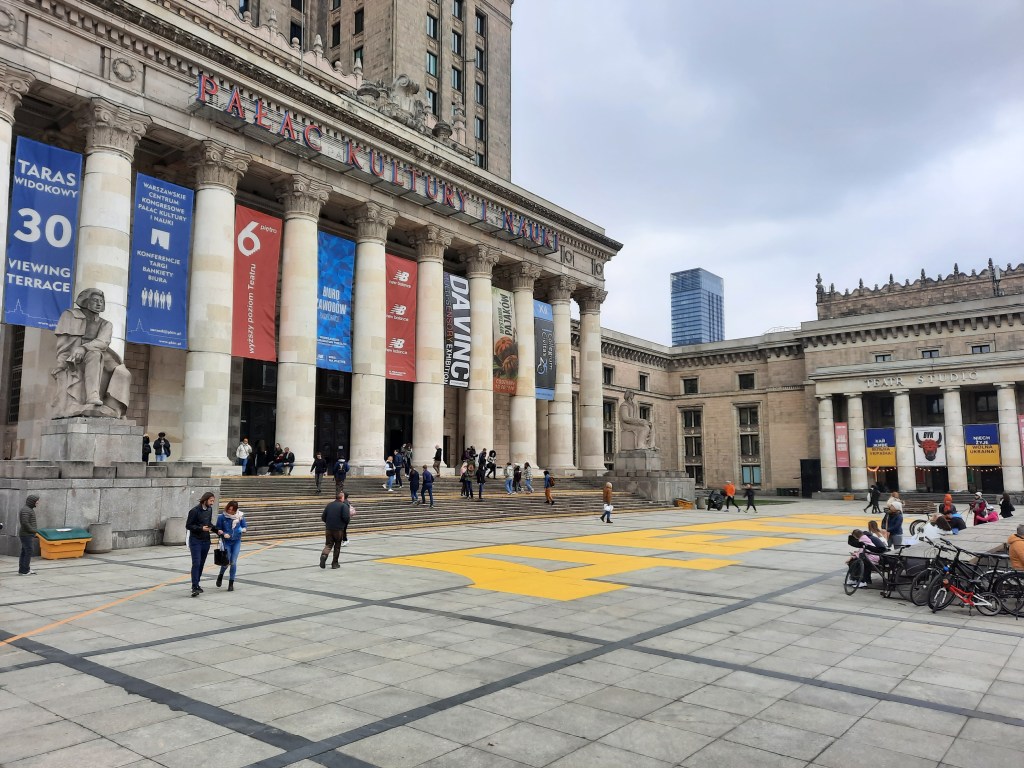
In front of the Palace of Culture and Science in Warsaw, it is written дети. Same as in front of the bombarded Mariupol theatre. A powerful reminder of innocent people that were killed during the war.

The Pianist and Mihail Sebastian

When playing Chopin’s Nocturne 20 on September 23rd, 1939 at Warsaw Radio, Wladyslaw Szpilman did not know that it will be his last performance for a long time. Hours later, a German bombardment destroyed the power supply. The radio was shut down for almost six years.

Chopin Nocturne 20 played by Wladyslaw Szpilman

Last year, while reading The Pianist by Wladyslaw Szpilman, I had no idea that Covid will come. That everyone will be isolated inside, living like the hero of this book during World War II. The book reminded me of a famous journal in Romanian literature, Mihail Sebastian’s Journal. As a consequence, this year, during isolation, I read, again, Sebastian’s journal. This happened after more than twenty years from my first lecture.

These days, when the Covid pandemic affects the whole world, I found these two books inspiring and powerful. Despite the tragedies happening at every step in the books, I found them very human. These are real-life stories. They describe how the authors kept going in difficult circumstances. I hope people reading these testimonies will find help in overcoming the current situation.

These books depict the stories of two men, a pianist, and a writer. Both were highly esteemed before the war for their talents. During World War II they lost everything they had. In both cases, the only reason behind this was their Jewish origin. One lived during the war in Warsaw. The other one in Bucharest. They went on living and fighting for their lives during hard times. They overcome the difficulties in the end.

If you don’t have the time to read the book, you can watch Szpilman’s story in the video below. Or you can watch the famous movie directed by Roman Polanski.

Szpilman recounting his life in Warsaw during the German occupation.

I don’t have a video for Sebastian’s story. But his journal is very well written. He was a talented writer. His family kept his journal private for more than fifty years after his death. It was published in 1996. By then, most of the people mentioned in the book were no longer alive.

Below is a short video of his biography. He was honored with a Doodle on the occasion of his birthday in October 2020.

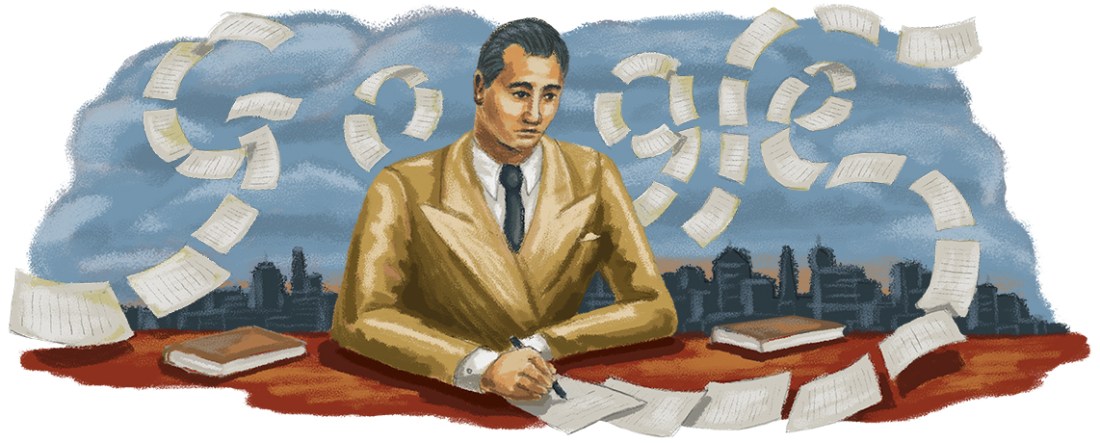
Mihail Sebastian was honored with a Doodle on October 18th, 2020 on his 113th birthday anniversary

Both books offer great insight into historical events. And how ordinary people lived them. We can read in history books about what happened during World War II. However, reading about day to day life is like zooming in on a historical moment.

When reading Sebastian’s journal, I realized that possibly before the war, Sebastian listened to Szpilman playing live on Polish Radio. He mentions in the journal a few times listening to classical music at the Warsaw Radio. Once, it was a three piano concerto. Szpilman worked with Polish Radio since 1935.

That happened in a normal world, before the war. A writer passionate about music could listen to a talented musician from another European country. Then the war came. Szpilman was no longer playing the piano. Sebastian was not allowed to write plays or novels. Because he was a jew. However, during the war, in 1942, he wrote his best play. He named it “A star without a name”. Somebody else had to assume writing that play to bypass the law. Sebastian saw the great success of the play. Yet, he took no credit for it until the end of 1944.

Szpilman lived with his parents, his brother, and sisters at the beginning of the war. By 1945 all his family members died in the Treblinka concentration camp. Sebastian lived alone before the war. He had to move back with his parents and his brother during the war. He lacked money. At the end of the war, Szpilman was the only one alive from his family. Sebastian the only one who died.

There were many stories in both books that impressed me. In most cases, it’s about human nature. The books contain mostly sad and sometimes tragic scenes. But in the end, after going through all these difficult experiences, the message is optimistic.

In 1945, when the Polish Radio station broadcasted again, Szpilman played the same Nocturne by Chopin as in 1939. It was a superb way to resume life and overcome the pains suffered during the war.

One day, like him, we’ll have the chance to resume our usual lives.

Vera Lynn -We’ll meet again. A message that remains actual.